Are you tracking the pulse of the Bitcoin market? Understanding **BTC perpetual futures** long/short ratios is crucial for gauging trader sentiment. This data offers a direct window into how participants on major platforms are positioning themselves. It helps reveal whether bullish or bearish biases currently dominate the landscape. Let’s delve into the latest 24-hour figures from the world’s top three crypto futures exchanges by open interest.
Understanding **BTC Perpetual Futures** Market Sentiment
The **BTC perpetual futures** market is a cornerstone of cryptocurrency trading. It allows traders to speculate on Bitcoin’s price movements without an expiry date. Consequently, perpetual futures provide high liquidity and continuous trading opportunities. The long/short ratio, therefore, becomes a vital indicator. It shows the proportion of traders holding long positions versus those holding short positions. A higher long ratio suggests bullish sentiment, while a higher short ratio points to bearishness. This metric offers valuable insights into the collective mindset of derivative traders.
Monitoring this ratio helps traders make informed decisions. For instance, an extreme skew in either direction might signal a potential reversal. When too many traders are long, a ‘long squeeze’ could occur. Conversely, an excessive number of short positions might lead to a ‘short squeeze.’ These events often result in rapid price movements. Thus, paying close attention to these ratios is essential for risk management and strategy formulation.
Current **Long/Short Ratio** Snapshot Across Top Exchanges
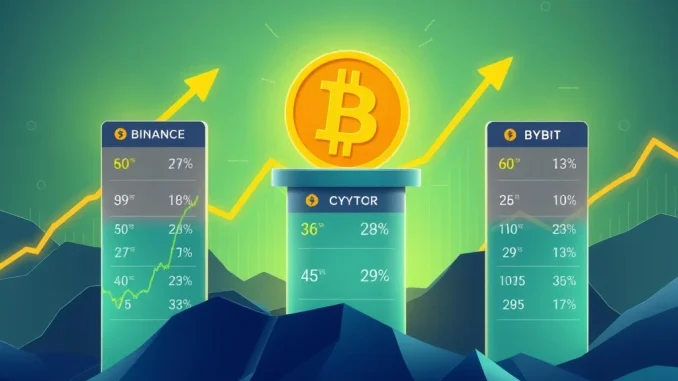
The latest 24-hour data reveals a fascinating picture of **market sentiment**. Overall, short positions slightly outweigh long positions across the top three exchanges. This suggests a cautious, perhaps even slightly bearish, outlook from a collective standpoint. Individual exchange data, however, shows some subtle differences.
Here is a breakdown of the 24-hour long/short position ratios for BTC perpetual futures:
| Exchange / Overall | Long Positions | Short Positions |
|---|---|---|
| Overall | 48.27% | 51.73% |
| Binance | 48.03% | 51.97% |
| OKX | 49.22% | 50.78% |
| Bybit | 49.29% | 50.71% |
As evident, the short interest is marginally higher across the board. Binance shows the highest short bias among the three. OKX and Bybit, while still leaning short, present a more balanced distribution. These figures provide a snapshot of current trader positioning. They do not predict future price movements directly. Instead, they indicate prevailing sentiment.
Diving Deeper into Specific **Crypto Exchanges** Data
Each major exchange caters to a slightly different user base. Consequently, their long/short ratios can sometimes diverge. Binance, as the largest exchange by trading volume, often reflects a broader market sentiment. Its current ratio of 48.03% long to 51.97% short suggests a slight bearish edge among its vast user base. This could be due to various factors, including recent price action or macroeconomic concerns.
OKX and Bybit, while also significant players, show slightly less pronounced short bias. OKX reports 49.22% long and 50.78% short. Bybit is very similar, with 49.29% long and 50.71% short. These differences, though small, can be meaningful. They might indicate varying trading strategies or risk appetites among users on these platforms. It’s important to remember that these ratios are dynamic. They change constantly with market conditions and trader activity.
Analyzing these individual exchange figures can offer a more nuanced view. Traders often look for divergences between exchanges. Such discrepancies can sometimes hint at localized market dynamics or institutional interest. Furthermore, consistent patterns across all major platforms usually confirm a strong overarching trend. In this case, the slight short bias is a consistent theme.
Implications for **Bitcoin Futures** Traders
For **Bitcoin futures** traders, these long/short ratios are more than just numbers. They are critical tools for market analysis. A sustained high short ratio might signal potential buying opportunities. This happens if the market overextends on the short side. Conversely, an extremely high long ratio could precede a correction. Traders might then consider taking profit or hedging their positions.
This data also helps in confirming or challenging personal biases. If you are bullish but the market’s collective sentiment leans short, you might re-evaluate your position. Perhaps there are underlying factors you have overlooked. Conversely, if your analysis aligns with the prevailing sentiment, it can boost confidence. Always combine this data with other technical and fundamental analysis. No single indicator provides a complete picture.
Ultimately, the long/short ratio is a piece of a larger puzzle. It complements volume data, open interest, and price action. Savvy traders use it to refine entry and exit points. They also use it to manage risk effectively. Staying informed about these ratios is therefore a fundamental aspect of successful futures trading. The current slight short bias suggests a cautious market, which active traders should certainly note.
Conclusion: Monitoring **Market Sentiment** for Strategic Edge
The latest **BTC perpetual futures** long/short ratios indicate a slight leaning towards short positions across the top three exchanges. This collective sentiment provides valuable context for traders. While Binance shows the most pronounced short bias, OKX and Bybit also reflect a cautious outlook. These figures are dynamic and reflect the ever-changing nature of the crypto market. Traders must continuously monitor these metrics alongside other indicators. Doing so helps them gain a strategic edge and navigate the volatile Bitcoin futures landscape more effectively. Understanding these ratios can inform better risk management and trading decisions.
Frequently Asked Questions (FAQs)
What do BTC perpetual futures long/short ratios mean?
The BTC perpetual futures long/short ratio indicates the proportion of traders holding long (betting on price increase) positions versus short (betting on price decrease) positions on a derivatives exchange. It serves as a sentiment indicator for the Bitcoin market.
Why are long/short ratios important for traders?
These ratios are important because they offer insight into collective market sentiment. An extreme skew in either direction (too many longs or too many shorts) can sometimes precede price reversals or squeezes, helping traders anticipate potential market shifts and manage risk.
Which exchanges are included in the ‘top 3’ for these ratios?
The ‘top 3’ exchanges typically refer to those with the highest open interest for BTC perpetual futures. Currently, these are Binance, OKX, and Bybit, though rankings can shift over time.
How often do BTC perpetual futures long/short ratios change?
These ratios are highly dynamic and change continuously, often updated every few minutes or hours. The data presented here reflects a 24-hour snapshot, but real-time monitoring is crucial for active traders.
Does a higher short ratio mean Bitcoin’s price will fall?
Not necessarily. While a higher short ratio indicates a prevailing bearish sentiment among traders, it is not a direct prediction of price movement. Sometimes, an excessive short position can lead to a ‘short squeeze,’ where the price rises sharply as short sellers are forced to cover their positions.
How can I use this data in my trading strategy?
You can use long/short ratio data as a confluence factor with other technical and fundamental analysis. For example, if your technical analysis suggests a bullish reversal but the long/short ratio is extremely high (indicating over-optimism), you might exercise more caution. Conversely, a high short ratio might confirm a bearish bias or suggest a potential contrarian buying opportunity if combined with other bullish signals.