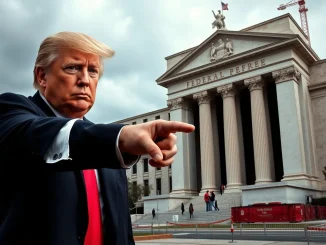
The financial world, including the dynamic cryptocurrency market, closely watches every statement from the Federal Reserve. Recently, Governor Steven Miran offered crucial clarity on the central bank’s current priorities. He stated that the push for interest rate cuts is not primarily focused on addressing potential asset bubbles. This distinction provides significant insight into the Fed’s ongoing strategy.
Federal Reserve’s Stance on Interest Rate Cuts
Federal Reserve Governor Steven Miran clarified the central bank’s perspective on monetary easing. He emphasized that the current drive for interest rate cuts does not specifically target concerns about inflated asset prices. Instead, the Fed’s decisions stem from broader economic considerations. This statement, reported by Reuters, aims to provide transparency regarding the institution’s strategic objectives. Therefore, market participants can better understand the rationale behind upcoming policy shifts.
Miran’s remarks are particularly relevant in today’s economic climate. Historically, periods of low interest rates can sometimes contribute to asset price inflation. However, the Fed’s current approach appears to prioritize other factors. This includes managing inflation and supporting employment levels. Consequently, the focus remains on achieving the central bank’s dual mandate. This clear communication helps temper speculation regarding the Fed’s intentions.
Understanding Asset Bubbles and Market Dynamics
An asset bubble occurs when asset prices rise rapidly and excessively. These increases often go beyond the assets’ intrinsic value. Such bubbles can form in various markets, including real estate, stocks, or even certain commodities. Low interest rates can fuel these bubbles by making borrowing cheaper. This encourages greater investment and risk-taking. However, Miran’s statement suggests the Federal Reserve does not currently view asset prices as the primary driver for its rate decisions.
Several factors contribute to market dynamics. Investor sentiment plays a significant role. Easy credit conditions also encourage speculation. Yet, the Fed’s current assessment indicates other economic forces are at play. For instance, the central bank might be more concerned with broader economic growth or persistent inflationary pressures. This nuanced perspective is vital for interpreting the Fed’s forward guidance. Thus, investors should consider a wider range of economic indicators.
Monetary Policy and Its Broader Implications
The Federal Reserve’s monetary policy serves a dual mandate: achieving maximum employment and maintaining price stability. Interest rate cuts are a powerful tool within this framework. They can stimulate economic activity by reducing borrowing costs for businesses and consumers. This encourages investment and spending. Conversely, rate hikes aim to cool an overheating economy and curb inflation. Miran’s comments highlight a focus on these core objectives rather than preemptively addressing asset valuations.
The implications of this policy approach extend across the entire economy. Businesses might find it easier to expand, creating more jobs. Consumers could benefit from lower loan rates. Moreover, a stable economic environment fosters investor confidence. This indirect effect can positively influence various financial markets, including cryptocurrencies. Therefore, the Fed’s stance on rate cuts impacts everyone, from large corporations to individual households.
Navigating the Economic Outlook
The current economic outlook informs the Federal Reserve’s decisions. Policymakers closely monitor a range of data points. These include inflation rates, unemployment figures, and GDP growth. Miran’s statement indicates that these broader economic health indicators are guiding the discussion on interest rate cuts. The Fed aims to engineer a ‘soft landing’ for the economy, avoiding both recession and runaway inflation. This careful balancing act is crucial for long-term stability.
Future Fed actions will likely depend on how these economic indicators evolve. If inflation cools further, and employment remains robust, rate cuts could proceed as planned. However, unexpected economic shifts might alter the Fed’s trajectory. Market participants, including those in the crypto space, should remain attentive to upcoming economic reports. These reports will provide further clues about the Fed’s next steps. Understanding the economic outlook helps anticipate market movements.
Conclusion
Federal Reserve Governor Steven Miran’s recent clarification provides valuable insight into the central bank’s current priorities. He clearly stated that the push for interest rate cuts is not primarily focused on addressing asset bubbles. Instead, the Federal Reserve’s monetary policy is guided by its fundamental mandates of price stability and maximum employment. This nuanced approach helps shape the broader economic outlook, influencing financial markets globally. Investors and consumers alike will continue to monitor the Fed’s actions closely as it navigates the complex economic landscape.
Frequently Asked Questions (FAQs)
Q1: What did Federal Reserve Governor Steven Miran say about interest rate cuts?
A1: Governor Miran stated that the Federal Reserve’s pursuit of interest rate cuts is not primarily focused on addressing potential asset bubbles. The decisions are based on broader economic objectives.
Q2: What is an asset bubble?
A2: An asset bubble occurs when the price of an asset, such as stocks or real estate, rises significantly and rapidly beyond its fundamental or intrinsic value, often driven by speculation.
Q3: How do interest rate cuts typically affect asset prices?
A3: Generally, lower interest rate cuts can make borrowing cheaper, encouraging more investment and potentially leading to higher asset prices. However, the Fed’s current focus extends beyond just asset valuations.
Q4: What are the primary goals of the Federal Reserve’s monetary policy?
A4: The Federal Reserve’s monetary policy has a dual mandate: to achieve maximum sustainable employment and to maintain price stability (control inflation).
Q5: How might the Federal Reserve’s stance impact the cryptocurrency market?
A5: The Federal Reserve’s monetary policy decisions, including interest rate cuts, influence overall market liquidity and investor risk appetite. This can indirectly affect demand and prices in the cryptocurrency market, as investors often seek alternative assets during periods of economic uncertainty or easy money.