Understanding the pulse of the cryptocurrency market is paramount for any trader. Specifically, the dynamics of BTC perpetual futures offer vital clues. These financial instruments allow traders to speculate on Bitcoin’s future price without an expiry date. Consequently, analyzing the long/short ratio becomes a crucial indicator. This metric provides a snapshot of current market sentiment. It shows whether traders are predominantly betting on price increases (longs) or decreases (shorts). Today, we delve into the latest 24-hour long/short position ratios for BTC perpetual futures on the world’s leading crypto futures exchanges by open interest.
Decoding the BTC Perpetual Futures Landscape
BTC perpetual futures are a cornerstone of modern crypto trading. Unlike traditional futures contracts, they do not have a settlement date. This allows traders to hold positions indefinitely. Perpetual futures closely track the spot price of Bitcoin. Funding rates ensure this peg. Furthermore, these contracts are highly liquid. They attract significant trading volume from both retail and institutional investors. Therefore, their market data offers deep insights.
The long/short ratio is a key metric derived from these contracts. It compares the total number of long positions to short positions. A long position anticipates a price increase. Conversely, a short position expects a price decrease. This ratio essentially reflects the collective sentiment of traders. It signals whether market participants are leaning bullish or bearish. Traders widely use this data. They integrate it into their strategies. Moreover, it helps them gauge potential market reversals or continuations.
Understanding the Long/Short Ratio in Bitcoin Futures Trading
The long/short ratio serves as a powerful barometer for Bitcoin futures trading sentiment. When the ratio is high, it means more traders are taking long positions. This suggests a bullish outlook. Conversely, a low ratio indicates a prevalence of short positions. This points towards a bearish sentiment. However, interpreting this ratio requires nuance. An extremely high ratio, for instance, could sometimes signal over-leveraged longs. This might precede a potential liquidation cascade if the price moves against them. Similarly, an overly bearish ratio might suggest a market bottom. This could set the stage for a short squeeze.
Currently, the overall 24-hour long/short position ratio for BTC perpetual futures shows a near-even split. Long positions account for 49.98%, while short positions stand at 50.02%. This indicates a finely balanced market. Neither bulls nor bears hold a significant majority at this moment. This balanced state often precedes periods of consolidation. It can also hint at upcoming volatility. Traders should monitor such equilibrium carefully. It suggests indecision among market participants.
Current Crypto Market Sentiment Across Leading Exchanges
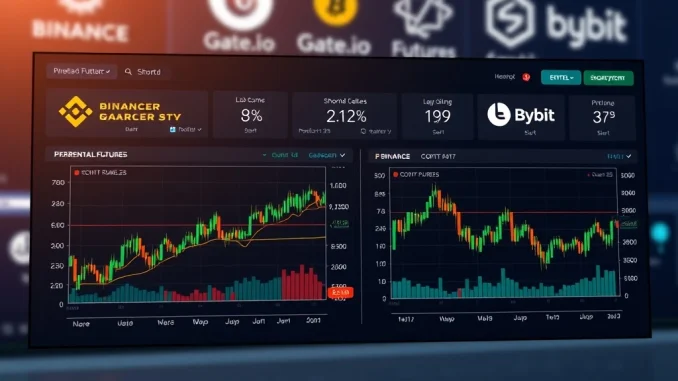
Examining the long/short ratios across individual futures exchanges provides a granular view. The top three exchanges by open interest — Binance, Bybit, and Gate.io — offer distinct snapshots. Each platform has its own user base and trading dynamics. Consequently, their ratios can vary slightly. These differences can sometimes highlight localized sentiment shifts. Here is a breakdown of the 24-hour long/short position ratios:
- Overall: Long 49.98% / Short 50.02%
- Binance: Long 49.39% / Short 50.61%
- Bybit: Long 49.89% / Short 50.11%
- Gate.io: Long 49.72% / Short 50.28%
As you can see, all three exchanges exhibit a slight lean towards short positions. Binance, the largest exchange, shows the most pronounced bias towards shorts. Its ratio stands at 49.39% long and 50.61% short. This suggests a slightly more bearish sentiment among Binance traders. Bybit and Gate.io also show a marginal preference for shorts. Their ratios are 49.89% long / 50.11% short and 49.72% long / 50.28% short, respectively. This consistent slight bearish tilt across major platforms is noteworthy. It collectively shapes the broader crypto market sentiment.
Interpreting These Ratios for Strategic Bitcoin Futures Trading
The current data indicates a cautious approach from traders. The slight dominance of short positions suggests a collective expectation of potential downside. This does not necessarily predict a massive crash. Instead, it reflects a prevailing sentiment. Traders might be hedging existing spot positions. They could also be speculating on minor pullbacks. Therefore, this data point alone is insufficient for making trading decisions. Traders often combine the long/short ratio with other technical indicators. They also consider fundamental analysis. For example, a slight short bias might become more significant if coupled with decreasing trading volume. Alternatively, strong on-chain metrics could counteract it.
A balanced ratio, like the one observed, often points to market indecision. It can signal a period of consolidation. Price action might remain range-bound. However, it also means that a significant move in either direction could trigger a chain reaction. This happens as stops are hit and positions are liquidated. Consequently, monitoring funding rates and open interest alongside the long/short ratio offers a more complete picture. These additional metrics provide context. They reveal the conviction behind these long and short positions.
Factors Influencing Crypto Market Sentiment
Numerous factors contribute to the dynamic crypto market sentiment. Macroeconomic indicators play a significant role. Inflation data, interest rate decisions, and global economic stability impact investor risk appetite. Geopolitical events also create ripples. Regulatory news, positive or negative, directly affects market confidence. For example, a new clarity on stablecoin regulations could boost sentiment. Conversely, a crackdown on certain crypto activities could dampen it.
Technological developments within the crypto space are equally important. Upgrades to Bitcoin’s network or major advancements in decentralized finance (DeFi) can attract new capital. Adoption by institutional players or major corporations also signals maturity and strengthens sentiment. Finally, social media trends and influential personalities often sway public perception. This can lead to rapid shifts in trading behavior. Understanding these external forces helps in better interpreting the long/short ratio data. It adds depth to market analysis.
Leveraging Data from Top Futures Exchanges for Informed Decisions
The data from leading futures exchanges like Binance, Bybit, and Gate.io is invaluable. These platforms represent a substantial portion of the global crypto derivatives market. Therefore, their aggregated and individual long/short ratios offer a robust indicator. Traders can use this information to confirm their own biases. They can also identify potential contrarian opportunities. For instance, if most indicators point bullish but the long/short ratio shows extreme bearishness, it might suggest an impending short squeeze. Conversely, an overwhelmingly bullish ratio might warn of an overheated market.
Furthermore, observing discrepancies between exchanges can be insightful. While all three currently show a slight short bias, larger divergences could highlight specific market dynamics. Perhaps one exchange has a higher concentration of short-term traders. Another might cater more to long-term hedgers. Analyzing these nuances enhances a trader’s predictive capabilities. It allows for more precise strategic adjustments. Ultimately, informed decision-making relies on comprehensive data analysis. The long/short ratio is a critical component of this analysis.
Conclusion: Navigating the Nuances of BTC Perpetual Futures
The 24-hour long/short ratio for BTC perpetual futures provides a compelling snapshot of current market sentiment. With an overall near-even split, yet a slight lean towards short positions across major exchanges like Binance, Bybit, and Gate.io, the market appears to be in a state of cautious equilibrium. This delicate balance suggests that traders are treading carefully. They anticipate potential downside movements. However, this slight bearish bias is not overwhelming. It points to a market ripe for either consolidation or a significant directional move based on upcoming catalysts. Successful Bitcoin futures trading requires continuous monitoring of these crucial metrics. It also demands integrating them with broader market analysis. Therefore, staying informed about these ratios is indispensable for making astute trading decisions in the dynamic crypto landscape.
Frequently Asked Questions (FAQs)
What does the BTC perpetual futures long/short ratio indicate?
The BTC perpetual futures long/short ratio indicates the prevailing sentiment among traders. It compares the number of long positions (bets on price increase) to short positions (bets on price decrease). A higher ratio suggests bullish sentiment, while a lower ratio points to bearish sentiment.
Why is the long/short ratio important for Bitcoin futures trading?
The long/short ratio is crucial for Bitcoin futures trading because it acts as a sentiment indicator. It helps traders gauge market expectations and potential turning points. It can also highlight whether the market is over-leveraged in one direction, potentially leading to liquidation cascades.
How do different futures exchanges’ long/short ratios compare?
While the overall long/short ratio provides a general market view, individual futures exchanges may show slight variations. These differences can reflect the unique demographics or trading strategies of their user bases. Observing these comparisons offers a more nuanced understanding of market sentiment.
What does a nearly 50/50 long/short ratio mean for crypto market sentiment?
A nearly 50/50 long/short ratio, as seen currently, suggests a balanced or indecisive crypto market sentiment. Neither bulls nor bears have a strong advantage. This often precedes periods of consolidation or increased volatility, as the market awaits a clearer directional catalyst.
How can traders use the long/short ratio in their strategies?
Traders can use the long/short ratio in conjunction with other technical and fundamental analysis tools. For example, an extremely high long ratio might signal an overheated market due for a correction, while an extremely low short ratio could indicate a potential short squeeze. It helps in confirming biases or identifying contrarian opportunities.
What other factors influence BTC perpetual futures market sentiment?
Beyond the long/short ratio, other factors influencing BTC perpetual futures market sentiment include macroeconomic news (inflation, interest rates), regulatory developments, technological advancements within crypto, institutional adoption, and significant social media trends. These external forces provide crucial context for interpreting trading data.