The traditional world of real estate is poised for a significant and exciting transformation. Specifically, Eric Trump, a prominent figure, is leading a groundbreaking initiative to tokenize properties. This move aims to democratize access to high-value assets. Furthermore, it seeks to reshape how ordinary people invest in real estate projects. This development directly involves the Trump Organization’s new ventures.
Eric Trump’s Vision for Real Estate Tokenization
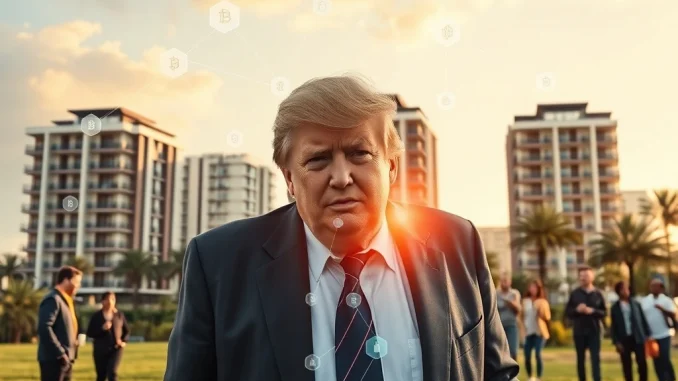
Eric Trump, co-founder of World Liberty Financial (WLFI) and son of President Trump, recently shared ambitious plans. He revealed these intentions during an interview with CoinDesk. Mr. Trump stated that he intends to tokenize a new real estate project. This project originates from the Trump Organization itself. He explained that this initiative would leverage WLFI and its proprietary stablecoin, USD1. This innovative approach aims to bypass traditional banking systems for fundraising. Moreover, it seeks to enable participation from ordinary retail investor participation. This vision directly addresses long-standing barriers in property investment. It promises to open new avenues for a broader range of investors.
Unlocking Opportunities Through Tokenize Real Estate
The concept of tokenizing real estate offers numerous advantages. Firstly, it allows for fractional ownership of high-value assets. This means investors can purchase a small ‘token’ representing a portion of a property. Consequently, large capital outlays are no longer a prerequisite for investment. Secondly, tokenization enhances liquidity. Historically, real estate has been illiquid, making it hard to buy or sell quickly. Tokens, however, can be traded more easily on secondary markets. This provides investors with greater flexibility. Furthermore, it can potentially lower transaction costs and reduce bureaucratic hurdles. The process simplifies ownership transfer. It also increases transparency through immutable blockchain records. Thus, tokenize real estate presents a modern solution to age-old investment challenges.
Blockchain Real Estate: A New Investment Frontier
At its core, this initiative relies on blockchain technology. Blockchain offers a secure and transparent ledger for recording transactions. Each real estate token represents a verified ownership stake. This digital record is immutable and publicly verifiable. As a result, it significantly reduces the risk of fraud. It also streamlines the entire investment process. Smart contracts, a key feature of blockchain, automate various aspects of property management. These contracts can handle rental income distribution, maintenance payments, and even governance decisions. Therefore, blockchain real estate is not just about digital assets. It represents a fundamental shift in how property rights are managed and traded globally. This technological advancement ensures a new level of trust and efficiency.
Empowering Retail Investor Participation
A primary goal of Eric Trump’s plan is to empower everyday investors. Traditionally, investing in large-scale commercial or luxury real estate projects required substantial capital. It also demanded extensive connections. Tokenization dismantles these barriers. It allows individuals to invest with smaller amounts. This democratic approach broadens the pool of potential investors. It also creates more inclusive financial opportunities. For example, someone might invest a few hundred dollars instead of hundreds of thousands. This expanded access could lead to a more diverse and resilient investment ecosystem. Therefore, retail investor participation is central to this transformative vision. It offers a pathway for wealth creation previously unavailable to many.
World Liberty Financial and the USD1 Stablecoin
World Liberty Financial (WLFI) plays a pivotal role in this venture. WLFI is the platform facilitating these tokenized real estate offerings. The company aims to provide a secure and user-friendly environment for digital asset investments. Their proprietary stablecoin, USD1, is integral to the process. USD1 is pegged to the U.S. dollar, ensuring price stability. This stability is crucial for real estate transactions, which require predictable valuations. Investors will likely use USD1 to purchase and trade the real estate tokens. This creates a seamless, on-chain financial ecosystem. Previously, WLFI CEO Jack Witkoff announced these plans at the TOKEN2049 conference. He highlighted the potential for tokenizing real estate owned by the Trump family. This prior announcement underscores the long-term commitment of World Liberty Financial to this innovative space. Their technology aims to bridge traditional finance with the burgeoning digital economy.
In conclusion, Eric Trump’s plan to tokenize real estate marks a significant step. It combines traditional assets with cutting-edge blockchain technology. This initiative promises greater accessibility and efficiency for investors. It also aims to redefine how real estate projects are funded and managed. The collaboration with World Liberty Financial and the use of the USD1 stablecoin are key components. This move could truly revolutionize the real estate investment landscape for retail investors worldwide.
Frequently Asked Questions (FAQs)
What is real estate tokenization?
Real estate tokenization involves converting property ownership rights into digital tokens on a blockchain. Each token represents a fractional share of the property. This allows for easier buying, selling, and managing of real estate investments.
Who is Eric Trump, and what is World Liberty Financial (WLFI)?
Eric Trump is the son of former President Donald Trump and a co-founder of World Liberty Financial (WLFI). WLFI is a financial technology company. It focuses on leveraging blockchain for various financial applications, including real estate tokenization.
How can retail investors participate in this initiative?
Retail investors can participate by purchasing the digital tokens representing fractional ownership of Trump Organization real estate projects. This approach lowers the entry barrier, allowing smaller investments compared to traditional property acquisitions.
What role does the USD1 stablecoin play?
The USD1 stablecoin is WLFI’s proprietary digital currency. It is pegged to the U.S. dollar. It will likely serve as the primary medium of exchange for purchasing and trading the tokenized real estate assets on the WLFI platform, ensuring price stability.
What are the primary benefits of tokenizing real estate?
Key benefits include increased liquidity for traditionally illiquid assets, fractional ownership for greater accessibility, enhanced transparency and security through blockchain, and reduced transaction costs. It also democratizes access to high-value real estate investments for a broader audience.