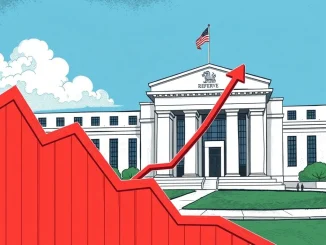
The financial world recently received a significant update from Federal Reserve Chairman Jerome Powell. He indicated that the central bank’s ongoing **Federal Reserve QT** (quantitative tightening) program could conclude in a matter of months. This revelation holds considerable weight for markets, including the often-volatile cryptocurrency sector, as shifts in monetary policy frequently influence investor sentiment and liquidity. Therefore, understanding the implications of this potential policy change is crucial for all market participants.
Understanding the Federal Reserve QT Process
The Federal Reserve’s quantitative tightening is a key monetary policy tool. It involves reducing the size of the Fed’s balance sheet. Essentially, the Fed allows its holdings of Treasury bonds and mortgage-backed securities to mature without reinvesting the proceeds. This process effectively removes liquidity from the financial system. Central banks typically implement QT to combat inflation or to normalize monetary policy after periods of aggressive easing, such as during economic crises. Furthermore, QT aims to raise long-term interest rates and slow economic growth, thereby cooling inflationary pressures.
Jerome Powell Statement: A Pivotal Announcement
Chairman Jerome Powell’s recent **Jerome Powell Statement**, as reported by the Wall Street Journal, marks a pivotal moment. He suggested that the **Quantitative Tightening End** could arrive sooner than many anticipated, potentially within a few months. This announcement stems from a careful review of current market conditions. Specifically, a recent rise in short-term money market rates has prompted the Fed to reassess its strategy. Powell’s remarks provide clarity on the Fed’s evolving approach to managing the economy and its balance sheet. Therefore, market participants are closely monitoring these developments for future policy direction.
The Influence of Rising Money Market Rates
A significant factor in the Fed’s reconsideration of its QT path involves the recent increase in **Money Market Rates**. These rates represent the cost of short-term borrowing between financial institutions. When money market rates rise unexpectedly or become volatile, it often signals a tightening of liquidity in the financial system. For instance, if banks become hesitant to lend to each other, or if the demand for short-term funds outstrips supply, rates will climb. The Fed monitors these rates closely. Sustained increases can indicate that the QT program is having a more pronounced effect on liquidity than intended, potentially leading to undesirable market disruptions. Consequently, the Fed might adjust its strategy to ensure market stability.
Interest on Excess Reserves (IOER) and Market Stability
Chairman Powell also issued a stern warning regarding the **Interest on Excess Reserves (IOER)** system. The IOER rate is the interest the Federal Reserve pays on balances commercial banks hold in their accounts at the Fed. This system is a crucial tool for controlling short-term interest rates. By adjusting the IOER rate, the Fed influences the rates banks charge each other for overnight lending, known as the federal funds rate. If Congress were to abolish the IOER system, Powell warned, the Fed could lose its effective control over short-term rates. Such a loss of control would threaten broader market stability. Therefore, maintaining the IOER system is vital for the Fed’s ability to implement monetary policy effectively.
Implications of a Potential Quantitative Tightening End
The potential **Quantitative Tightening End** within months carries significant implications for various sectors. For one, it could signal a more accommodative monetary environment. This might translate into increased liquidity in the financial system. Investors often view greater liquidity as a positive for risk assets, including stocks and cryptocurrencies. Conversely, it could also indicate that the Fed believes its tightening efforts have achieved their goals, or that further tightening risks unintended consequences. Ultimately, an earlier end to Federal Reserve QT could ease pressure on interest rates, potentially supporting economic growth and corporate earnings. However, the exact impact will depend on the timing and the broader economic context.
What an Earlier Conclusion to Federal Reserve QT Means for Markets
An early conclusion to the **Federal Reserve QT** program could have several key effects:
- Increased Liquidity: More money would remain in the financial system, potentially lowering borrowing costs.
- Market Sentiment: Investors might perceive this as a less hawkish stance by the Fed, boosting confidence.
- Asset Prices: Risk assets, including equities and digital currencies, could see upward pressure due to improved liquidity.
- Interest Rates: While short-term rates are influenced by other factors, the overall upward pressure from QT would diminish.
Moreover, this shift highlights the Fed’s adaptability. It shows their willingness to adjust policy based on real-time economic data and market signals. The upcoming months will undoubtedly provide further clarity on the Fed’s final decision and its subsequent effects on the global financial landscape.
Conclusion: Navigating the Evolving Monetary Landscape
Chairman Jerome Powell’s recent **Jerome Powell Statement** about the potential **Quantitative Tightening End** within months signals a significant shift in monetary policy. This decision is largely influenced by rising **Money Market Rates** and the critical role of the **Interest on Excess Reserves (IOER)** system. The Federal Reserve continues to navigate a complex economic environment, balancing inflation control with financial stability. As such, market participants must remain vigilant, understanding how these central bank actions can shape economic conditions and investment opportunities. The coming months will reveal the full scope of these adjustments and their impact.
Frequently Asked Questions (FAQs)
What is quantitative tightening (QT)?
Quantitative tightening (QT) is a monetary policy tool used by central banks, like the Federal Reserve. It involves reducing the size of the central bank’s balance sheet by allowing government bonds and other securities to mature without reinvesting the proceeds. This process removes liquidity from the financial system, aiming to raise long-term interest rates and curb inflation.
Why might the Fed end QT soon?
The Fed might end QT soon due to rising short-term money market rates. These increases signal a tightening of liquidity in the financial system. Federal Reserve Chairman Jerome Powell indicated that such market conditions have prompted a review of the QT path to prevent potential market instability.
What is Interest on Excess Reserves (IOER)?
Interest on Excess Reserves (IOER) is the interest rate the Federal Reserve pays to commercial banks on the funds they hold in their reserve accounts at the Fed beyond what is legally required. This rate serves as a key tool for the Fed to control the federal funds rate and manage overall short-term interest rates in the economy.
How does IOER affect market stability?
IOER significantly affects market stability by providing the Fed with effective control over short-term interest rates. By adjusting the IOER rate, the Fed influences how much banks lend to each other. Abolishing this system, as warned by Jerome Powell, could cause the Fed to lose control over short-term rates, potentially leading to market instability and disrupting monetary policy implementation.
What impact could ending Federal Reserve QT have on the economy?
Ending Federal Reserve QT could lead to increased liquidity in the financial system. This might ease upward pressure on interest rates, potentially supporting economic growth and boosting investor confidence. For risk assets like stocks and cryptocurrencies, an end to QT could be seen as a positive signal, potentially leading to increased demand and higher prices.