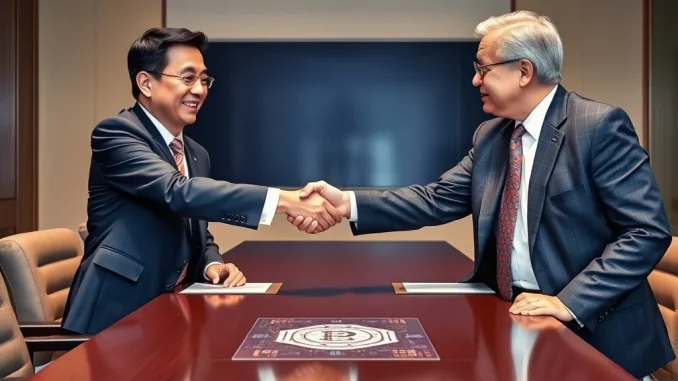
A significant development in the world of digital assets recently emerged from a high-level meeting. Lee Chan-jin, Governor of South Korea’s Financial Supervisory Service (FSS), met with Paul Atkins, Chairman of the U.S. Securities and Exchange Commission (SEC), late last month. This crucial discussion centered on the evolving landscape of **South Korea crypto regulation** and global supervisory frameworks. The exclusive report by SBS Biz highlighted the importance of this cross-border dialogue, signaling growing international cooperation in managing the digital economy.
Deep Dive into South Korea Crypto Regulation and International Dialogue
The meeting occurred in Washington D.C. on September 26. Governor Lee was accompanying President Lee Jae-myung on an official visit to the United States. During their discussions, Lee Chan-jin and Paul Atkins explored various aspects of crypto-asset regulation. They focused on supervisory practices in both South Korea and the U.S. Such high-level engagements are vital for fostering a consistent approach to digital asset oversight worldwide. This proactive step helps shape future regulatory frameworks.
These talks underscore a global trend. Jurisdictions are increasingly seeking common ground on how to manage the rapidly expanding crypto market. For instance, robust **South Korea crypto regulation** is a priority for the FSS. Similarly, the SEC plays a critical role in the U.S. market. Their combined efforts could set new benchmarks. This collaboration aims to protect investors and maintain market integrity.
Paul Atkins SEC: A Pro-Crypto Perspective Shaping Policy
Paul Atkins’ presence in this discussion is particularly noteworthy. He is widely recognized as a pro-crypto figure. His background offers a unique perspective on digital asset policy. Before his nomination as SEC chair, Atkins co-chaired the Token Alliance at the Chamber of Digital Commerce from 2017. This role provided him with deep insights into the blockchain industry and its potential. His previous work suggests a nuanced understanding of crypto assets. He often advocates for regulatory approaches that support innovation while ensuring market stability.
His views contrast with some more cautious stances within regulatory bodies. This makes his involvement in discussions on **crypto asset supervision** especially impactful. Atkins’ pro-innovation philosophy could influence future U.S. regulatory actions. It might also encourage a more balanced approach to digital asset oversight globally. Such a perspective is often welcomed by industry participants. They seek clarity and a conducive environment for growth.
The FSS Governor’s Mandate in Crypto Asset Supervision
Lee Chan-jin, as the **FSS governor**, holds a significant position in South Korea’s financial sector. The Financial Supervisory Service is the primary integrated financial regulator in South Korea. Its responsibilities include supervising financial institutions and enforcing financial laws. In the context of crypto, the FSS aims to:
- Ensure market stability.
- Protect investors from illicit activities.
- Develop appropriate regulatory frameworks for digital assets.
The FSS has been actively working to establish clear guidelines for virtual asset service providers (VASPs). This includes stringent anti-money laundering (AML) and know-your-customer (KYC) requirements. Their efforts reflect a commitment to integrating crypto safely into the broader financial system. The meeting with Atkins provides an opportunity for the FSS to share its experiences. It also allows them to learn from the U.S. approach to **crypto asset supervision**.
South Korea has seen significant growth in its crypto market. This makes the FSS’s role increasingly critical. Effective supervision helps mitigate risks. It also builds trust among investors. Governor Lee’s engagement with international counterparts is a strategic move. It reinforces South Korea’s position as a responsible player in the global financial landscape.
Advancing Global Crypto Policy Through International Collaboration
The meeting between the **FSS governor** and the **Paul Atkins SEC** representative highlights the necessity of international cooperation. Digital assets operate across borders. Therefore, a fragmented regulatory landscape can create loopholes and foster arbitrage. Collaborative dialogues like this one are essential for developing a cohesive **global crypto policy**. Key areas of discussion often include:
- Information sharing on market trends and risks.
- Harmonization of regulatory standards.
- Development of best practices for consumer protection.
These discussions pave the way for more synchronized regulatory responses. They can help prevent regulatory arbitrage. They also promote a level playing field for market participants. The aim is to create a secure and innovative environment for crypto assets. This benefits both traditional financial systems and the emerging digital economy.
Moreover, sharing insights on enforcement strategies and technological advancements is crucial. Regulators can learn from each other’s successes and challenges. This collaborative spirit is vital for building a resilient global financial system. It ensures that digital innovation can thrive responsibly.
Future Implications for South Korea Crypto Regulation and Beyond
This high-level meeting could have lasting implications. It may influence how both South Korea and the U.S. approach digital asset oversight. For South Korea, it could lead to refinements in its existing **crypto asset supervision** framework. It might also accelerate the adoption of new regulatory tools. Similarly, the U.S. SEC could gain valuable insights from South Korea’s experience. This is especially true regarding its more integrated approach to VASP regulation.
Ultimately, these dialogues contribute to a more robust and predictable global crypto market. They signal a commitment from major economies to address the complexities of digital assets collaboratively. Such efforts are paramount for the long-term sustainability and growth of the crypto industry. They ensure that innovation occurs within a framework of stability and investor confidence.
The ongoing discussions between financial leaders like Governor Lee and Chairman Atkins are fundamental. They shape the future of **global crypto policy**. As the digital asset space continues to evolve, these partnerships will become even more critical. They help navigate challenges and unlock new opportunities.
Frequently Asked Questions (FAQs)
Q1: Who attended the high-level meeting on crypto regulation?
A1: Lee Chan-jin, Governor of South Korea’s Financial Supervisory Service (FSS), met with Paul Atkins, Chairman of the U.S. Securities and Exchange Commission (SEC).
Q2: What was the primary focus of their discussion?
A2: The main focus was a wide-ranging discussion on the status of **crypto asset supervision** and regulation in both South Korea and the United States.
Q3: Why is Paul Atkins considered a significant figure in crypto discussions?
A3: Paul Atkins is known as a pro-crypto figure. He previously served as co-chair of the Token Alliance at the Chamber of Digital Commerce, indicating his deep involvement and understanding of the digital asset space.
Q4: What is the role of the FSS in **South Korea crypto regulation**?
A4: The FSS (Financial Supervisory Service) is South Korea’s integrated financial regulator. It supervises financial institutions and enforces financial laws, including those related to virtual assets, to ensure market stability and investor protection.
Q5: How do such international meetings impact **global crypto policy**?
A5: These international meetings are crucial for fostering cross-border cooperation, sharing regulatory insights, and potentially harmonizing standards. They aim to create a more consistent and secure environment for digital assets worldwide.