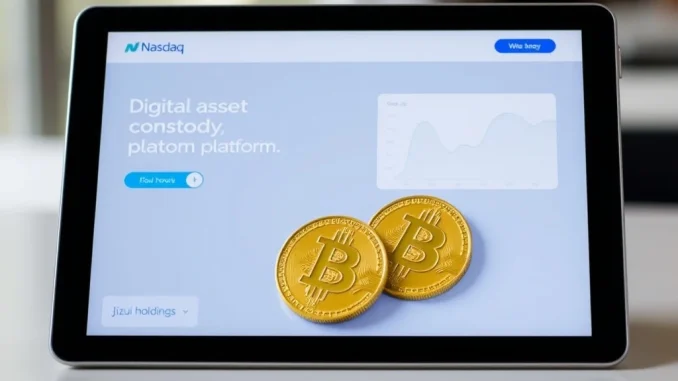
In a significant development echoing the growing convergence of traditional finance and digital assets, **Jiuzi Holdings**, a Nasdaq-listed entity, recently announced a landmark acquisition. The Chinese electric vehicle manufacturer has secured a substantial **100 BTC** (Bitcoin) through a meticulously executed **private placement**. This move marks a pivotal moment for the company, signaling a strategic expansion beyond its core EV business into the burgeoning cryptocurrency sector. It represents a clear intent to embrace new technological frontiers.
Jiuzi Holdings’ Strategic Pivot to Digital Assets
Jiuzi Holdings (JZCN), primarily known for its operations in the electric vehicle market in China, has historically focused on manufacturing and sales. However, this recent announcement highlights a profound shift in its corporate strategy. By acquiring **100 BTC**, the company is not merely investing in a volatile asset; instead, it is laying the groundwork for a new venture. Management plans to leverage these digital assets to establish a robust **digital asset custody** platform. Furthermore, it intends to develop advanced systems based on cutting-edge cryptocurrency storage technology. This strategic pivot could redefine Jiuzi Holdings’ future trajectory.
The decision to delve into the digital asset space reflects a broader trend among publicly traded companies. Many are exploring ways to integrate blockchain technology and cryptocurrencies into their operations. Jiuzi Holdings’ move is particularly noteworthy because it combines an asset acquisition with a clear development roadmap. This indicates a long-term commitment rather than a speculative investment. Consequently, the company aims to become a significant player in the digital economy.
Understanding the 100 BTC Private Placement
The acquisition of **100 BTC** was facilitated through a **private placement**. This method differs significantly from public offerings. A private placement involves selling securities directly to a select group of investors, often institutions or accredited individuals, rather than to the general public. This approach allows companies to raise capital quickly and efficiently, bypassing the complex and time-consuming regulatory requirements of a public offering. Therefore, it is a preferred method for strategic capital injections.
Key aspects of a private placement often include:
- Direct Sale: Securities are sold directly to a limited number of investors.
- Speed and Efficiency: It typically offers a faster fundraising process.
- Reduced Regulatory Burden: Fewer public disclosure requirements apply.
- Strategic Partnerships: It can forge strong relationships with investors.
For Jiuzi Holdings, securing **100 BTC** via this method underscores the strategic importance of the acquisition. The company did not disclose the specific terms or investors involved in the placement. However, the intent behind it is clear: to fund its ambitious digital asset initiatives. This approach ensures dedicated capital for its new ventures.
Building a Robust Digital Asset Custody Platform
A central pillar of Jiuzi Holdings’ new strategy involves building a **digital asset custody** platform. Digital asset custody refers to the secure storage and management of cryptocurrencies and other digital assets on behalf of clients. For institutions and high-net-worth individuals, secure custody is paramount. It addresses concerns about theft, hacking, and regulatory compliance. Therefore, robust custody solutions are critical for widespread institutional adoption of cryptocurrencies.
Jiuzi Holdings’ plan to develop such a platform suggests several strategic advantages:
- Diversification of Revenue Streams: It creates new business opportunities beyond EV manufacturing.
- Leveraging Emerging Technology: It positions the company at the forefront of blockchain innovation.
- Addressing Market Needs: There is a growing demand for secure, institutional-grade custody solutions.
- Enhancing Trust: A secure platform can attract significant institutional capital.
The company specifically mentioned developing systems based on cryptocurrency storage technology. This likely involves advanced cryptographic techniques, multi-signature wallets, hardware security modules (HSMs), and stringent operational protocols. Consequently, this focus on secure infrastructure is vital for establishing credibility in the digital asset space.
Nasdaq-listed Firms Embrace Cryptocurrency
Jiuzi Holdings is not an isolated case. Several other **Nasdaq-listed** companies have previously made significant forays into the cryptocurrency market. Perhaps the most prominent example is MicroStrategy, which has accumulated tens of thousands of Bitcoin, making it a corporate Bitcoin whale. Tesla, another high-profile Nasdaq-listed company, also made headlines with its Bitcoin acquisitions and acceptance as payment, though it later paused Bitcoin payments. These precedents demonstrate a growing acceptance and integration of digital assets within mainstream corporate finance.
The trend indicates a maturing perception of Bitcoin and other cryptocurrencies. They are increasingly viewed as legitimate assets, potential hedges against inflation, and strategic investments. For **Nasdaq-listed** companies, such moves can also attract a new segment of investors interested in the digital asset economy. Furthermore, it showcases a forward-thinking approach to capital management and technological adoption. This broadens their appeal in the investment community.
What This Means for Jiuzi Holdings and the Market
This bold move by Jiuzi Holdings carries several implications for the company and the broader market. Firstly, it signifies a strong vote of confidence in Bitcoin as a store of value and a foundational asset for new digital services. Secondly, it positions Jiuzi Holdings as an innovator, willing to adapt and expand its business model in response to evolving technological landscapes. This could potentially attract new investors interested in companies with exposure to both traditional and digital economies.
Moreover, the development of a **digital asset custody** platform could establish Jiuzi Holdings as a key service provider in the cryptocurrency ecosystem. This offers a potentially high-growth area, distinct from the competitive EV market. The success of this new venture will depend on effective execution, robust security measures, and strong market adoption. Investors will be watching closely to see how this strategy unfolds. Therefore, Jiuzi Holdings’ journey into digital assets will be an interesting case study.
In conclusion, Jiuzi Holdings’ acquisition of **100 BTC** via a **private placement** is more than just an investment. It represents a strategic reorientation for a **Nasdaq-listed** company. The commitment to building a **digital asset custody** platform underscores a forward-looking vision. This move firmly places Jiuzi Holdings on the path to becoming a diversified technology company, embracing the future of finance and digital innovation.
Frequently Asked Questions (FAQs)
Q1: What is Jiuzi Holdings (JZCN) primarily known for?
Jiuzi Holdings (JZCN) is primarily known as a Chinese electric vehicle (EV) manufacturer. The company operates in the sales and manufacturing sectors of the EV market in China.
Q2: Why did Jiuzi Holdings acquire 100 BTC?
Jiuzi Holdings acquired 100 BTC as part of a strategic pivot to diversify its business. The company plans to use the proceeds and the asset itself to build a digital asset custody platform and develop systems based on cryptocurrency storage technology.
Q3: What is a private placement in this context?
A private placement is a method of raising capital by selling securities directly to a select group of investors, such as institutions or accredited individuals, rather than through a public offering. This method is often chosen for its speed and reduced regulatory burden.
Q4: What is a digital asset custody platform?
A digital asset custody platform provides secure storage and management solutions for cryptocurrencies and other digital assets on behalf of clients. These platforms are crucial for institutional adoption, offering robust security against hacking and theft, along with regulatory compliance.
Q5: Is Jiuzi Holdings the first Nasdaq-listed company to acquire Bitcoin?
No, Jiuzi Holdings is not the first Nasdaq-listed company to acquire Bitcoin. Other prominent examples include MicroStrategy and Tesla, which have also made significant investments in Bitcoin and explored its integration into their operations.