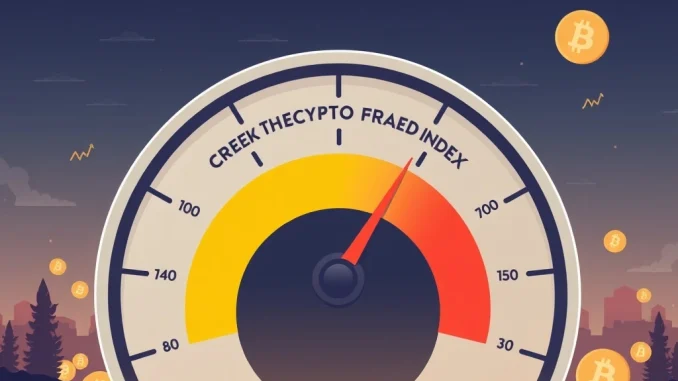
The Crypto Fear & Greed Index recently saw a significant jump. This shift indicates a crucial change in market sentiment. It moved away from “extreme fear.” For many investors, this news brings a sense of relief. It suggests a potential stabilization in the volatile cryptocurrency market. Understanding this index is vital for all participants.
Understanding the Crypto Fear & Greed Index
The Crypto Fear & Greed Index provides a snapshot of market emotions. It helps investors gauge the prevailing sentiment. This index ranges from 0 (extreme fear) to 100 (extreme greed). It offers insights into potential market movements. Extreme fear often suggests undervaluation. Conversely, extreme greed might signal an impending correction. Alternative.me compiles this important metric. Therefore, it serves as a valuable barometer for the crypto ecosystem.
The Recent Shift: From Extreme Fear Crypto to Caution
The index recently rose 14 points. It now sits at 38. This moves the market from “extreme fear crypto” into a simple “fear” state. This shift is notable. It suggests a lessening of panic among investors. Market participants feel less apprehensive. This improved outlook could precede further positive action. However, caution remains key. The market has not yet reached neutral territory. This transition reflects a changing psychological landscape for traders.
How the Index is Calculated
The Crypto Fear & Greed Index uses several factors. These components offer a holistic view. They combine to create a comprehensive sentiment score.
- Volatility (25%): This measures current Bitcoin price fluctuations. It compares them to average values. High volatility often signals fear.
- Market Volume (25%): High trading volumes in a rising market indicate greed. High volumes in a falling market suggest fear.
- Social Media (15%): This analyzes crypto-related hashtags. It also counts specific mentions on social platforms. High engagement often correlates with market excitement.
- Surveys (15%): These polls ask investors about their market outlook. However, this component is currently paused.
- Bitcoin Dominance (10%): A rising dominance implies fear. Investors often shift to Bitcoin as a safe haven. A falling dominance shows increased risk appetite.
- Google Trends (10%): This tracks search queries related to cryptocurrencies. High search volume for “Bitcoin price manipulation” suggests fear.
What Drives Bitcoin Sentiment? Key Index Components
Bitcoin sentiment plays a central role in the overall index. Bitcoin’s market dominance directly influences the score. When Bitcoin performs well, the broader crypto market often follows. Therefore, its price movements and associated search trends are critical. A surge in Bitcoin’s price often pulls the index higher. Conversely, a sharp drop can push it into extreme fear crypto territory. The index uses Bitcoin data primarily. This reflects Bitcoin’s status as the leading cryptocurrency. It acts as a bellwether for the entire market. Consequently, understanding Bitcoin’s performance is essential for interpreting the index.
Interpreting Investor Sentiment Crypto: Beyond the Numbers
The investor sentiment crypto index serves as a valuable tool. It helps investors make informed decisions. Many use it as a contrarian indicator. For example, they buy when the index shows extreme fear. They consider selling when it shows extreme greed. This strategy aims to capitalize on market extremes. However, the index is not a perfect predictor. It should supplement other research. Fundamental and technical analysis remain essential. Always conduct your own due diligence. Moreover, market conditions can change rapidly.
Historical Patterns and Market Cycles
Historically, periods of extreme fear crypto have presented opportunities. These moments often mark market bottoms. Similarly, extreme greed often precedes market tops. However, these are general patterns. They do not guarantee future outcomes. The crypto market remains highly dynamic. External economic factors also influence sentiment. Global events can quickly shift market mood. Therefore, historical data offers guidance, not certainty.
The Broader Crypto Market Sentiment: Implications of the Shift
This recent shift impacts the broader crypto market sentiment. Moving out of extreme fear builds confidence. It might encourage new capital inflows. Investors who were on the sidelines may now consider re-entering. This can lead to increased trading activity. Furthermore, it could stabilize prices across various altcoins. A sustained move towards neutral or greedy territory would signal a more robust recovery. Conversely, a quick return to extreme fear would highlight underlying vulnerabilities. This underscores the delicate balance of market psychology.
The rise of the Crypto Fear & Greed Index to 38 is a significant development. It signals a departure from extreme fear crypto. This positive shift in investor sentiment crypto offers a glimmer of hope. While still in the “fear” zone, it indicates growing confidence. Monitoring this index alongside other metrics remains crucial. It helps navigate the volatile crypto landscape. The market continues its evolution. Therefore, understanding these emotional indicators is vital for all participants.
Frequently Asked Questions (FAQs)
Q1: What does the Crypto Fear & Greed Index measure?
A1: The Crypto Fear & Greed Index measures the current sentiment of the cryptocurrency market. It ranges from 0 (extreme fear) to 100 (extreme greed), indicating whether investors are feeling apprehensive or overly enthusiastic.
Q2: How is the Crypto Fear & Greed Index calculated?
A2: The index uses six key factors: volatility (25%), trading volume (25%), social media mentions (15%), surveys (15% – currently paused), Bitcoin’s market dominance (10%), and Google search volume (10%). These components are weighted to produce a single score.
Q3: What does a score of 38 on the index mean?
A3: A score of 38 signifies that the market is currently in a state of “fear.” This indicates that investors are still cautious, but have moved away from “extreme fear,” suggesting a slight improvement in overall market sentiment.
Q4: How do investors typically use the Crypto Fear & Greed Index?
A4: Many investors use the index as a contrarian indicator. They might consider buying when the index shows extreme fear, believing the market is undervalued. Conversely, they might consider selling when it shows extreme greed, anticipating a potential market correction.
Q5: Why is Bitcoin’s dominance important for the index?
A5: Bitcoin’s market dominance is crucial because Bitcoin is the largest cryptocurrency. Its performance often influences the broader market. A rising Bitcoin dominance can indicate fear, as investors move to a perceived safer asset. A falling dominance suggests increased risk appetite.
Q6: Does the index predict future market movements accurately?
A6: While the index provides valuable insights into market psychology, it is not a perfect predictive tool. It should be used in conjunction with other forms of analysis, such as fundamental and technical research, to make informed investment decisions.