In an era where digital assets frequently dominate financial headlines, the enduring appeal of traditional safe havens remains undeniable. Investors, including those keenly observing the cryptocurrency landscape, often diversify their portfolios with assets like gold. A significant development has recently captured market attention: the gold price has made a notable recovery, with spot gold reclaiming the crucial $4,010 per ounce threshold. This resurgence signals a renewed confidence in precious metals and prompts a deeper look into the forces at play.
Understanding the Impressive Gold Price Surge
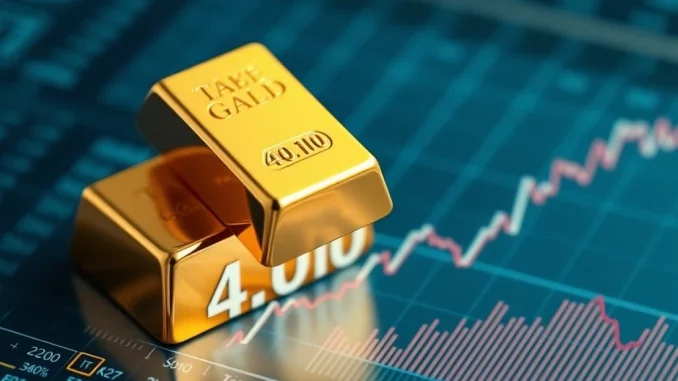
The recent surge in the gold price to $4,010 per ounce marks a pivotal moment for the global commodities market. This level represents more than just a numerical value; it reflects a complex interplay of economic indicators and investor sentiment. For many, gold acts as a reliable hedge against inflation and economic uncertainty. Consequently, its upward movement often signals shifts in broader financial landscapes. This gold recovery is drawing considerable interest from analysts and investors alike. Therefore, understanding the underlying dynamics is crucial for all market participants.
Key Factors Driving the Gold Recovery
Several powerful factors are contributing to the robust gold recovery. Each element plays a distinct role in influencing investor behavior and market trends. Specifically, these factors highlight gold’s traditional appeal during periods of instability.
- Persistent Inflation Concerns: Across major economies, central banks continue to grapple with rising prices. This erosion of purchasing power for fiat currencies drives investors towards tangible assets. Gold, therefore, offers a perceived stability and retains its value over time.
- Geopolitical Tensions: Unrest and uncertainty in various global regions heighten demand for safe-haven assets. When political landscapes become volatile, investors typically seek refuge in assets historically known for their resilience.
- Weakening U.S. Dollar: A depreciating U.S. dollar often provides a significant tailwind for spot gold. Gold becomes more affordable for holders of other currencies when the dollar weakens. This boosts international demand and pushes the gold price higher.
This combination of macroeconomic pressures and currency dynamics supports the current positive trajectory for precious metals. Furthermore, low-interest-rate environments also reduce the opportunity cost of holding non-yielding assets like gold, further enhancing its appeal.
The Significance of the $4,010 Gold Mark
Reclaiming the $4,010 gold level holds significant psychological and technical importance for traders. Historically, such price points often act as strong resistance or support levels. Breaking past previous resistance can signal further upward momentum. This specific recovery demonstrates sustained buying interest. It also suggests that previous downward pressures have abated. Market participants are closely watching to see if this level can be maintained. Sustained trading above $4,010 could solidify the bullish sentiment for precious metals. Moreover, it provides a strong technical foundation for potential future gains.
Gold’s Enduring Role Among Precious Metals
Among all precious metals, gold maintains its status as the most prominent. Its historical value as a store of wealth is unmatched. While silver, platinum, and palladium also play crucial roles in industry and investment, gold often leads the market sentiment. The current gold recovery reinforces this leadership. Investors view gold as a fundamental component of a diversified portfolio. It offers protection during economic downturns. Therefore, its performance is often seen as a bellwether for the broader commodities sector. The move to $4,010 underscores its continued relevance and inherent value.
Market Implications and Future Outlook for Spot Gold
The recent performance of spot gold has significant implications for various market participants. For long-term investors, this gold recovery validates its role as a hedge against volatility. Short-term traders might see increased volatility and new trading opportunities. Analysts are now revising their price targets upwards. Many anticipate further gains if current macroeconomic conditions persist. However, potential headwinds exist. A sudden strengthening of the U.S. dollar or a de-escalation of geopolitical tensions could temper gold’s ascent. The path for the gold price remains subject to global events. Nonetheless, the current momentum is decidedly positive, suggesting a robust market for the foreseeable future.
In conclusion, the impressive gold recovery to $4,010 per ounce marks a significant event in the financial markets. This milestone highlights gold’s enduring appeal as a safe-haven asset. It also reflects ongoing concerns about inflation and geopolitical stability. As precious metals continue to attract investor interest, spot gold remains a critical barometer. Its journey past the $4,010 gold threshold offers valuable insights into current economic sentiments. All investors, regardless of their primary focus, should monitor gold’s performance. It often provides early signals for broader market shifts and opportunities for diversification.
Frequently Asked Questions (FAQs)
Q1: What does the gold price recovery to $4,010 mean for investors?
A1: This recovery indicates strong market confidence in gold. It suggests investors are seeking safe-haven assets amidst economic uncertainties and inflationary pressures. It validates gold’s role as a hedge.
Q2: What factors are primarily driving the current gold recovery?
A2: Key drivers include persistent inflation concerns, ongoing geopolitical tensions, and a relatively weaker U.S. dollar. These macroeconomic factors collectively increase demand for spot gold.
Q3: Is gold still considered a good hedge against inflation?
A3: Yes, gold traditionally serves as an excellent hedge against inflation. Its value tends to rise when fiat currencies lose purchasing power, preserving wealth over time.
Q4: How does spot gold differ from gold futures?
A4: Spot gold refers to the current market price for immediate delivery of the physical commodity. Gold futures, conversely, are contracts to buy or sell gold at a predetermined price on a future date, often used for speculation or hedging.
Q5: Should cryptocurrency investors also pay attention to the gold price?
A5: Absolutely. Gold’s performance reflects broader macroeconomic trends and investor sentiment. These factors can indirectly influence the cryptocurrency market and overall portfolio diversification strategies, offering valuable insights into global financial stability.
Q6: What is the outlook for precious metals like gold in the near future?
A6: The outlook for precious metals, particularly gold, appears positive given current global economic conditions. Continued inflation, geopolitical risks, and potential interest rate adjustments could further support the gold price.