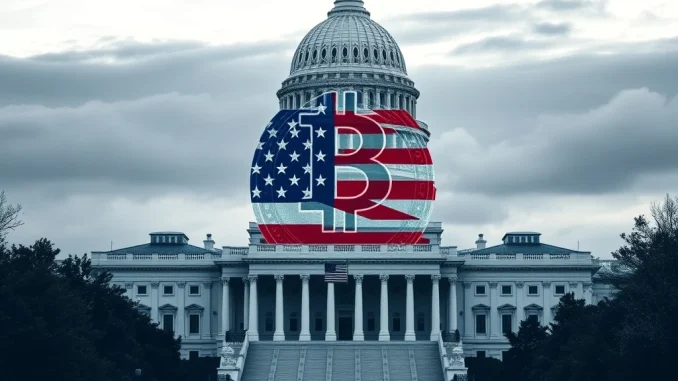
The United States stands at a pivotal moment in its financial strategy. Senator Cynthia Lummis, a prominent pro-cryptocurrency voice, recently confirmed a significant development. She stated on X that the U.S. is prepared to initiate a Strategic Bitcoin Reserve at any given time. This readiness stems from an executive order signed by former President Donald Trump. This revelation marks a crucial step in integrating digital assets into national policy, sparking widespread discussion among economists and crypto enthusiasts alike.
The Vision for a US Bitcoin National Asset
The concept of a Strategic Bitcoin Reserve (SBR) represents a groundbreaking shift. It envisions the U.S. government officially designating and stockpiling Bitcoin (BTC) as a national strategic asset. This bold proposal has garnered attention as a potential safeguard. Many see it as a hedge against the ongoing depreciation of the U.S. dollar. Furthermore, it could offer a novel approach to mitigating the nation’s escalating national debt. Discussions around establishing such a reserve gained considerable traction following President Trump’s executive order last March. This order broadly addressed digital asset development, laying groundwork for future initiatives. Despite this momentum, implementation has faced delays, largely due to ongoing legislative debates.
Historically, nations maintain strategic reserves of vital commodities. These often include oil, gold, and other precious metals. They serve as economic shock absorbers and geopolitical tools. Introducing Bitcoin into this framework signifies a recognition of its growing importance. Bitcoin’s decentralized nature and finite supply offer unique advantages. Advocates suggest it could provide a non-sovereign, censorship-resistant asset. This diversification could strengthen the U.S. economic position globally. Moreover, it could signal a strong commitment to embracing financial innovation.
Overcoming Legislative Hurdles for the Strategic Bitcoin Reserve
While the path to a fully operational Strategic Bitcoin Reserve appears promising, it is not without obstacles. Senator Lummis acknowledged these legislative hurdles. She remains confident in the underlying framework provided by the executive order. This order effectively empowers the government to act. It outlines a comprehensive approach to digital assets, encouraging innovation while addressing risks. However, specific congressional action may still be required. Lawmakers must define the precise mandate, funding mechanisms, and operational protocols for the SBR. Diverse opinions within Congress contribute to the ongoing debate. Some members express caution regarding Bitcoin’s volatility. Others highlight the need for robust regulatory frameworks before any large-scale adoption.
The debate extends beyond just economic considerations. National security implications also play a significant role. Securing a large national Bitcoin holding requires advanced cybersecurity measures. It demands protection against both state-sponsored attacks and criminal enterprises. Establishing clear guidelines for custody, management, and deployment of these assets is paramount. This ensures the reserve remains resilient and impenetrable. Experts emphasize the importance of cold storage solutions. They also recommend multi-signature protocols and geographically dispersed vaults. These measures collectively enhance the security posture of any future SBR.
Sourcing the US Bitcoin Supply
A critical aspect of the SBR plan involves its initial funding. The U.S. government has previously indicated its strategy for acquiring Bitcoin. Initially, the supply would come from confiscated BTC. Law enforcement agencies regularly seize cryptocurrencies during criminal investigations. These seizures often involve illicit activities like money laundering or drug trafficking. Utilizing these confiscated assets offers a unique advantage. It allows the government to build the reserve without allocating new budget funds. This approach addresses concerns about taxpayer money being used for speculative asset purchases.
Beyond confiscated assets, the government could explore other acquisition methods. These might include direct purchases on open markets. However, such actions would require careful planning. Large-scale purchases could impact market prices. Therefore, a phased approach might be necessary. The goal is to accumulate additional quantities strategically. This would happen without disrupting market stability. This cautious approach reflects a commitment to responsible financial management. It also demonstrates an understanding of Bitcoin’s market dynamics. The long-term vision aims for a robust and growing reserve. This reserve would bolster national financial security for decades to come.
Senator Lummis’s Advocacy and Trump’s Executive Order
Senator Cynthia Lummis has been a consistent and vocal advocate for Bitcoin and digital assets. Her efforts have significantly shaped the conversation in Washington. She consistently champions policies that foster innovation and responsible regulation. Her deep understanding of both traditional finance and cryptocurrency makes her a credible voice. She sees Bitcoin not just as an investment, but as a fundamental shift in global finance. Her advocacy underscores the bipartisan interest in exploring Bitcoin’s potential. This interest transcends traditional political divides.
President Trump’s executive order, signed in March, provided a crucial impetus. It directed federal agencies to study and report on various aspects of digital assets. These included their risks, benefits, and potential uses. While not explicitly mandating a Bitcoin reserve, it created the regulatory environment. This environment made such a proposal feasible. The order emphasized the need for a whole-of-government approach. It sought to ensure U.S. leadership in the digital asset space. This forward-thinking directive laid the essential groundwork. It paved the way for discussions about the Bitcoin national asset and its strategic importance. The order highlighted the need for financial stability, consumer protection, and national security in the digital realm.
The Economic Implications of a Bitcoin National Asset
Implementing a Bitcoin national asset could have profound economic implications. For one, it could significantly boost Bitcoin’s legitimacy. A U.S. government endorsement would send a powerful signal globally. It could encourage other nations to consider similar strategies. This would further accelerate mainstream adoption of cryptocurrencies. Furthermore, holding Bitcoin could provide a hedge against inflation. Central banks worldwide grapple with rising inflation rates. Bitcoin’s fixed supply offers a contrast to fiat currencies. Fiat currencies are subject to quantitative easing and unlimited printing. This makes Bitcoin an attractive alternative store of value.
Moreover, a national Bitcoin reserve could offer a new tool for managing national debt. While not a direct solution, it could diversify national assets. This diversification reduces reliance on traditional debt instruments. It also provides a non-correlated asset class. This can enhance overall financial resilience. The move could also solidify the U.S.’s position as a leader in financial technology. It would demonstrate a proactive approach to evolving global financial landscapes. This strategic foresight is critical in an increasingly digital world. The potential for a new era of digital economic policy is immense.
Global Perspective and Future Outlook
The U.S. contemplating a Strategic Bitcoin Reserve also carries international weight. Other countries, like El Salvador, have already adopted Bitcoin. However, a major global economic power like the U.S. taking such a step is unprecedented. It could trigger a ‘Bitcoin arms race’ among nations. Countries might begin to accumulate Bitcoin. They would view it as a strategic resource. This could reshape geopolitical dynamics and international finance. Nations would assess their economic vulnerabilities. They would consider how digital assets might offer new forms of sovereignty and independence.
Looking ahead, the successful establishment of an SBR would require ongoing adaptation. The digital asset landscape evolves rapidly. Therefore, the reserve’s management policies must remain flexible. They must incorporate new technologies and regulatory insights. This proactive approach ensures the reserve remains effective and secure. Senator Lummis’s comments highlight the ongoing dialogue. They underscore the serious consideration being given to Bitcoin’s role in national strategy. The readiness of the U.S. to act, bolstered by the executive order, suggests that the future of national reserves may soon include digital gold.
Frequently Asked Questions (FAQs)
What is the Strategic Bitcoin Reserve (SBR)?
The Strategic Bitcoin Reserve (SBR) is a proposed plan for the U.S. government to designate and stockpile Bitcoin (BTC) as a national strategic asset. It aims to serve as a potential hedge against a declining U.S. dollar and rising national debt.
Who proposed the idea of the SBR?
While the idea has been discussed by various proponents, U.S. Senator Cynthia Lummis has been a prominent advocate for the Strategic Bitcoin Reserve. She recently confirmed the U.S. readiness to initiate it.
How would the U.S. government source the initial Bitcoin for the SBR?
The U.S. government has stated it would primarily source the initial Bitcoin supply from confiscated BTC. These are assets seized during criminal investigations. This approach allows the reserve to be built without allocating new budget funds.
What role does President Trump’s executive order play in the SBR?
President Donald Trump’s executive order, signed last March, provided the foundational framework for digital asset development. While not directly establishing the SBR, it created the necessary regulatory environment and impetus for discussions and potential implementation of such a reserve.
What are the main benefits of a US Bitcoin reserve?
Key benefits include acting as a hedge against inflation and dollar decline, diversifying national assets, potentially helping manage national debt, and solidifying the U.S.’s leadership in financial technology and digital assets.
What challenges does the SBR face?
The SBR faces legislative hurdles, including defining its mandate and funding, addressing concerns about Bitcoin’s volatility, and establishing robust cybersecurity measures for securing a large national digital asset holding.