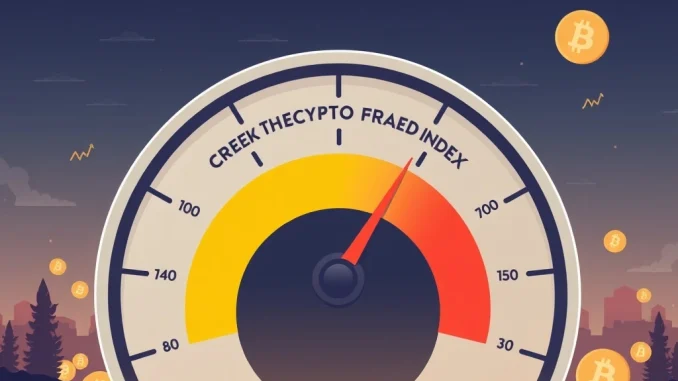
The cryptocurrency market often moves on emotion. Therefore, understanding investor psychology is crucial. The latest data reveals a significant shift: the Crypto Fear & Greed Index has climbed to 71. This marks an eight-point increase from the previous day. This rise firmly places market sentiment in the ‘greed’ territory. This article will explore what this reading means. It will also delve into the factors influencing this important indicator for comprehensive crypto market analysis.
Understanding the Crypto Fear & Greed Index
The Crypto Fear & Greed Index offers a snapshot of current market emotions. It helps investors gauge whether the market is overly fearful or excessively greedy. Alternative.me compiles this index daily. Its scale ranges from 0 to 100. A score of 0 signifies ‘extreme fear.’ Conversely, a score of 100 indicates ‘extreme greed.’ The recent jump to 71 clearly shows sustained optimism among participants. Historically, extreme fear can signal a buying opportunity. In contrast, extreme greed often precedes a market correction. Therefore, monitoring this index provides valuable insights into potential market shifts.
This index is not a crystal ball. Instead, it serves as a valuable barometer. It measures the collective emotional state of cryptocurrency investors. High greed levels suggest that investors are confident. They are willing to take on more risk. However, this also means the market might be overheated. Traders and analysts often use this tool. They combine it with other technical and fundamental analyses. This approach helps them make informed decisions. It highlights the importance of emotional intelligence in trading.
Key Factors Driving Market Sentiment and Crypto Greed
The Crypto Fear & Greed Index uses several weighted factors. Each component contributes to the overall score. Understanding these elements is essential. It clarifies how the index reflects broader market sentiment. These factors offer a multi-faceted view. They capture different aspects of investor behavior and market activity. Let’s examine each one in detail.
Volatility (25%)
Market volatility is a significant contributor. It accounts for 25% of the index’s calculation. High volatility often signals fear. Sudden, large price swings can make investors nervous. They might panic-sell their assets. Conversely, sustained low volatility can foster confidence. It suggests a more stable market environment. The index measures current volatility. It compares it with average values over the last 30 and 90 days. A sharp increase in volatility usually pushes the index towards ‘fear.’ However, a controlled, upward volatility can sometimes align with ‘greed’ if prices are rising steadily.
Trading Volume (25%)
Trading volume also holds a 25% weight. High trading volumes, especially during price increases, indicate strong interest. This often reflects active participation and confidence. Low trading volumes, particularly during downtrends, suggest a lack of conviction. The index analyzes current trading volume. It compares it to historical averages. Elevated trading volume in a rising market pushes the index towards ‘greed.’ Conversely, high volume during a price crash points to ‘fear’ and panic selling. This metric confirms the strength behind price movements.
Social Media Mentions (15%)
Social media sentiment plays a 15% role. The index scans various platforms. It looks for keywords related to cryptocurrencies. It specifically tracks mentions of Bitcoin. An increase in positive mentions suggests growing optimism. Conversely, a surge in negative discussions indicates fear. This factor leverages natural language processing. It identifies sentiment from posts and comments. High engagement and positive discussions contribute to a ‘greed’ reading. This highlights the collective mood of the crypto community. It shows how quickly sentiment can shift online.
Surveys (15%)
Investor surveys also contribute 15% to the index. These surveys directly poll crypto investors. They ask about their market outlook. These surveys provide a direct measure of public opinion. While sometimes paused, when active, they offer unique insights. They capture the immediate feelings of market participants. Positive survey results naturally push the index towards ‘greed.’ Negative results, however, indicate caution or fear. This direct feedback mechanism is crucial. It adds a human element to the data-driven factors.
Bitcoin’s Market Cap Dominance (10%)
Bitcoin dominance holds a 10% weight. This metric measures Bitcoin’s market capitalization. It compares it against the total crypto market cap. A rising Bitcoin dominance often signals fear. Investors tend to flock to Bitcoin. They see it as a safer haven during uncertain times. Conversely, a falling dominance can suggest increasing confidence. It means investors are diversifying into altcoins. Currently, the index interprets higher dominance as fear. A lower dominance indicates greed. This is because capital flows into riskier altcoins during bullish periods.
Google Search Volume (10%)
Google search trends make up the final 10%. The index analyzes search queries related to cryptocurrencies. It specifically monitors terms like “Bitcoin price manipulation” or “crypto crash.” A surge in fearful search terms indicates panic. Conversely, searches for terms like “buy crypto” or “Bitcoin rally” suggest growing interest. This factor reflects retail investor curiosity and concern. Higher search volumes for positive terms contribute to a ‘greed’ score. This provides an indirect measure of public interest and anxiety.
Implications of Continued Crypto Greed
The index at 71 signifies sustained crypto greed. This level of optimism has several implications. First, it suggests strong buying pressure. Many investors are entering the market. They expect prices to rise further. This can fuel continued upward momentum. However, high greed levels also carry risks. Historically, markets often correct after periods of extreme optimism. Therefore, a reading of 71 warrants careful consideration. It is not necessarily a signal to sell. Yet, it advises caution. Investors should avoid making impulsive decisions.
Furthermore, prolonged greed can lead to irrational exuberance. This might result in overvalued assets. New investors, driven by FOMO (Fear Of Missing Out), might enter at peak prices. Experienced traders, however, might start taking profits. They might reduce their exposure. This behavior could trigger a market downturn. Therefore, understanding the index’s implications is vital. It helps in managing risk effectively. It encourages a balanced approach to investment. This is particularly true in volatile markets like crypto.
Navigating the Market: Beyond the Fear & Greed Index
While the Crypto Fear & Greed Index is a useful tool, it should not be the sole basis for investment decisions. It offers a sentiment-driven perspective. However, a holistic approach is always better. Investors should combine this indicator with other forms of crypto market analysis. Technical analysis, fundamental analysis, and macroeconomic factors are all important. For example, looking at on-chain data can provide deeper insights. Analyzing project fundamentals helps assess long-term viability. Macroeconomic trends also influence the broader market.
Successful investing requires a diversified strategy. It involves setting clear entry and exit points. Risk management is paramount. Do not let emotions dictate your actions. Use the index as a guide, not a definitive command. A high greed score might suggest a potential reversal. Conversely, extreme fear might present a buying opportunity. Always conduct your own research. Consult financial advisors if needed. This approach helps navigate the dynamic crypto landscape responsibly.
Conclusion: Monitoring Market Sentiment
The rise of the Crypto Fear & Greed Index to 71 highlights a period of significant market optimism. This reading indicates widespread crypto greed among investors. The index’s multifaceted calculation, including volatility, trading volume, social media, surveys, Bitcoin dominance, and Google searches, provides a comprehensive view of current market sentiment. While a high greed score reflects strong confidence and potential for further gains, it also serves as a reminder for caution. Investors should always combine sentiment indicators with thorough crypto market analysis to make informed and strategic decisions in this evolving financial landscape.
Frequently Asked Questions (FAQs)
What does a Crypto Fear & Greed Index score of 71 mean?
A score of 71 on the Crypto Fear & Greed Index indicates ‘greed.’ This suggests that investors are feeling optimistic and confident about the market. They are more willing to buy assets, often expecting prices to rise further.
How is the Crypto Fear & Greed Index calculated?
The index is calculated using six weighted factors: volatility (25%), trading volume (25%), social media mentions (15%), surveys (15%), Bitcoin’s market cap dominance (10%), and Google search volume (10%). Each factor contributes to the overall sentiment score.
Is a high Crypto Fear & Greed Index score always a bad sign?
Not necessarily. A high score like 71 indicates strong market optimism. This can fuel further price increases. However, historically, extreme greed can sometimes precede market corrections. It advises caution and a review of investment strategies.
How does Bitcoin’s dominance affect the index?
Bitcoin’s market cap dominance accounts for 10% of the index. A rising dominance often suggests fear, as investors move to Bitcoin as a perceived safe haven. A falling dominance, where capital flows into altcoins, typically indicates greed and increased risk appetite.
Should I use the Crypto Fear & Greed Index for trading decisions?
The Crypto Fear & Greed Index is a valuable sentiment indicator. However, it should not be your only tool for trading decisions. Combine it with comprehensive crypto market analysis, technical analysis, and fundamental research for a well-rounded strategy.
Where can I find the Crypto Fear & Greed Index?
The Crypto Fear & Greed Index is publicly available. You can find the most up-to-date readings on websites like Alternative.me, which is the primary source for this data.