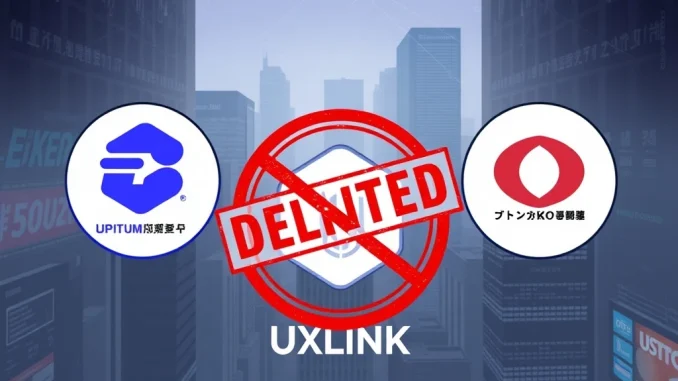
The cryptocurrency market often sees swift changes. Recently, a significant announcement rocked the UXLINK community. South Korea’s leading cryptocurrency exchanges – Upbit, Bithumb, and Coinone – confirmed a major move. They will delist UXLINK from their platforms. This action takes effect at 6:00 a.m. UTC on November 3. Investors and market watchers are now scrutinizing the implications of this decision.
Understanding the UXLINK Delisting Decision
The exchanges issued statements on their official websites. They collectively explained the reasoning behind the UXLINK delisting. Fundamentally, the UXLINK foundation provided insufficient information. This lack of data failed to resolve prior issues. These issues had initially triggered an investment warning. After a thorough review, including security-related matters, the platforms reached a firm conclusion. The UXLINK project no longer met their stringent criteria. Therefore, continued trading support became untenable.
This decision highlights the critical role exchanges play. They act as gatekeepers, protecting investors. Maintaining a secure and transparent trading environment is paramount. Exchanges regularly assess listed assets. They ensure projects adhere to specific standards. These standards cover financial stability, technological integrity, and regulatory compliance. When a project falls short, delisting is a necessary measure.
Why South Korean Crypto Exchanges Are Key Players
Upbit, Bithumb, and Coinone represent a significant portion of the South Korean crypto market. They are among the largest and most influential exchanges in the region. Their decisions carry substantial weight. A delisting from these platforms can severely impact a project’s liquidity. It also affects its market visibility. Furthermore, it can erode investor confidence. This collective action against UXLINK underscores a unified stance. It signals a commitment to upholding high listing standards.
South Korea possesses a vibrant yet highly regulated cryptocurrency landscape. Authorities impose strict guidelines on exchanges. This ensures market stability and consumer protection. Exchanges must conduct rigorous due diligence. They continually monitor listed tokens. Any project failing to maintain transparency or address critical concerns risks removal. This environment fosters a higher level of accountability for crypto projects operating within the region.
The Impact on UXLINK and Its Community
The immediate consequence for UXLINK is a significant reduction in trading access. Holders on these exchanges must take action before the November 3 deadline. They need to withdraw their UXLINK tokens. Failure to do so could result in lost access to funds. Furthermore, the delisting impacts UXLINK’s market presence. It could lead to reduced liquidity. It might also cause price volatility. Such events often trigger a negative sentiment among investors.
For the UXLINK foundation, this presents a considerable challenge. They must address the deficiencies identified by the exchanges. Regaining trust and meeting compliance standards will be crucial. The foundation needs to provide clear, actionable information. They must also demonstrate robust security protocols. This situation serves as a stark reminder for all crypto projects. Maintaining strong communication with exchanges is vital. Adherence to listing requirements is equally important. Projects must prioritize investor protection and transparency.
Security and Transparency: Non-Negotiable Standards
The exchanges explicitly mentioned security-related matters in their review. This detail is especially significant. In the volatile crypto space, security breaches are a constant threat. Exchanges prioritize user safety above all else. They must ensure that listed projects have robust security frameworks. This protects user assets and data. A lack of clarity or insufficient information on security protocols raises red flags. This can quickly lead to a project being deemed too risky for trading. Transparency about project development, finances, and governance is also essential. Investors rely on this information to make informed decisions. When a foundation fails to provide adequate details, trust erodes.
This incident reinforces the broader industry trend. Exchanges are increasingly scrutinizing projects. They demand higher levels of transparency and security. This protects their users and maintains their own reputations. Projects that cannot meet these evolving standards face severe consequences. The move by Upbit UXLINK, Bithumb UXLINK, and Coinone UXLINK reflects this heightened vigilance. It sets a precedent for other exchanges globally.
Navigating Delisting for UXLINK Holders
For current UXLINK holders on Upbit, Bithumb, and Coinone, immediate action is necessary. Users should check the specific announcements from each exchange. These announcements will detail the exact procedures and deadlines for withdrawal. Typically, exchanges provide a grace period for users to move their assets. However, it is crucial not to delay. Failing to withdraw tokens before the specified date can lead to irreversible loss. Users might consider transferring their UXLINK to a personal wallet. Alternatively, they could move it to another exchange that still supports the token. Always verify the receiving wallet address carefully before initiating any transfer.
This situation also prompts a broader lesson for all cryptocurrency investors. Always conduct thorough due diligence before investing. Understand the project’s fundamentals, team, and security measures. Monitor official announcements from exchanges where you trade. Stay informed about any warnings or potential delistings. This proactive approach helps mitigate risks in a dynamic market. The actions by these South Korean crypto exchanges serve as a powerful reminder of market volatility and the need for investor vigilance.
The Broader Implications for the Crypto Market
This coordinated delisting by major South Korean crypto exchanges sends a clear message. Exchanges are serious about maintaining market integrity. They are willing to remove projects that do not meet their standards. This trend contributes to a more mature and regulated cryptocurrency ecosystem. It pushes projects towards greater accountability. It also encourages better governance and communication. Ultimately, this benefits long-term investors. It helps to filter out projects that lack substance or transparency.
The incident also highlights the influence of regional markets. South Korea is a significant hub for crypto trading. Decisions made by its leading exchanges can reverberate globally. Other exchanges might observe this situation. They could re-evaluate their own listing criteria. This continuous refinement of standards is essential. It supports the sustainable growth of the entire blockchain industry. The goal remains a more secure, transparent, and trustworthy environment for all participants.
Conclusion: A Call for Greater Accountability
The upcoming UXLINK delisting from Upbit, Bithumb, and Coinone marks a pivotal moment. It underscores the increasing demands for transparency and security within the crypto space. These leading South Korean exchanges have clearly stated their expectations. Projects must provide sufficient information. They must also resolve critical issues. Failure to do so will result in severe consequences. This decision serves as a crucial reminder for both projects and investors. Diligence, clear communication, and robust security are not optional; they are fundamental requirements for sustained success in the evolving world of digital assets.
Frequently Asked Questions (FAQs)
Q1: Why are Upbit, Bithumb, and Coinone delisting UXLINK?
A1: The exchanges announced they are delisting UXLINK because the UXLINK foundation provided insufficient information to resolve issues that prompted an initial investment warning. A comprehensive review, including security matters, found the project no longer met their criteria for continued trading support.
Q2: When will the UXLINK delisting officially take place?
A2: The delisting of UXLINK from Upbit, Bithumb, and Coinone will occur at 6:00 a.m. UTC on November 3.
Q3: What should UXLINK holders on these exchanges do before the delisting date?
A3: UXLINK holders on Upbit, Bithumb, and Coinone should withdraw their UXLINK tokens from these exchanges before the November 3 deadline. It is advisable to transfer them to a personal wallet or another exchange that continues to support UXLINK.
Q4: How does this UXLINK delisting impact the project’s future?
A4: The delisting from major South Korean exchanges will likely impact UXLINK’s liquidity, market visibility, and investor confidence. The project foundation will need to address the identified deficiencies to regain trust and potentially seek relisting on other platforms.
Q5: What does this delisting signify for the broader cryptocurrency market?
A5: This coordinated delisting by prominent South Korean crypto exchanges signals a heightened commitment to market integrity, transparency, and security standards. It serves as a precedent, encouraging greater accountability from all cryptocurrency projects and fostering a more mature ecosystem.