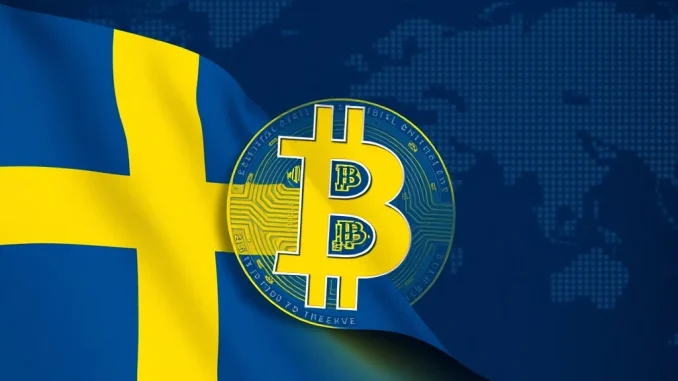
A significant development in European digital asset policy is unfolding. Two prominent members of the Sweden Democrats party have officially proposed a groundbreaking initiative. Lawmakers Dennis Dioukarev and David Perez advocate for the Swedish government to explore creating a strategic Bitcoin reserve Sweden. This move aims to diversify national assets and combat inflationary pressures effectively. It signals a proactive approach to evolving global financial landscapes.
The Rationale Behind a National BTC Reserve
The proposal from the Sweden Democrats Bitcoin initiative stems from a clear economic and strategic vision. Dioukarev and Perez argue for Bitcoin’s inclusion as a national asset. They believe it can serve as a robust hedge against inflation. Furthermore, it offers a vital diversification tool for the nation’s financial holdings. Their argument highlights a growing international trend. Many major countries, including the United States, are reportedly building or considering digital asset reserves. Therefore, Sweden must participate in this evolving global competition.
The lawmakers describe this competition as a “digital arms race.” They emphasize the need for Sweden to recognize Bitcoin’s inherent potential. Joining nations that have embraced digital assets is now crucial. This strategic foresight could position Sweden favorably in the future global economy. Ultimately, the proposal seeks to secure Sweden’s financial sovereignty in an increasingly digital world.
Understanding the Digital Arms Race Crypto
The concept of a “digital arms race” underscores a pivotal shift in global economics. Nations are increasingly recognizing digital assets as strategic tools. They offer advantages in economic resilience and geopolitical influence. This race involves several key aspects:
- Sovereign Wealth Diversification: Countries seek to move beyond traditional fiat currencies and gold. They explore assets like Bitcoin to protect against currency devaluation.
- Technological Supremacy: Governments aim to foster innovation in blockchain and cryptocurrency. This ensures their economies remain competitive.
- Geopolitical Leverage: Holding significant digital asset reserves could provide new forms of economic power. It offers alternatives to traditional financial systems.
This evolving landscape compels countries like Sweden to consider their position. The proposal from the Sweden Democrats suggests an urgent need for action. Sweden’s participation could shape future international financial relations. It positions the country as a forward-thinking player.
Sweden’s Crypto Strategy: Economic Benefits and Risks
Implementing a national BTC reserve presents a dual perspective of potential benefits and inherent risks. Proponents highlight Bitcoin’s decentralized nature. It offers protection from central bank policies and government overreach. Moreover, its fixed supply creates scarcity, a valuable attribute during inflationary periods. For example, Bitcoin has historically outperformed many traditional assets. This makes it an attractive option for long-term wealth preservation. A Bitcoin reserve Sweden could therefore enhance national economic stability.
However, significant considerations exist. Bitcoin’s price volatility remains a concern. Its value can fluctuate dramatically over short periods. Regulatory uncertainties also persist globally. Governments are still developing comprehensive frameworks for digital assets. Furthermore, security risks associated with holding large amounts of cryptocurrency are real. Nations must implement robust cybersecurity measures. They must protect these reserves from sophisticated attacks. Thorough risk assessments are essential before any implementation.
Navigating the Path to a National Bitcoin Reserve
The proposal marks an important first step. However, the path to establishing a national BTC reserve involves complex deliberations. The Swedish government must conduct extensive research. They will evaluate economic models and risk management strategies. Discussions will likely include financial experts, policymakers, and industry stakeholders. They will assess the technical infrastructure required. This includes secure storage solutions and operational protocols. Public education will also be crucial. Citizens must understand the rationale and implications of such a significant national policy shift.
Moreover, international cooperation and diplomatic considerations play a role. Sweden would join a select group of nations exploring similar strategies. Its move could influence other European Union members. This could potentially accelerate broader adoption of digital assets by sovereign entities. Consequently, the proposal’s impact extends beyond Sweden’s borders.
Global Precedents and Future Implications for Sweden
El Salvador became the first nation to adopt Bitcoin as legal tender. This bold move provided a real-world case study for national Bitcoin integration. While Sweden’s proposal is different—focusing on a reserve rather than legal tender—it draws parallels in strategic intent. Other countries, too, are quietly exploring their options. Sovereign wealth funds and national treasuries are increasingly looking at Bitcoin. They view it as a hedge against global economic instability. This growing interest fuels the “digital arms race crypto” narrative. It highlights a fundamental shift in how nations perceive monetary assets.
If Sweden proceeds, it could set a precedent for other developed nations. A European country with a strong economy embracing Bitcoin as a reserve asset would be significant. It could validate Bitcoin’s role in global finance. This move might encourage more institutional adoption and further stabilize the market. Ultimately, it could solidify Sweden’s crypto strategy as a leader in digital economic innovation.
The Sweden Democrats’ Vision for Economic Resilience
The Sweden Democrats Bitcoin proposal aligns with a broader vision of national economic resilience. The party emphasizes fiscal responsibility and long-term stability. Their advocacy for a Bitcoin reserve reflects a belief in diversifying away from traditional financial instruments. They seek to future-proof Sweden’s economy against global shocks. This approach demonstrates a pragmatic understanding of evolving financial technologies. It suggests a willingness to embrace innovative solutions for national prosperity. The lawmakers’ initiative is not merely about cryptocurrency. It is about securing Sweden’s economic future in a rapidly changing world. They see Bitcoin as a tool to achieve greater financial independence and strength.
Conclusion: A New Chapter for Sweden’s Financial Future
The proposal by Dennis Dioukarev and David Perez represents a pivotal moment. It challenges traditional economic thinking within Sweden. Establishing a Bitcoin reserve Sweden could signify a bold new chapter for the nation’s financial strategy. It acknowledges the growing importance of digital assets in the global economy. As the “digital arms race” intensifies, nations must adapt. Sweden’s potential move could inspire further discussions across Europe and beyond. This initiative underscores Bitcoin’s increasing recognition as a legitimate, strategic asset. It positions Sweden at the forefront of digital economic innovation, ready for the challenges of the future.
Frequently Asked Questions (FAQs)
Q1: What is a national Bitcoin reserve?
A national Bitcoin reserve is a strategic holding of Bitcoin by a country’s government or central bank. Its purpose is to diversify national assets, hedge against inflation, and potentially strengthen the nation’s economic position in the digital age. It acts similarly to gold reserves but with a digital asset.
Q2: Why are Swedish lawmakers proposing a Bitcoin reserve?
Lawmakers Dennis Dioukarev and David Perez of the Sweden Democrats propose it for two main reasons: to counter inflation and to diversify national assets. They argue that Sweden must participate in the global “digital arms race,” where major countries are already building digital asset reserves.
Q3: What does the term “digital arms race” mean in this context?
The “digital arms race” refers to the global competition among nations to accumulate and leverage digital assets like Bitcoin. Countries seek to gain economic advantage, ensure financial stability, and maintain geopolitical influence in an increasingly digital world. It involves strategic asset accumulation and technological development.
Q4: What are the potential benefits of Sweden holding Bitcoin?
Potential benefits include protection against inflation due to Bitcoin’s fixed supply, diversification from traditional fiat currencies, and positioning Sweden as a leader in digital finance. It could also provide a new form of national economic resilience against global market fluctuations.
Q5: What are the main challenges or risks for a national BTC reserve?
Key challenges include Bitcoin’s price volatility, which could impact reserve value. Regulatory uncertainties and the need for robust cybersecurity measures to protect these valuable assets are also significant concerns. Implementing such a reserve requires careful planning and risk management.
Q6: How does this proposal compare to El Salvador’s Bitcoin adoption?
El Salvador adopted Bitcoin as legal tender, making it a medium for daily transactions. Sweden’s proposal focuses on creating a strategic national reserve, treating Bitcoin as an asset for the national treasury. While both involve Bitcoin, their applications and implications for the economy differ significantly.