In the volatile world of finance, political stability often underpins market confidence. Cryptocurrency markets, while distinct, are not immune to broader economic sentiments. A potential government shutdown in the United States, therefore, introduces significant uncertainty. This situation could ripple through global financial systems. It may influence investor behavior across all asset classes, including digital currencies.
Crucial Senate Vote Scheduled for Tuesday
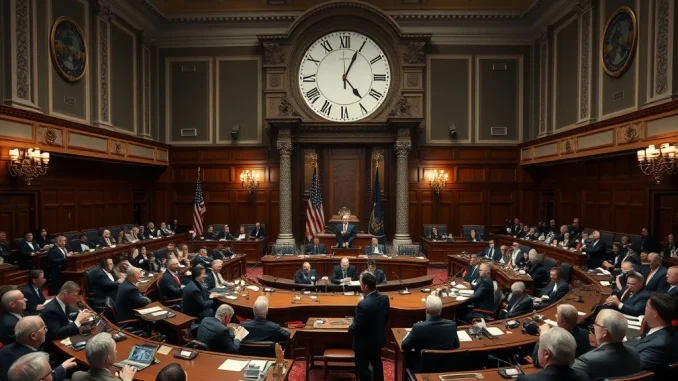
U.S. Senate Republican Leader John Thune recently confirmed a pivotal development. The Senate will conduct another Senate vote on Tuesday. This vote aims to address a critical bill. Its purpose is to avert a looming government shutdown. This announcement signals a renewed push by lawmakers. They seek to finalize federal funding. The deadline for current appropriations is fast approaching. Lawmakers are working to avoid a disruption of government services. The outcome of this vote holds considerable weight. It will impact millions of Americans and the broader economy.
The legislative process for funding the government is complex. It requires agreement between both chambers of Congress. Moreover, presidential assent is necessary. Failure to pass necessary spending bills leads to a shutdown. Many non-essential government operations cease. This can cause widespread disruption. Therefore, Tuesday’s vote is a significant moment.
Understanding a Government Shutdown: What It Means
A government shutdown occurs when Congress fails to pass appropriations bills. These bills fund federal government operations. The new fiscal year typically begins on October 1st. If funding is not secured by this date, agencies must stop non-essential work. This means many federal employees are furloughed. Essential services, however, continue. These include national security and public safety. For instance, air traffic control and some medical services remain operational. However, national parks may close. Passport processing could also slow down. The economic fallout can be substantial. It affects both individuals and businesses.
The causes of a shutdown are often rooted in political disagreements. These disagreements frequently center on spending levels or policy riders. Each party often has specific demands. These demands can create a deadlock. Reaching a consensus becomes difficult. The current debate likely involves similar contentious issues. These issues must be resolved before the deadline. A bipartisan effort is crucial for a resolution. Without it, the country faces a fiscal impasse.
The Impending US Budget Bill Debate
The core of the current legislative battle revolves around the US budget bill. This comprehensive package outlines federal spending. It covers various departments and programs. Disagreements between political parties often prevent its timely passage. These disputes can involve:
- Specific funding allocations for agencies.
- Policy provisions attached to spending measures.
- Overall spending limits and the national debt.
Lawmakers are working to bridge these divides. They aim to find common ground. Their goal is to prevent a shutdown. The negotiations are often intense. They involve high-stakes political maneuvering. The details of the bill are still under discussion. However, the urgency is clear. A solution must be found quickly.
House Republicans and Senate Democrats often have differing priorities. These differences make compromise challenging. The Senate’s upcoming vote reflects ongoing efforts. They are trying to find a path forward. The specific content of the bill will determine its success. It must satisfy a broad range of concerns. Only then can it pass both chambers. Ultimately, the President must sign it into law. This complex process highlights the challenges of modern governance.
Historical Precedents of Congressional Action
The United States has experienced several government shutdowns. These past events offer valuable lessons. They highlight the potential impacts. For example, the 2018-2019 shutdown was the longest in U.S. history. It lasted 35 days. This event furloughed 800,000 federal workers. It also disrupted numerous government services. These disruptions caused significant economic strain. They affected many families and businesses. Previous shutdowns also showed varied durations and impacts. They often depended on the nature of the disagreements. They also depended on the political climate. Each instance of Congressional action or inaction carries consequences.
Learning from history, lawmakers understand the stakes. A shutdown can damage public trust. It can also harm the economy. This knowledge drives efforts to find a resolution. However, political will and compromise remain essential. Without them, history could repeat itself. The current situation demands decisive leadership. It requires effective negotiation. These efforts aim to avoid previous pitfalls. They seek to ensure government continuity.
Potential Economic Repercussions and Fiscal Crisis
A government shutdown carries significant economic repercussions. These extend far beyond furloughed federal employees. Businesses relying on government contracts can face payment delays. This impacts their cash flow. Small businesses, in particular, may struggle. Delays in government permits and approvals can halt projects. This slows economic activity. Consumer confidence can also decline. This leads to reduced spending. A prolonged shutdown could even shave points off GDP growth. This creates a broader fiscal crisis. The uncertainty alone can deter investment. It can also lead to market volatility. Financial markets often react negatively to such instability. They prefer predictability and stable governance.
The ripple effect can touch various sectors. Research grants may be delayed. Public health initiatives could be impacted. Even international relations can suffer. A strong, stable U.S. government is crucial for global markets. Any disruption sends signals of instability. This affects investor sentiment worldwide. For cryptocurrency investors, this means keeping an eye on traditional markets. Significant economic downturns or uncertainties can influence broader market trends. These trends sometimes impact digital asset valuations. Therefore, the resolution of this budget debate is critical for overall economic health.
FAQs on the Government Shutdown and Senate Vote
Q1: What exactly is a government shutdown?
A government shutdown occurs when Congress fails to pass legislation. This legislation funds federal government operations. Non-essential government agencies and services then cease. Many federal employees are furloughed without pay.
Q2: Why is the Senate voting again on Tuesday?
The Senate is voting again to pass a bill. This bill aims to fund the government. It will prevent a shutdown. Republican Leader John Thune confirmed this upcoming Senate vote. Lawmakers are working against a deadline.
Q3: What are the main points of contention in the US budget bill?
The main points of contention typically involve disagreements. These include specific spending levels for agencies. They also cover policy riders attached to funding. Overall budget limits are often debated too. Finding common ground is crucial for the US budget bill to pass.
Q4: How could a government shutdown affect the economy?
A shutdown can have several negative economic impacts. It can lead to furloughs for federal workers. It can delay payments to contractors. It may also disrupt government services. This can reduce consumer confidence. It can also slow economic activity. A prolonged shutdown could impact GDP growth. It could create a broader fiscal crisis.
Q5: What is the deadline for avoiding a government shutdown?
The deadline for current federal funding typically aligns with the start of the new fiscal year. This is October 1st. If new appropriations bills are not enacted by then, a shutdown begins. This makes Tuesday’s Senate vote extremely timely.
Q6: Does a government shutdown directly impact cryptocurrency markets?
A government shutdown does not directly impact cryptocurrency markets. However, it can create economic uncertainty. This affects broader financial market sentiment. Such instability can indirectly influence investor behavior. This may then affect digital asset valuations. Therefore, maintaining a stable government through Congressional action is beneficial for overall market confidence.