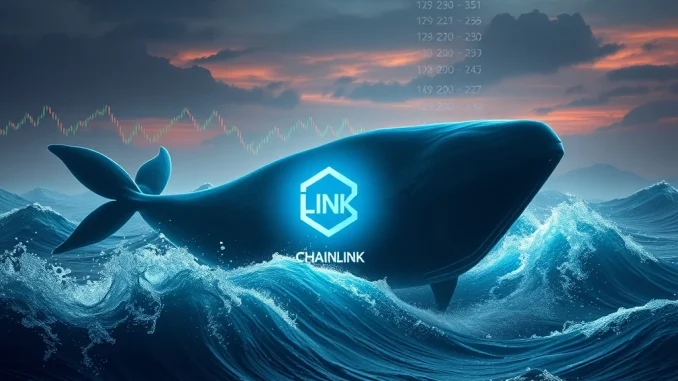
A significant event recently unfolded within the cryptocurrency market, drawing considerable attention. An anonymous crypto whale executed a massive sale of Chainlink LINK tokens. This transaction involved a substantial amount, subsequently sparking widespread discussion and analysis among market participants. Investors closely monitor such large-scale movements, as they often signal potential shifts in market dynamics.
Understanding the Chainlink LINK Whale Transaction
Onchain-lens, a reputable analytics platform, recently reported a notable transaction. An anonymous whale sold precisely 233,094 Chainlink LINK tokens. This considerable sum equated to approximately $4.85 million at the time of the sale. The average execution price for this significant divestment was $20.80 per LINK token. Subsequently, this same whale deposited an additional 10,000 LINK tokens to the OKX exchange. Such a move often precedes further selling activity, thus keeping market observers on alert.
Furthermore, a “crypto whale” refers to an individual or entity holding vast amounts of cryptocurrency. These entities possess enough digital assets to potentially influence market prices through large trades. Their actions are therefore closely watched by analysts and investors alike. A sale of this magnitude can introduce significant selling pressure into the market. It also often triggers speculation regarding the whale’s motivations and future intentions. Understanding these transactions is crucial for grasping broader market trends.
The Mechanics of a Major Sale
Executing a sale of nearly 233,000 LINK tokens requires careful planning. Such a large order could easily impact market liquidity. Whales often use various strategies to minimize price slippage. These might include executing trades over time or utilizing over-the-counter (OTC) desks. In this specific instance, the reported average price of $20.80 suggests a relatively efficient execution. The subsequent deposit of more Chainlink LINK to OKX, a major cryptocurrency exchange, further indicates ongoing activity from this whale. This action suggests potential preparation for additional sales or other strategic moves.
Moreover, on-chain data provides unparalleled transparency into these movements. Blockchain explorers allow anyone to track large transactions. This transparency helps analysts identify patterns and anticipate market shifts. The ability to monitor whale activity is a cornerstone of modern cryptocurrency trading strategies. It offers insights that traditional markets often lack, providing a clearer picture of significant capital flows.
Implications for LINK Price and Market Sentiment
A sale of this size inevitably creates ripples across the market, particularly affecting the LINK price. Large sell-offs can lead to increased supply on exchanges. This increased supply, in turn, can exert downward pressure on the token’s value. Market participants often react to such news with caution. Some may interpret it as a bearish signal, leading to further selling. Others might view it as a temporary dip, presenting a buying opportunity.
Furthermore, the deposit of additional 10,000 LINK to OKX amplifies these concerns. Moving tokens to an exchange typically precedes a sale. This action suggests the whale might not be finished divesting their holdings. Consequently, the market anticipates further selling pressure. This expectation can negatively impact investor sentiment. The overall mood around Chainlink LINK could become more conservative in the short term. Therefore, monitoring subsequent on-chain movements remains vital for understanding the full impact.
Exchange Deposits and Their Significance
Depositing large amounts of cryptocurrency to an exchange is a critical indicator. It often signals an intent to sell or trade. Unlike holding tokens in a private wallet, exchange deposits make assets readily available for market transactions. For analysts tracking on-chain data, such a move is a strong signal. It suggests a potential increase in market supply. This can, in turn, influence the asset’s spot price. The 10,000 LINK deposit to OKX is therefore not just a minor detail; it’s a strategic action. It highlights the whale’s active management of their significant portfolio.
Moreover, exchanges like OKX provide the liquidity necessary for large trades. Whales utilize these platforms to execute their strategies efficiently. The choice of exchange can also be indicative. Some whales prefer specific platforms due to liquidity, fees, or privacy considerations. Understanding these nuances helps paint a more complete picture of the market’s underlying dynamics. It allows investors to better gauge potential market volatility and price movements for Chainlink LINK.
The Role of On-Chain Data in Crypto Analysis
The entire narrative of this whale activity relies heavily on on-chain data. This data provides an immutable, transparent record of all transactions on a blockchain. Platforms like Onchain-lens specialize in analyzing these public records. They identify large transfers, wallet movements, and exchange deposits. This analysis offers invaluable insights into the behavior of major market players. Without on-chain data, tracking anonymous whales would be impossible. This transparency is a defining feature of the cryptocurrency market.
Furthermore, on-chain analytics helps distinguish genuine market activity from mere speculation. It provides empirical evidence of capital flows. For instance, tracking a whale’s wallet allows observers to see their historical transactions. This includes previous buys, sells, and transfers. Such historical context is crucial for predicting future actions. It adds a layer of expertise and authority to market analysis. Consequently, investors increasingly rely on these tools for informed decision-making in cryptocurrency trading.
Decoding Whale Behavior
Deciphering the motivations behind a crypto whale‘s actions is complex. Whales may sell for various reasons. These include profit-taking after a significant price rally. They might also be rebalancing their portfolio. Diversification across different assets is a common strategy. Sometimes, a whale might sell to cover operational costs or to fund other investments. Less frequently, such large sales could indicate a loss of confidence in the asset. However, this particular whale’s actions require further observation. The subsequent deposit suggests a calculated, ongoing strategy rather than a sudden panic sell. Understanding these potential drivers is key to interpreting market signals accurately. It allows for a more nuanced perspective beyond immediate price reactions.
Broader Context of Cryptocurrency Trading
This Chainlink whale event occurs within a dynamic global cryptocurrency trading landscape. The broader market sentiment, macroeconomic factors, and regulatory news all play a role. A single large transaction, while impactful, is part of a much larger ecosystem. Chainlink itself is a prominent decentralized oracle network. It connects smart contracts with real-world data. Its fundamental utility remains strong, regardless of short-term price fluctuations. Therefore, long-term investors often look beyond immediate whale movements.
Moreover, market liquidity plays a crucial role in absorbing such large sales. A highly liquid market can handle large orders with minimal price impact. The overall health and depth of the Chainlink market are therefore important considerations. The fact that $4.85 million worth of LINK was sold at a relatively stable average price suggests reasonable market depth. This resilience is a positive sign for the asset’s underlying strength. However, continuous large sales could test this liquidity over time.
Investor Reactions and Strategies
Retail investors often react strongly to whale movements. Some might panic sell, fearing further price drops. Others might see an opportunity to ‘buy the dip.’ It is crucial for investors to conduct their own research. Relying solely on whale activity for investment decisions can be risky. Fundamental analysis of Chainlink LINK‘s technology and adoption is equally important. Technical analysis, examining price charts and trading volumes, also provides valuable context. A balanced approach combines on-chain data with broader market analysis. This helps investors develop robust cryptocurrency trading strategies.
Furthermore, understanding risk management is paramount. Investors should never invest more than they can afford to lose. Diversifying portfolios and setting stop-loss orders can mitigate potential losses. While whale movements offer insights, they are just one piece of the puzzle. Long-term conviction in an asset’s utility and growth potential should guide investment decisions. This measured approach helps navigate the inherent volatility of the crypto market. It promotes more sustainable and less emotionally driven investment choices.
What This Means for Chainlink’s Future
The recent whale activity, while significant, does not inherently alter Chainlink LINK‘s long-term trajectory. Chainlink continues to be a vital component of the decentralized finance (DeFi) ecosystem. Its oracle services are essential for numerous blockchain applications. The network’s development and partnerships continue to expand. These fundamental strengths underpin Chainlink’s value proposition. Short-term price movements, influenced by whale sales, are part of any volatile market. However, they should be distinguished from the project’s core utility and innovation.
Ultimately, the crypto market is characterized by both innovation and speculation. Whale transactions highlight the influence of large capital. However, they also underscore the transparency offered by on-chain data. Investors should leverage these insights. They must also maintain a focus on fundamental value. This balanced perspective helps navigate the complexities of the digital asset space. It allows for a more informed and strategic approach to investing in projects like Chainlink.
The anonymous whale’s sale of 233,094 Chainlink (LINK) tokens and subsequent deposit to OKX has certainly captured the market’s attention. This event underscores the impact of major holders on LINK price and broader market sentiment. While the immediate effect might be increased selling pressure and speculation, it also provides valuable data for astute investors. As the cryptocurrency market matures, the role of on-chain analytics in deciphering these powerful movements will only grow. Therefore, staying informed and understanding the various facets of cryptocurrency trading remains essential for all participants.
Frequently Asked Questions (FAQs)
Q1: What is a crypto whale?
A crypto whale is an individual or entity that holds a very large amount of a particular cryptocurrency. Their substantial holdings allow them to significantly influence market prices through large buy or sell orders.
Q2: How does a whale sale affect the LINK price?
A large whale sale, like the recent Chainlink LINK transaction, typically increases the supply of tokens on exchanges. This can lead to increased selling pressure, potentially causing the LINK price to drop due to an imbalance between supply and demand.
Q3: Why did the whale deposit more LINK to OKX after the sale?
Depositing cryptocurrency to an exchange often indicates an intention to sell, trade, or otherwise transact with the assets. The subsequent deposit of 10,000 LINK to OKX suggests the whale might be preparing for further market actions, possibly additional sales.
Q4: What is the importance of on-chain data in tracking these events?
On-chain data provides transparent, publicly verifiable records of all transactions on a blockchain. It allows analysts to track large movements, identify whale wallets, and monitor deposits to exchanges, offering crucial insights into market dynamics and potential future price action.
Q5: Should retail investors panic when a crypto whale sells?
Not necessarily. While whale sales can impact short-term prices, retail investors should avoid making impulsive decisions. It’s crucial to conduct thorough research, consider the project’s fundamentals, and maintain a diversified portfolio. Whale actions are just one data point among many.
Q6: What is Chainlink’s role in the crypto ecosystem?
Chainlink is a decentralized oracle network. It securely connects smart contracts on various blockchains with real-world data, events, and traditional payment systems. This makes it a critical infrastructure layer for many decentralized applications (dApps) and the broader DeFi sector.