PayPal PYUSD is making significant strides in the digital asset space. This leading stablecoin is expanding its reach across multiple prominent blockchains. This move marks a pivotal moment for interoperability and broader adoption within the crypto ecosystem. Users and developers alike are watching closely. The expansion promises enhanced utility and access for this key digital asset.
PayPal PYUSD: A Strategic Blockchain Expansion
PayPal, a global leader in online payments, launched its own stablecoin, PYUSD, in August 2023. This groundbreaking initiative aimed to bridge traditional finance with the burgeoning world of digital currencies. Initially, PYUSD debuted on the Ethereum blockchain. The token is pegged to the U.S. dollar, maintaining a 1:1 ratio. Paxos Trust Company issues PYUSD. Paxos also holds reserves backing the stablecoin. This ensures stability and trust for users. PayPal’s entry into the stablecoin market was a major endorsement for the crypto industry. It signaled a growing acceptance of digital assets by mainstream financial institutions. The recent expansion represents a crucial next step. It enhances the utility and accessibility of PayPal PYUSD across a wider digital landscape.
Bridging the Gap: LayerZero and PYUSD Stablecoin Interoperability
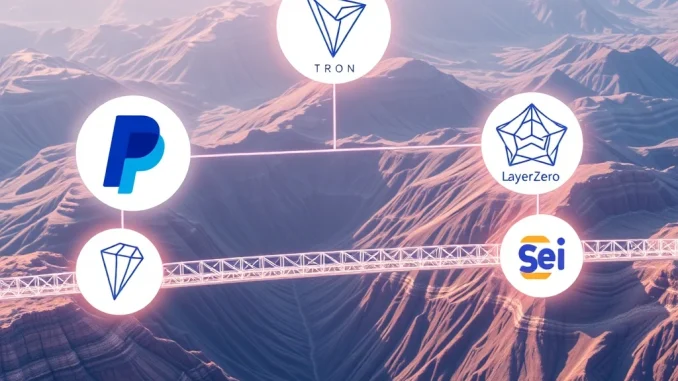
The latest expansion of PYUSD involves several new blockchain networks. These include Tron, Avalanche, and Sei. This multi-chain deployment is facilitated through LayerZero. LayerZero is a leading omnichain interoperability protocol. It allows various blockchains to communicate seamlessly. LayerZero acts as a crucial connector. It enables tokens to move efficiently between different ecosystems. A bridged version of the token, PYUSD0, will be instrumental in this process. This mechanism ensures secure and reliable transfers. Interoperability is a key challenge in the decentralized finance (DeFi) space. Different blockchains often operate in isolation. LayerZero addresses this by creating a unified environment. This integration significantly enhances the utility of the PYUSD stablecoin. Users can now access PYUSD across a wider range of dApps and platforms. This fosters greater liquidity and transactional flexibility.
Understanding LayerZero’s Role
LayerZero’s technology is vital for this expansion. It provides a robust infrastructure for cross-chain messaging. This protocol enables secure communication without relying on a central intermediary. Its architecture reduces risks associated with traditional bridging solutions. Consequently, users can confidently transfer PYUSD0. This system supports a truly omnichain future. LayerZero’s design focuses on security and and efficiency. This makes it an ideal partner for PayPal’s stablecoin strategy. The protocol’s proven track record reinforces trust. It enables seamless asset movement. This broadens the potential for PYUSD adoption across diverse blockchain communities. Ultimately, LayerZero simplifies complex cross-chain interactions.
Exploring New Frontiers: Tron, Avalanche, and Sei Integration
The choice of Tron, Avalanche, and Sei for PYUSD’s expansion is strategic. Each blockchain offers unique advantages and a distinct user base. This integration will introduce PYUSD to millions of new potential users. This widens the stablecoin’s reach significantly.
- Tron: Tron is known for its high transaction throughput and low fees. It boasts a large and active user community. Tron is particularly popular in Asia. It supports a vibrant ecosystem of dApps and stablecoin usage. Integrating PYUSD on Tron enhances its utility for everyday transactions.
- Avalanche: Avalanche is a high-performance blockchain platform. It offers rapid transaction finality and scalability. Its subnet architecture allows for custom blockchain networks. Avalanche supports a growing DeFi ecosystem. PYUSD on Avalanche will cater to users seeking speed and advanced DeFi applications.
- Sei: Sei is a relatively newer blockchain. It is optimized for trading and DeFi applications. Sei focuses on providing a fast and secure environment for digital asset exchanges. Its specialized architecture targets high-frequency trading. This makes it an attractive platform for stablecoin liquidity. PYUSD’s presence on Sei will likely boost its role in advanced trading strategies.
Furthermore, PYUSD has already expanded to the Aptos network. This earlier move demonstrated PayPal’s commitment to multi-chain growth. The continuous expansion highlights a clear strategy. PayPal aims to position PYUSD as a universally accessible stablecoin. This robust blockchain expansion is setting new industry standards.
The Future of PYUSD: Enhanced Accessibility and Use Cases
This latest blockchain expansion significantly boosts PYUSD’s accessibility. Users will find it easier to integrate PYUSD into their daily crypto activities. This includes trading, lending, and payments. The stablecoin’s presence on multiple chains increases its utility. It opens doors for various new use cases. For example, developers can now build dApps on Tron, Avalanche, or Sei. These applications can natively incorporate PYUSD. This broadens the scope for innovative financial products. It also simplifies cross-border transactions. The expansion makes PYUSD a more versatile digital asset. It enhances its potential as a global medium of exchange. This strategic growth reinforces PayPal’s vision. They aim to make digital currencies more integrated into mainstream commerce. Therefore, the future looks promising for PayPal PYUSD.
Implications for Stablecoin Adoption
The increased availability of PYUSD across multiple chains will likely drive broader stablecoin adoption. As a regulated stablecoin backed by a major financial institution, PYUSD offers a high degree of trust. Its presence on diverse, high-volume blockchains makes it more attractive to both retail and institutional users. This widespread deployment reduces friction for users. They no longer need to bridge assets through complex processes. Instead, they can access PYUSD directly on their preferred network. Consequently, this simplifies user experience. It also encourages greater participation in the decentralized economy. PayPal’s influence could further legitimize stablecoins. This expansion solidifies PYUSD’s position as a key player in the evolving financial landscape.
Why This Matters: Implications for the Crypto Ecosystem
PayPal’s continued investment in PYUSD and its multi-chain strategy carries significant implications. Firstly, it validates the importance of stablecoins in the digital economy. It showcases their role as a bridge between fiat and crypto. Secondly, it underscores the growing demand for interoperability solutions like LayerZero. The future of blockchain likely involves multiple interconnected networks. Thirdly, this move by a traditional finance giant sets a precedent. It encourages other mainstream entities to explore digital assets. The increased liquidity and reach of PYUSD will benefit the entire crypto ecosystem. It provides a reliable, regulated stablecoin option. This fosters greater confidence and stability. Ultimately, this expansion represents a significant step forward. It moves towards a more integrated and accessible global financial system. The PYUSD stablecoin is paving the way for wider adoption.
The expansion of PayPal PYUSD to Tron, Avalanche, and Sei through LayerZero is a landmark event. It significantly broadens the stablecoin’s reach and utility. This strategic move highlights PayPal’s commitment to innovation. It also reinforces the growing importance of interoperability in the blockchain space. As PYUSD becomes available on more networks, its potential for mainstream adoption grows. This development will undoubtedly shape the future landscape of digital payments and decentralized finance. It solidifies PayPal’s position at the forefront of this evolving financial frontier.
Frequently Asked Questions (FAQs)
Q1: What is PYUSD?
A1: PYUSD is PayPal’s stablecoin, pegged 1:1 to the U.S. dollar. Paxos Trust Company issues and backs it with reserves.
Q2: Which new blockchains is PYUSD expanding to?
A2: PYUSD is expanding to Tron, Avalanche, and Sei. It has also previously expanded to Aptos.
Q3: How is PYUSD expanding to these new blockchains?
A3: The expansion is facilitated through LayerZero, an omnichain interoperability protocol. A bridged version, PYUSD0, is used for transfers.
Q4: What is the significance of this expansion for PayPal PYUSD?
A4: This expansion significantly increases PYUSD’s accessibility and utility. It allows users to access the stablecoin across more dApps and platforms, fostering greater liquidity and use cases.
Q5: What is LayerZero’s role in this expansion?
A5: LayerZero provides the technology for secure and seamless cross-chain communication. It enables PYUSD0 to move efficiently between different blockchain networks.
Q6: How does this expansion benefit the broader crypto ecosystem?
A6: It validates stablecoins, highlights interoperability, and encourages mainstream adoption. It also provides a reliable, regulated stablecoin option for a wider user base.