The **Compound DAO** recently faced a significant challenge. A proposal to reclaim 300,000 **COMP tokens**, valued at approximately $13 million, ultimately failed. This event underscores ongoing debates within **DAO governance** regarding power distribution and community representation. Ultimately, it highlights the formidable influence of large investors in decentralized ecosystems.
Understanding the Compound DAO Token Recall Attempt
Last year, the **Compound DAO** initiated a grant. It distributed 300,000 **COMP tokens** to a specific group of delegates. The primary goal was to incentivize greater participation in the protocol’s governance processes. However, this grant quickly became a point of contention within the community. Many members voiced concerns that it disproportionately benefited a select few. They argued this structure undermined the decentralized ethos of the DAO.
Consequently, community members submitted a proposal. This initiative aimed to recall the previously granted tokens. Proponents believed this action was crucial for the long-term health and equity of the **Compound DAO**. They suggested the grant created an unfair advantage. Furthermore, they felt it concentrated power in fewer hands, which contradicted the principles of true decentralization.
The $13 Million COMP Tokens Grant Under Scrutiny
The initial grant involved a substantial sum. These **COMP tokens** represented a significant portion of the DAO’s treasury. Their value, roughly $13 million at the time of the recall proposal, highlighted the financial impact of the decision. This financial weight naturally drew considerable attention. Stakeholders carefully watched the unfolding debate. They weighed the benefits of incentivized participation against the risks of concentrated influence.
Therefore, the **token recall** proposal aimed to rebalance the distribution. It sought to return these tokens to the DAO’s control. This move would theoretically redistribute voting power more broadly. Ultimately, it aimed to foster a more inclusive and equitable **DAO governance** model. The community’s debate intensified as the voting period progressed, revealing deep divisions.
Decisive Opposition to the Token Recall Proposal
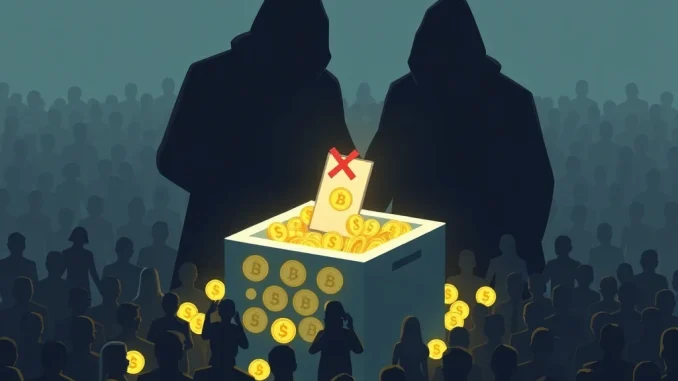
However, the recall effort encountered strong resistance. Approximately 70% of voters opposed the proposal. This significant margin clearly demonstrated a powerful faction’s influence. Reports, moreover, suggest that large-scale investors played a pivotal role in this opposition. Their collective voting power proved decisive. Consequently, they effectively blocked the community-led initiative.
This outcome has sparked considerable discussion. It highlights the inherent complexities of decentralized decision-making. While DAOs aim for broad participation, the reality often involves concentrated voting power. Large token holders can sway outcomes. Consequently, this raises questions about genuine decentralization. It also prompts deeper examination of the mechanisms designed to encourage balanced **DAO governance**.
The Influence of Large Investors in DeFi Protocols
The rejection of the **token recall** proposal offers a stark reminder. Large investors wield considerable power within many **DeFi protocols**. Their substantial holdings translate directly into significant voting weight. This dynamic can create a tension. It exists between the ideal of a decentralized, community-driven system and the practicalities of token-weighted governance. Furthermore, it often leads to outcomes that may not align with the broader community’s sentiment.
Such events are not unique to **Compound DAO**. Many **DeFi protocols** grapple with similar challenges. They seek to balance efficient decision-making with equitable representation. Therefore, understanding these power dynamics is crucial. It helps in assessing the true level of decentralization across the entire DeFi ecosystem. This incident serves as a case study for future governance discussions.
Implications for Compound DAO and Future Governance
The failure of the **token recall** proposal carries several implications. For the **Compound DAO**, it reaffirms the current distribution of power. The delegates who received the initial grant retain their **COMP tokens**. This outcome suggests that future attempts to alter existing token distributions may face similar hurdles. It also signals a preference among dominant voters for stability over radical change.
Moreover, this event provides valuable lessons for the broader **DAO governance** landscape. It underscores the importance of well-designed governance mechanisms. These systems must anticipate and address potential concentrations of power. Ultimately, the incident encourages further innovation in voting structures. It pushes for solutions that ensure more balanced and truly decentralized decision-making across all **DeFi protocols**.
In conclusion, the rejected **token recall** proposal marks a significant moment for **Compound DAO**. It clearly demonstrates the formidable influence of large investors within **DAO governance**. This event will undoubtedly fuel further debate. It will shape future discussions on decentralization, equity, and the evolution of **DeFi protocols**.
Frequently Asked Questions (FAQs)
Q1: What was the Compound DAO token recall proposal?
A1: The proposal aimed to reclaim 300,000 COMP tokens, valued at approximately $13 million, that were granted last year to specific delegates. Community members argued this grant benefited only a few insiders and harmed the DAO.
Q2: Why did the token recall proposal fail?
A2: The proposal failed due to significant opposition, with about 70% of voters rejecting it. This opposition was reportedly led by large-scale investors who held substantial voting power.
Q3: What are COMP tokens?
A3: COMP tokens are the native governance tokens of the Compound protocol. Holders of COMP tokens can propose, vote on, and implement changes to the Compound protocol, thereby participating in its decentralized governance.
Q4: What is DAO governance?
A4: DAO governance refers to the system by which a Decentralized Autonomous Organization (DAO) makes decisions. Token holders typically vote on proposals, and the outcome is executed automatically by smart contracts, aiming for a decentralized decision-making process.
Q5: How does this event impact the decentralization of Compound DAO?
A5: The failure of the recall highlights challenges in achieving true decentralization when voting power is concentrated among large token holders. It suggests that while the system is permissionless, significant influence can still reside with a few entities.
Q6: What does this mean for other DeFi protocols?
A6: This incident serves as a case study for other DeFi protocols. It underscores the importance of designing governance mechanisms that effectively balance participation, efficiency, and equitable distribution of power to avoid similar concentrations of influence.