The global financial landscape often hinges on geopolitical developments. Therefore, news concerning the relationship between major economic powers, such as the United States and China, invariably captures significant market attention. For cryptocurrency enthusiasts and investors, understanding these macro-level shifts is essential. Global economic stability, or the lack thereof, frequently influences investor sentiment across all asset classes, including digital currencies. Recent statements from U.S. Treasury Secretary Scott Bessent highlight potential positive movements in US-China trade talks, offering a glimpse into future market dynamics.
Crucial US-China Trade Talks Signal Potential Tariff Truce Extension
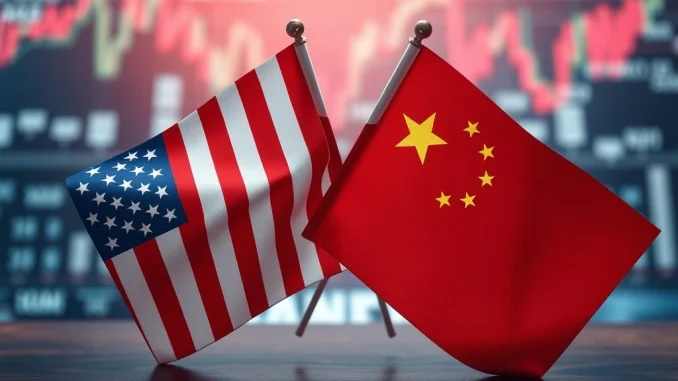
U.S. Treasury Secretary Scott Bessent recently announced that upcoming discussions between the United States and China could lead to a significant development. Specifically, these talks might result in a 90-day extension of the existing tariff deadline. This extension is likely to occur before the critical November 10 deadline. Secretary Bessent’s comments underscore a proactive approach to managing complex trade relations. Such an extension would provide a crucial window for further negotiations. It aims to resolve ongoing trade disputes and reduce economic friction between the two nations.
Historically, trade tensions between the U.S. and China have introduced considerable volatility into global markets. Tariffs, trade barriers, and retaliatory measures have impacted supply chains, corporate earnings, and consumer prices worldwide. Consequently, any indication of de-escalation or a pause in these tensions is usually met with relief by investors. The prospect of a tariff truce offers a period of reduced uncertainty. This can foster a more predictable environment for international trade and investment. Markets often react favorably to such news, anticipating improved economic conditions.
Understanding the Impact of Global Market Stability
The concept of global market stability is paramount for investors. It refers to a state where financial markets experience low volatility and predictable trends. When major economies like the U.S. and China engage in constructive dialogue, it often signals a move towards greater stability. This positive sentiment can permeate various sectors. Traditional stock markets, for example, tend to perform better when geopolitical risks are mitigated. Commodity prices also respond to shifts in global trade policy. A stable environment encourages investment and reduces speculative fear.
Moreover, investor confidence plays a pivotal role in market performance. When trade relations are uncertain, investors often become cautious. They might withdraw from riskier assets or delay investment decisions. Conversely, signs of an impending tariff truce can boost confidence. This encourages capital flow into various markets. The ripple effect extends to emerging markets and, importantly, to the cryptocurrency space. While cryptocurrencies operate somewhat independently, they are not immune to broader economic sentiment. A more stable global economy can lead to increased liquidity and a greater appetite for growth-oriented assets, including digital currencies.
Economic Outlook: Navigating Trade Policy Uncertainties
The economic outlook for the coming months will be heavily influenced by these trade discussions. A 90-day extension of the tariff deadline could provide much-needed breathing room for businesses. Companies reliant on international supply chains could adjust their strategies without immediate tariff pressures. This helps in planning and resource allocation. It also mitigates potential inflationary pressures that tariffs can impose on imported goods. A stable trade environment can support economic growth and reduce the likelihood of a global slowdown.
However, the extension is merely a temporary pause. It does not signify a complete resolution of underlying trade disagreements. Both nations still face complex issues related to intellectual property, market access, and state subsidies. Therefore, while the immediate future may look brighter, the long-term trade policy trajectory remains a key focus. Analysts will closely monitor the substance of the upcoming talks. The goal is to identify concrete steps towards a more permanent trade agreement. This ongoing negotiation process introduces its own set of uncertainties that markets will continue to digest.
The Significance of the Trade Deadline
The November 10 trade deadline is a critical date on the international economic calendar. If no extension is agreed upon, existing tariffs could escalate, or new ones could be imposed. Such actions would likely trigger negative reactions across global financial markets. Increased tariffs could harm corporate profitability, particularly for multinational companies. They might also lead to higher consumer prices and reduced purchasing power. Therefore, Secretary Bessent’s optimistic assessment of an extension is a welcome development. It temporarily defers these potential negative outcomes.
The market’s reaction to the outcome of these talks will be swift. A successful extension will likely reinforce positive sentiment. This could lead to upward movement in equity markets and potentially stabilize commodity prices. Conversely, a failure to extend the deadline could trigger a flight to safety. Investors might move capital into traditional safe-haven assets. This highlights the high stakes involved in these negotiations. The global economy stands at a pivotal juncture, with trade policy decisions shaping its immediate future.
Broader Implications for Digital Assets
While the initial news focuses on traditional markets, the implications for digital assets are noteworthy. Cryptocurrencies, often considered risk-on assets, tend to perform better in periods of economic certainty and growth. A successful tariff truce and continued global market stability could foster an environment conducive to crypto adoption and investment. Institutional investors, who increasingly view digital assets as a legitimate asset class, might allocate more capital during periods of reduced macroeconomic risk. This could drive demand and price appreciation for major cryptocurrencies like Bitcoin and Ethereum.
Conversely, renewed trade tensions or a failure to extend the deadline could create market jitters. In such scenarios, some investors might seek refuge in Bitcoin, viewing it as a non-sovereign, decentralized store of value. However, others might reduce exposure to all risk assets, including crypto. The precise impact depends on the severity of any trade escalation and the prevailing market narrative. Regardless, the ongoing US-China trade talks remain a significant external factor influencing the broader financial climate, which in turn, affects the cryptocurrency ecosystem.
In conclusion, U.S. Treasury Secretary Scott Bessent’s announcement regarding a potential 90-day extension of the US-China tariff deadline offers a positive signal for global markets. These crucial US-China trade talks aim to achieve a temporary tariff truce, fostering greater global market stability. While not directly about cryptocurrencies, the outcome of these discussions will profoundly influence the broader economic outlook. Investors across all asset classes, including digital assets, will closely monitor developments leading up to the November 10 trade deadline. A constructive resolution could pave the way for a more stable and growth-oriented global financial environment.
Frequently Asked Questions (FAQs)
1. What is the significance of the U.S. Treasury Secretary’s statement?
U.S. Treasury Secretary Scott Bessent’s statement indicates a potential 90-day extension of the US-China tariff deadline. This suggests a willingness from both nations to continue negotiations and avoid further trade escalation, which is crucial for global economic stability.
2. What is a ‘tariff truce’ and why is it important?
A ‘tariff truce’ refers to a temporary halt or reduction in the imposition of tariffs between trading partners. It is important because it reduces economic uncertainty, allows businesses to plan more effectively, and can prevent price increases for consumers, contributing to overall global market stability.
3. How do US-China trade talks affect global markets?
US-China trade talks significantly impact global markets by influencing investor sentiment, supply chain stability, and corporate profitability. Positive developments often lead to market rallies, while negative news can trigger sell-offs, affecting stocks, commodities, and even cryptocurrencies.
4. What is the ‘trade deadline’ mentioned, and why is November 10 important?
The ‘trade deadline’ refers to a specific date by which certain trade actions or tariff increases are set to take effect if no agreement is reached. November 10 is important as it is the current deadline for potential tariff escalations, making the prospect of an extension before this date crucial for market stability.
5. What are the potential implications for cryptocurrencies?
While not directly impacted, cryptocurrencies are influenced by broader market sentiment. A positive outcome in the US-China trade talks leading to a tariff truce and increased global market stability could foster a risk-on environment, potentially benefiting digital assets. Conversely, renewed tensions might lead to a flight from risk, or conversely, a flight to Bitcoin as a non-sovereign asset, depending on the market narrative.