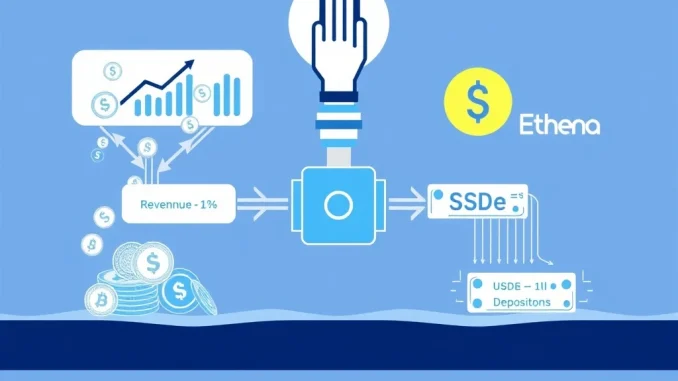
The Ethena protocol stands at a significant juncture. It has successfully met the necessary conditions for activating its highly anticipated Ethena fee switch. This development marks a pivotal moment for the synthetic dollar protocol and its community. Indeed, this activation promises to reshape value distribution within the ecosystem.
Ethena Fee Switch Conditions Fully Met
The Ethena Foundation officially announced that its Risk Committee’s stringent conditions for the Ethena fee switch are now satisfied. This achievement underscores the protocol’s rapid growth and robust operational performance. Furthermore, it signals a new phase for Ethena’s economic model. The activation awaits final implementation details and additional governance approval. Thus, the community anticipates further updates soon.
Ethena previously outlined three specific criteria for this crucial feature’s activation. These benchmarks ensured the protocol’s stability and maturity before initiating revenue distribution. Each condition played a vital role in demonstrating Ethena’s readiness. Therefore, meeting them represents a major milestone.
- USDe Circulating Supply: The protocol’s synthetic dollar, USDe stablecoin, surpassed a circulating supply of over $6 billion. This demonstrates significant market adoption and confidence.
- Cumulative Protocol Revenue: Ethena generated cumulative protocol revenue exceeding $250 million. This highlights the protocol’s strong earning potential and operational efficiency.
- Exchange Listings: USDe stablecoin secured listings on at least four of the top five derivatives exchanges. This expands its accessibility and liquidity across major trading platforms.
Meeting these demanding criteria showcases Ethena’s remarkable trajectory. It also reinforces its position within the broader cryptocurrency landscape. Consequently, the stage is set for a new era of value accrual.
A Major Step for ENA Holders and USDe Depositors
The activation of the Ethena fee switch holds immense significance for participants in the Ethena ecosystem. Specifically, it directly impacts ENA holders and those who deposit USDe stablecoin. Once live, the fee switch will redirect a portion of the protocol’s revenue. This revenue will then flow directly to these key stakeholders. Therefore, it creates a direct incentive for participation and long-term commitment.
Historically, protocol revenue often supported operational costs or treasury growth. However, this switch changes the dynamic. It allows for a direct return to those who support the ecosystem. For ENA holders, this means a share of the fees generated by the protocol. This could enhance the token’s utility and attractiveness. Similarly, USDe stablecoin depositors will also benefit from these distributions. This further solidifies the appeal of holding and utilizing USDe. Thus, the fee switch aligns the interests of the protocol with its community members.
This mechanism strengthens the economic ties between the protocol’s success and its users. It fosters a more engaged and incentivized community. Ultimately, this could lead to greater stability and growth for Ethena. It represents a significant step towards a more decentralized and equitable distribution of value.
Navigating the Path to Crypto Governance Approval
While the technical conditions are met, the activation of the Ethena fee switch is not immediate. It requires a final layer of approval through Ethena’s crypto governance process. The Ethena Foundation’s Risk Committee must first finalize implementation details. Subsequently, the broader Ethena community, through its governance framework, will vote on the activation. This democratic process ensures transparency and community consensus.
The governance approval phase is a critical safeguard. It allows token holders to review the proposed implementation. They can also voice any concerns or suggestions. This emphasizes the decentralized nature of Ethena. Furthermore, it empowers ENA holders to have a direct say in the protocol’s future. The process reflects a commitment to community-led development. Consequently, it builds trust and legitimacy within the ecosystem. The timeline for this final approval will depend on the committee’s work and the community’s engagement. However, the foundational requirements are already in place.
Ethena’s Growing Influence in Decentralized Finance
Ethena’s journey to activating its fee switch underscores its expanding influence within the realm of decentralized finance. The protocol offers a unique synthetic dollar solution, USDe, aiming to provide a censorship-resistant, scalable, and stable crypto-native asset. This innovation addresses a significant need in the DeFi space. Furthermore, it presents an alternative to traditional fiat-backed stablecoins. By meeting these rigorous conditions, Ethena solidifies its position as a leading innovator.
The success of USDe and the protocol’s revenue generation capabilities highlight a growing demand for such products. It also demonstrates the viability of Ethena’s underlying economic model. This activation will likely attract more users and capital to the ecosystem. Consequently, it could further accelerate the adoption of synthetic assets in decentralized finance. Ethena’s approach to stability and yield generation is closely watched. Therefore, this fee switch milestone is a testament to its impact.
What This Means for the Ethena Ecosystem
The impending activation of the Ethena fee switch represents a transformative moment for the entire Ethena ecosystem. It moves the protocol beyond merely achieving technical milestones. Instead, it transitions into a phase of direct value distribution. This change will likely foster greater participation and investment. It also strengthens the economic ties between the protocol’s success and its community. Furthermore, the transparency of the crypto governance process reinforces Ethena’s commitment to decentralization.
This development could set a precedent for other DeFi protocols. It showcases a sustainable model for rewarding community members. As Ethena continues to mature, its ability to generate and distribute value will be key. This milestone confirms the protocol’s robust design and execution. Ultimately, it paves the way for a more resilient and rewarding ecosystem for all participants. The future looks bright for ENA holders and the broader Ethena community.
The Ethena Foundation will release further details regarding the implementation. The community awaits the final governance vote with keen interest. This moment will undoubtedly be a landmark event for the synthetic dollar protocol. It solidifies Ethena’s commitment to its users and its vision for decentralized finance.
Frequently Asked Questions (FAQs)
Q1: What is the Ethena fee switch?
A1: The Ethena fee switch is a mechanism within the Ethena protocol that, once activated, will distribute a portion of the protocol’s generated revenue directly to ENA token holders and USDe depositors.
Q2: What conditions did Ethena meet for the fee switch activation?
A2: Ethena met three key conditions: a USDe circulating supply over $6 billion, cumulative protocol revenue exceeding $250 million, and USDe listings on at least four of the top five derivatives exchanges.
Q3: Who benefits from the Ethena fee switch?
A3: Both ENA token holders and USDe stablecoin depositors will benefit from the revenue distributed through the fee switch, creating direct incentives for their participation.
Q4: What is USDe?
A4: USDe is Ethena’s synthetic dollar, designed as a censorship-resistant, scalable, and stable crypto-native asset within the decentralized finance ecosystem.
Q5: What are the next steps for the fee switch activation?
A5: The Ethena Foundation’s Risk Committee must finalize implementation details. Subsequently, the activation requires additional approval through Ethena’s crypto governance process, involving a community vote.
Q6: How does this impact Ethena’s role in decentralized finance?
A6: Meeting these conditions and activating the fee switch reinforces Ethena’s position as a leading innovator in decentralized finance, demonstrating a sustainable model for value generation and distribution to its community.