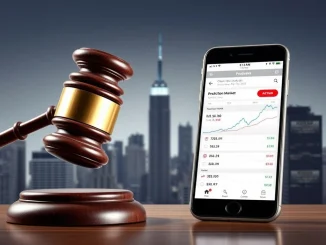
A significant legal challenge has emerged for the burgeoning prediction market industry. Specifically, the **Massachusetts Attorney General** has initiated a lawsuit against Kalshi, a prominent prediction market platform. This action alleges that Kalshi offered **sports prediction betting** services without proper state licensing. Consequently, this development marks a crucial moment for the regulatory landscape surrounding these innovative financial platforms. The lawsuit also seeks substantial monetary damages and other legal remedies, highlighting the seriousness of the allegations.
Understanding the Kalshi Lawsuit and Prediction Markets
Prediction markets allow users to bet on the outcome of future events. These events can range from political elections to economic indicators, and increasingly, sports results. Participants buy and sell ‘contracts’ tied to these outcomes. The price of a contract reflects the market’s collective probability of that event occurring. For instance, if a contract for ‘Team A wins’ trades at $0.70, the market believes there’s a 70% chance of that outcome. Kalshi positions itself as a regulated exchange for event contracts, operating under the Commodity Futures Trading Commission (CFTC).
However, the **Massachusetts Attorney General** views some of Kalshi’s offerings differently. The core of the **Kalshi lawsuit** centers on the classification of these event contracts. Are they legitimate financial derivatives, or do they constitute illegal gambling, particularly when related to sports? This distinction carries significant legal and operational weight. State laws often regulate sports betting very strictly, requiring specific licenses and adhering to consumer protection standards.
Allegations of Unlicensed Sports Prediction Betting
The lawsuit explicitly accuses Kalshi of operating as an **unlicensed betting** provider within Massachusetts. This means the platform allegedly allowed residents to place wagers on sports-related outcomes without obtaining the necessary permits from state authorities. Many states, including Massachusetts, have specific frameworks for legal sports betting. These frameworks often involve rigorous application processes, background checks, and ongoing compliance requirements. Furthermore, operating without such a license can lead to severe penalties, including fines and cessation of operations.
The **Massachusetts Attorney General** argues that Kalshi’s sports-related contracts fall squarely under the definition of sports betting. Therefore, they contend that Kalshi must comply with state gambling laws. This interpretation directly challenges Kalshi’s claim of being a CFTC-regulated exchange for financial products. The legal battle will likely hinge on how these event contracts are ultimately defined in the eyes of Massachusetts law. The outcome could set a precedent for other states and prediction markets.
The Broader Regulatory Landscape for Prediction Markets
The regulatory environment for **prediction market** platforms is complex and evolving. Generally, federal agencies like the CFTC regulate commodity futures and derivatives. However, state laws often govern gambling and sports betting. This creates a jurisdictional gray area for platforms that offer contracts on various events. Many prediction markets have faced scrutiny over the years regarding whether their offerings are legitimate financial instruments or disguised forms of gambling.
This particular **Kalshi lawsuit** highlights the tension between federal and state regulatory bodies. While Kalshi might assert its federal regulation, state attorneys general can still pursue action under state-specific laws. Consequently, this dual layer of oversight presents significant compliance challenges for operators. Companies must carefully navigate these differing legal interpretations. Furthermore, the lack of a clear, unified national framework contributes to this regulatory uncertainty. This makes it difficult for platforms to operate consistently across state lines.
Implications of the Massachusetts Attorney General’s Action
The **Massachusetts Attorney General’s** legal action against Kalshi carries significant implications. Firstly, for Kalshi itself, a negative ruling could result in substantial financial penalties. It could also force them to cease offering certain types of contracts in Massachusetts or even nationally. Secondly, for the broader **prediction market** industry, this lawsuit could establish a precedent. Other states might follow suit, initiating similar legal challenges against platforms operating within their jurisdictions. This could lead to a more fragmented regulatory landscape.
Moreover, this case could influence how regulators classify event contracts in the future. If courts consistently rule that sports-related prediction contracts are gambling, it could fundamentally alter the business model for many platforms. This might force them to seek specific sports betting licenses, which are often more restrictive. Therefore, all stakeholders in the prediction market space are closely watching the developments of this crucial case. It represents a critical test of the industry’s legal standing.
Seeking Monetary Damages and Other Remedies in the Kalshi Lawsuit
The **Kalshi lawsuit** filed by the **Massachusetts Attorney General** seeks more than just a halt to alleged unlicensed activities. It also demands significant monetary damages. These damages could potentially cover profits gained from the alleged illegal operations and penalties for non-compliance. Additionally, the lawsuit seeks ‘other remedies.’ These might include injunctions, which would legally compel Kalshi to stop offering specific services in the state. They could also involve disgorgement of funds, forcing Kalshi to return money earned from the contested activities. This comprehensive approach underscores the severity of the state’s allegations.
For Kalshi, defending against these claims will be a costly and time-consuming endeavor. The legal battle could span months or even years. The potential financial repercussions are substantial, impacting the company’s valuation and operational capabilities. Furthermore, the negative publicity associated with an **unlicensed betting** lawsuit could damage its reputation. This could make it harder to attract new users and investors. The outcome will undoubtedly shape Kalshi’s future operations and strategic decisions.
The **Massachusetts Attorney General’s** lawsuit against prediction market Kalshi marks a pivotal moment. It highlights the ongoing struggle to define and regulate innovative financial products. The outcome of this **Kalshi lawsuit** will have far-reaching consequences for Kalshi, the **prediction market** industry, and the future of **sports prediction betting** in the United States. As the legal proceedings unfold, the industry will be watching closely for clarity on the regulatory path forward.
Frequently Asked Questions (FAQs)
Q1: What is Kalshi, and why is it being sued by the Massachusetts Attorney General?
Kalshi is a prediction market platform where users can trade contracts based on the outcome of future events. The Massachusetts Attorney General is suing Kalshi for allegedly offering sports prediction betting services to state residents without obtaining the required state gambling licenses, classifying these services as illegal **unlicensed betting**.
Q2: What are prediction markets, and how do they work?
Prediction markets are platforms where participants buy and sell contracts that pay out based on whether a specific future event occurs. For example, a contract might pay $1 if ‘Team X wins the game.’ The price of the contract reflects the market’s collective probability of that event happening. They operate similarly to financial exchanges but focus on event outcomes.
Q3: What is the main legal argument in the Kalshi lawsuit?
The central legal argument revolves around whether Kalshi’s sports-related event contracts constitute legitimate financial derivatives, regulated federally by the CFTC, or illegal sports betting under Massachusetts state law. The **Massachusetts Attorney General** argues they are a form of **sports prediction betting** and require state licensing.
Q4: What are the potential consequences for Kalshi if the lawsuit is successful?
If the **Kalshi lawsuit** is successful, the company could face significant monetary damages, including fines and the disgorgement of profits. It might also be forced to cease offering certain types of contracts in Massachusetts or even nationwide through injunctions. This could severely impact its operations and reputation.
Q5: How does this lawsuit affect the broader prediction market industry?
This lawsuit could set a significant precedent for the entire **prediction market** industry. A ruling against Kalshi might encourage other states to pursue similar actions, leading to a more fragmented and stringent regulatory environment. It could also force platforms to re-evaluate their offerings and compliance strategies to avoid being classified as **unlicensed betting** operators.