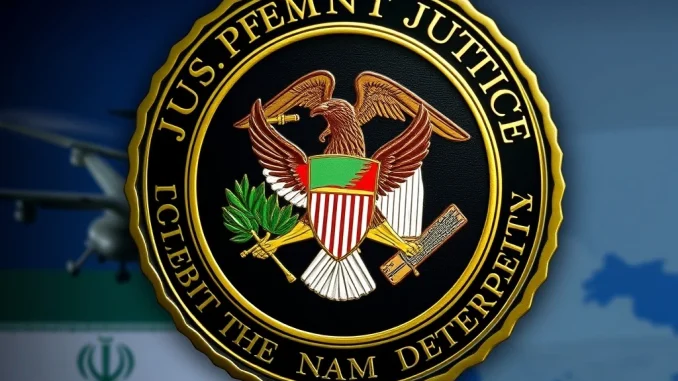
The cryptocurrency world watches closely as the US DOJ makes a significant move. They aim to seize a substantial amount of USDT. This action targets the founder of an Iranian drone firm. It underscores ongoing efforts to combat illicit financial activities. This development highlights the increasing scrutiny on digital assets globally.
US DOJ’s Bold Civil Forfeiture Action
The U.S. Department of Justice recently filed a civil forfeiture complaint. This complaint seeks to seize approximately 580,000 USDT. These funds belong to the founder of SDRA. SDRA is a company accused of supplying drone technology. This technology reportedly went to the Iranian military. Decrypt first reported these developments. Such actions highlight the increasing scrutiny on digital assets. They also show how governments track illicit funds. Furthermore, this case sets a precedent for future enforcement.
Unpacking the Iranian Drone Firm Connection
The case centers on SDRA, an Iranian drone firm. This entity reportedly played a crucial role. It provided drone technology to Iran’s military. These actions violate international sanctions. The founder’s alleged involvement led directly to the US DOJ action. The use of USDT in such transactions raises important questions. It highlights the challenges of tracing digital assets. However, it also demonstrates the growing capabilities of law enforcement agencies. Indeed, they are adapting to new financial technologies.
The Broader Implications of Crypto Seizure
This specific crypto seizure effort sends a clear message. Governments are serious about enforcing sanctions. They are also serious about preventing illicit financing. The US DOJ employs various tools to achieve these goals. Digital assets, while offering some privacy, are not beyond reach. Law enforcement agencies increasingly develop expertise. They can trace transactions on public blockchains. This case serves as a warning. Individuals and entities involved in illicit activities face severe consequences. Consequently, compliance measures become even more critical.
USDT and Global Sanctions Enforcement
The choice of USDT in this case is particularly notable. Tether’s stablecoin is widely used globally. Its liquidity makes it attractive for various transactions. However, this also makes it a target for illicit actors. The US DOJ action reinforces a strong commitment. They aim to disrupt networks that use cryptocurrencies. These networks often support sanctioned regimes. This move underscores the global nature of financial crime. Moreover, it demonstrates the broad reach of U.S. legal authority. Therefore, entities handling USDT must exercise diligence.
Navigating Regulatory Scrutiny in Cryptocurrency
This incident adds to the growing regulatory landscape. The civil forfeiture complaint emphasizes this trend. It shows that digital assets are not immune. They are subject to the same laws as traditional finance. The crypto seizure will likely lead to more discussions. These discussions will focus on compliance and oversight. The industry must adapt to these evolving demands. This ensures greater transparency and accountability. Ultimately, this case highlights the evolving challenges and responses in digital asset regulation.
Frequently Asked Questions (FAQs)
Q1: What is the US DOJ seeking to seize?
A1: The US Department of Justice is seeking to seize approximately 580,000 USDT. This action is part of a civil forfeiture complaint.
Q2: Who is the target of this civil forfeiture complaint?
A2: The complaint targets the founder of SDRA. SDRA is an Iranian company that allegedly provided drone technology to the Iranian military.
Q3: What is SDRA’s alleged role?
A3: SDRA is accused of supplying drone technology to the Iranian military. This activity violates international sanctions.
Q4: Why is USDT being targeted in this seizure?
A4: USDT, a widely used stablecoin, was allegedly used in transactions related to SDRA’s activities. This highlights law enforcement’s ability to trace digital assets used in illicit finance.
Q5: What are the broader implications of this crypto seizure?
A5: This crypto seizure underscores the US DOJ’s commitment to enforcing sanctions and combating illicit financing. It signals increased scrutiny on digital assets used by sanctioned entities and individuals.
Q6: How does this case relate to global sanctions?
A6: This case directly relates to global sanctions enforcement. It demonstrates efforts to disrupt financial networks that support sanctioned regimes, even when using cryptocurrencies.