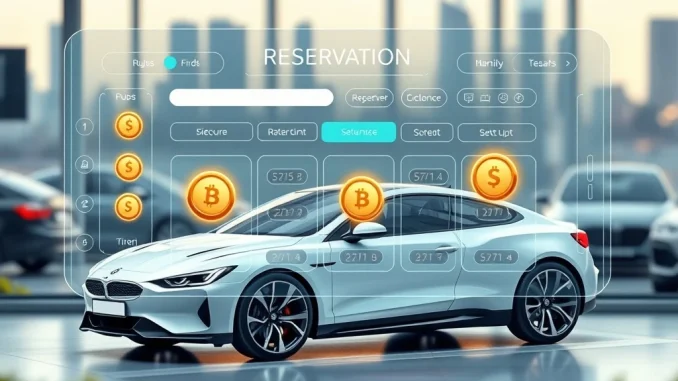
Imagine a world where buying a new car means more than just waiting. Instead, you could trade your reservation, ensuring fairness and transparency. This revolutionary concept, known as tokenizing car reservations, is poised to transform the automotive industry. Early analysis suggests this innovation could unlock a multi-trillion dollar market, addressing long-standing consumer frustrations with current vehicle ordering systems. The shift promises enhanced efficiency and greater consumer control.
Unlocking the Potential of Tokenizing Car Reservations
The current landscape of vehicle reservations often involves opaque waiting lists and unexpected premiums. Consumers frequently experience dissatisfaction due to these inefficiencies. However, a groundbreaking approach leveraging blockchain technology offers a powerful solution. By tokenizing reservation rights, deposits can be held in secure, on-chain escrow accounts. This innovative method allows consumers to freely trade their positions in the queue, creating a dynamic and transparent marketplace. Consequently, the entire reservation process becomes significantly more efficient and user-friendly. This change empowers buyers with unprecedented flexibility and choice.
Addressing Consumer Frustration with Blockchain Technology
Current car reservation systems are notoriously inefficient. Many consumers face long, unclear waiting lists. They also encounter unexpected premiums on new car orders. These issues contribute to significant consumer dissatisfaction. Blockchain technology offers a clear path to resolve these problems. For instance, an immutable ledger records every transaction and reservation. This ensures complete transparency. Furthermore, smart contracts can automate the entire process, from deposit to delivery. This eliminates manual errors and reduces delays. Ultimately, blockchain technology builds trust and streamlines operations for both consumers and dealerships.
Moreover, the ability to trade reservation tokens creates a secondary market. This provides liquidity for consumers who might need to cancel or change their orders. It also allows others to acquire desired slots more quickly. This flexibility is a significant improvement over rigid, non-transferable reservation systems. The system also mitigates price gouging often seen in high-demand markets. Thus, it fosters a more equitable environment for car buyers.
The Multi-Trillion Dollar Market Opportunity
Cointelegraph reports that this innovative application of blockchain could tap into a multi-trillion dollar market. The sheer volume of global vehicle sales, combined with the inefficiencies present in the current system, highlights this immense potential. Consider the global automotive market, valued at trillions annually. Even a small fraction of this market, improved by tokenization, represents a massive economic shift. The enhanced efficiency and transparency would attract widespread adoption. This would, in turn, drive significant economic growth within the sector. Consequently, the financial implications are profound.
Furthermore, this market extends beyond just new car orders. It could encompass pre-owned vehicles, luxury car rentals, and even specialized vehicle access. Each segment presents unique opportunities for tokenization. The improved liquidity and verifiable ownership provided by blockchain make these applications highly attractive. Therefore, the total addressable market is truly vast. This transformation could redefine how we perceive and interact with vehicle acquisition.
Automakers Embrace Automotive Blockchain Innovations
Major automakers are already exploring blockchain’s potential. Companies like BMW and Mercedes-Benz are actively experimenting with various applications. Their initiatives extend beyond reservations. They include supply chain management, automated payments, and decentralized identity solutions. These explorations signal a broader industry recognition of blockchain’s value. Such early adoption suggests a strong foundation for integrating automotive blockchain solutions into core business processes. Automakers seek to gain efficiencies and improve customer experiences.
For example, in supply chain management, blockchain enhances traceability. It ensures the authenticity of parts and components. Automated payments reduce processing times and costs. Decentralized identity solutions improve security and personalization for drivers. These advancements demonstrate a clear commitment to digital transformation. Consequently, extending these efforts to car reservations is a logical next step. It aligns with their strategic goals for innovation and customer satisfaction. The industry is clearly moving towards a more interconnected and transparent future.
Real-World Asset Tokenization: A Broader Vision
The Boston Consulting Group (BCG) projects a much larger trend. They estimate the broader market for real-world asset tokenization could reach an astonishing $16 trillion by 2030. This projection underscores the immense transformative power of blockchain. It extends far beyond the automotive sector. Experts believe this application could revolutionize numerous industries. The principles applied to car reservations are highly transferable. This includes various forms of tangible and intangible assets.
For instance, hotel rooms could be tokenized, allowing guests to trade bookings dynamically. Concert tickets could become non-fungible tokens (NFTs), preventing scalping and verifying authenticity. Even medical equipment bookings could benefit from enhanced transparency and efficiency. Each of these applications addresses similar issues: inefficiency, lack of transparency, and limited liquidity. Therefore, tokenization offers a universal solution for these challenges. This broader vision highlights the profound impact of blockchain on our economy. It promises to unlock new forms of value and ownership across sectors.
The Mechanics of Real-World Asset Tokenization
Tokenization converts rights to an asset into a digital token on a blockchain. This token represents ownership or access to the underlying asset. Smart contracts govern its transfer and usage. This process provides several key benefits. First, it fractionalizes ownership, making high-value assets more accessible. Second, it increases liquidity, as tokens can be traded on digital exchanges 24/7. Third, it enhances transparency and auditability. Every transaction is recorded on an immutable ledger. This reduces fraud and increases trust. Finally, it streamlines administrative processes. It eliminates intermediaries and reduces costs. Thus, real-world asset tokenization offers a powerful paradigm shift for various industries.
Paving the Way Forward: Challenges and Opportunities
While the potential is enormous, challenges remain. Regulatory clarity is crucial for widespread adoption. Interoperability between different blockchain networks also needs development. Educating consumers and businesses about this new technology is essential. Despite these hurdles, the benefits are compelling. The shift towards tokenized assets represents a significant opportunity. It promises greater efficiency, transparency, and liquidity across various markets. The groundwork laid by early adopters like major automakers will pave the way. This will encourage broader industry acceptance and innovation. Ultimately, the future of reservations and asset ownership looks increasingly digital and decentralized.
The move to tokenized systems is not just about technology. It is about redefining economic interactions. It empowers individuals and streamlines complex processes. As blockchain technology matures, its applications will only expand. We are on the cusp of a new era. This era will feature more efficient, transparent, and equitable markets. The vision of a multi-trillion dollar market fueled by tokenization is rapidly becoming a reality. This will undoubtedly reshape how we interact with assets in the digital age.
FAQs: Tokenizing Car Reservations and Real-World Assets
Q1: What does “tokenizing car reservations” mean?
A1: Tokenizing car reservations means converting the right to a car reservation into a digital token on a blockchain. This token can then be securely held, transferred, or traded, making the reservation process more transparent and efficient.
Q2: How does blockchain technology improve car reservation systems?
A2: Blockchain technology improves systems by providing transparency, immutability, and security. It allows deposits to be held in on-chain escrow, enables the free trading of reservation positions, and reduces fraud and inefficiencies through smart contracts.
Q3: Which major automakers are exploring blockchain?
A3: Major automakers like BMW and Mercedes-Benz are already experimenting with blockchain. Their efforts focus on areas such as supply chain management, automated payments, and decentralized identity solutions, indicating a readiness for broader adoption.
Q4: What is “real-world asset tokenization”?
A4: Real-world asset tokenization is the process of converting rights to tangible or intangible assets (like real estate, art, or even car reservations) into digital tokens on a blockchain. This enables fractional ownership, increased liquidity, and enhanced transparency.
Q5: What is the projected market size for real-world asset tokenization?
A5: The Boston Consulting Group (BCG) projects that the broader market for real-world asset tokenization could reach an estimated $16 trillion by 2030, highlighting its massive potential across various industries.
Q6: Beyond car reservations, what other industries could benefit from tokenization?
A6: Experts believe tokenization could extend to many other industries. These include hotel rooms, concert tickets, medical equipment bookings, real estate, and fine art, all benefiting from improved efficiency, transparency, and liquidity.