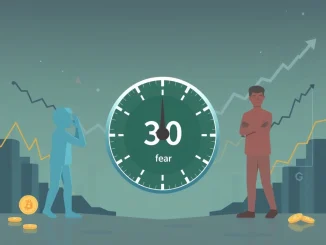
Understanding market sentiment proves vital for cryptocurrency traders. The **BTC perpetual futures** long/short ratio offers a crucial window into this sentiment. This metric reveals the current balance between bullish and bearish positions on major exchanges. Analyzing these ratios provides key insights into potential market direction. It helps traders gauge prevailing investor confidence or fear. Therefore, this data becomes an indispensable tool for informed decision-making in the volatile crypto space.
Deciphering the BTC Perpetual Futures Long Short Ratio
BTC perpetual futures are derivative contracts. They allow traders to speculate on Bitcoin’s future price without owning the actual asset. Unlike traditional futures, perpetual futures lack an expiry date. Instead, they employ a funding rate mechanism. This mechanism ensures their price remains tethered to Bitcoin’s spot price. Consequently, these instruments are popular for both short-term speculation and longer-term hedging strategies. The long/short ratio specifically measures the proportion of open long positions against open short positions. A ‘long’ position expects prices to rise. Conversely, a ‘short’ position anticipates a price drop. This ratio thus offers a snapshot of aggregate trader sentiment across the market.
Recently, the **long short ratio** across major exchanges showed a slight bias. Over the last 24 hours, the overall market exhibited a relatively balanced stance. However, individual exchanges presented minor variations. Here is a breakdown of the data:
- Overall Market: Long 50.57% / Short 49.43%
- Binance: Long 51.59% / Short 48.41%
- Bybit: Long 50.26% / Short 49.74%
- Gate.io: Long 49.8% / Short 50.2%
These figures indicate a marginally higher number of long positions overall. Yet, the market remains quite evenly split. This suggests a period of relative indecision or healthy two-way action. Furthermore, Binance, a dominant player, shows a slightly stronger long bias. Gate.io, on the other hand, leans marginally short. These small differences highlight varying sentiment among different exchange user bases.
Understanding Bitcoin Futures and Their Market Impact
Bitcoin futures play a significant role in the broader crypto ecosystem. They provide liquidity and allow for complex trading strategies. Institutions often use them for hedging their spot Bitcoin holdings. Retail traders, moreover, utilize them for leveraged speculation. The introduction of Bitcoin futures contracts on regulated exchanges, such as CME, also brought increased institutional participation. This broadened the market’s appeal. Perpetual futures, specifically, offer continuous trading opportunities. Their funding rates act as a crucial mechanism. Positive funding rates mean longs pay shorts, encouraging equilibrium. Negative rates mean shorts pay longs. Thus, funding rates often complement the long/short ratio. They provide further insight into market pressures.
The collective volume and open interest in **Bitcoin futures** markets are enormous. They often surpass spot market volumes. This makes futures data particularly impactful for market analysis. Changes in long/short ratios can precede significant price movements. For example, an extreme skew towards long positions might indicate an overheated market. This could signal a potential correction. Conversely, an overwhelmingly short sentiment could point to a capitulation phase. This sometimes precedes a rebound. Therefore, monitoring these metrics becomes essential for anticipating shifts in market momentum.
Gauging Crypto Market Sentiment with Precision
Accurately gauging **crypto market sentiment** is challenging. However, tools like the long/short ratio provide valuable quantitative data. A balanced ratio, like the one observed, suggests a cautious yet engaged market. It indicates neither extreme euphoria nor widespread panic. Traders often look for divergences or extremes in these ratios. For instance, if the price increases significantly but the long/short ratio remains flat or even declines, it might signal weakness. This could suggest that the rally lacks strong conviction from leveraged traders. Conversely, a strong rally accompanied by a rapidly increasing long/short ratio confirms bullish momentum. This indicates aggressive long positioning.
Analyzing **crypto market sentiment** requires more than just one metric. Traders frequently combine the long/short ratio with other indicators. These include funding rates, open interest, and social media sentiment. A holistic approach provides a more robust understanding. For example, a high long/short ratio combined with high funding rates suggests strong bullish conviction. However, it also indicates increased risk for long positions due to higher funding costs. Conversely, low long/short ratios with negative funding rates might signal capitulation. This can present contrarian buying opportunities. Understanding these dynamics helps traders navigate market volatility more effectively.
Leveraging Futures Trading Analysis for Strategic Decisions
Effective **futures trading analysis** integrates multiple data points. The long/short ratio is a cornerstone of this analysis. Traders use this ratio to identify potential trend continuations or reversals. A sustained increase in the long/short ratio often accompanies an uptrend. This confirms buying pressure. Conversely, a consistent decrease might signal growing bearish sentiment. This could precede a downtrend. Experienced traders also monitor the ratio across different timeframes. Short-term fluctuations can indicate momentary shifts. Longer-term trends, however, reveal more significant market biases.
Furthermore, **futures trading analysis** often involves comparing data across various exchanges. As seen in the provided data, Binance showed a slightly higher long bias than Gate.io. Such differences can highlight varying trader demographics or regional influences. Combining this with technical analysis provides a comprehensive view. For example, if Bitcoin approaches a major resistance level and the long/short ratio is extremely high, traders might anticipate a rejection. They could then consider taking profits or opening short positions. Conversely, if Bitcoin bounces off strong support with a low long/short ratio, it might signal a good entry point for long positions. This strategic integration enhances decision-making capabilities.
In conclusion, the **BTC perpetual futures** long/short ratio offers a vital indicator of market sentiment. While the current ratios suggest a balanced market, monitoring these figures remains crucial. They provide a quantitative measure of trader positioning. By integrating this data with other analytical tools, traders gain deeper insights. This empowers them to make more informed and strategic decisions in the dynamic cryptocurrency landscape. Always remember that no single indicator guarantees success. However, a comprehensive approach significantly improves the odds.
Frequently Asked Questions (FAQs)
1. What are BTC perpetual futures?
BTC perpetual futures are derivative contracts that allow traders to speculate on the price of Bitcoin without an expiry date. They are 'perpetual' because they can be held indefinitely, with their price tied to the spot market through a funding rate mechanism.
2. How is the long/short ratio calculated for perpetual futures?
The long/short ratio is calculated by dividing the total number of open long positions by the total number of open short positions on a specific exchange or across multiple exchanges. It represents the proportion of bullish versus bearish sentiment among leveraged traders.
3. What does a 50/50 long/short ratio indicate?
A 50/50 long/short ratio suggests a relatively balanced market sentiment. It indicates that the number of traders expecting price increases is almost equal to those expecting price decreases. This often points to market indecision or a healthy two-way trading environment.
4. Why are Binance, Bybit, and Gate.io important for this data?
Binance, Bybit, and Gate.io are among the world’s largest cryptocurrency futures exchanges by open interest and trading volume. Their combined data offers a comprehensive and representative view of the global BTC perpetual futures market sentiment.
5. Can the long/short ratio predict price movements accurately?
The long/short ratio is a powerful indicator of market sentiment but not a standalone predictor. It should be used in conjunction with other technical and fundamental analysis tools. Extreme ratios can sometimes signal potential reversals, but context and confluence with other indicators are crucial.
6. How do funding rates relate to long/short ratios in perpetual futures?
Funding rates and long/short ratios are closely related. Positive funding rates typically occur when the long/short ratio is high, meaning longs pay shorts to keep the perpetual contract price close to spot. Conversely, negative funding rates often coincide with a higher short/long ratio, where shorts pay longs. Both metrics provide insights into the strength and cost of leveraged positions.