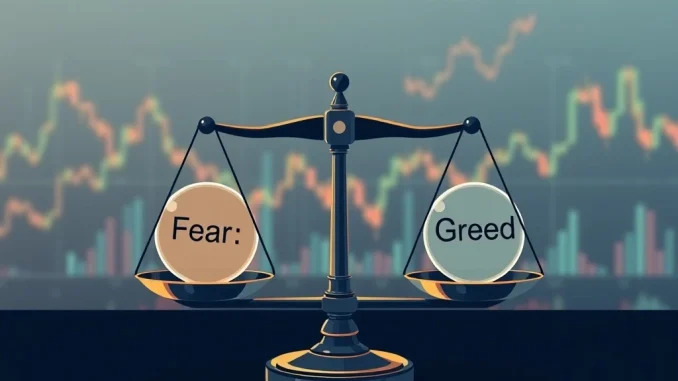
The Crypto Fear & Greed Index currently holds a crucial position. It sits firmly in the 48-point neutral zone. This reading offers valuable insights into prevailing market sentiment for Bitcoin and the wider cryptocurrency landscape. Investors often monitor this index closely. It helps them gauge collective emotion, which can drive market movements. Understanding this indicator becomes essential for informed decision-making in the volatile crypto space.
Decoding the Crypto Fear & Greed Index
The Crypto Fear & Greed Index serves as a vital barometer for the digital asset market. Alternative.me compiles this index daily. It measures overall market sentiment on a simple scale. Zero represents ‘Extreme Fear,’ while 100 signifies ‘Extreme Greed.’ This range provides a clear picture. Traders and investors use it to avoid emotional pitfalls. For example, extreme fear can signal potential buying opportunities. Conversely, extreme greed might suggest a market correction is imminent. The index, therefore, often acts as a counter-indicator for many experienced participants. It helps them make more rational choices.
Unpacking the Neutral Zone at 48
A score of 48 places the index squarely in the neutral zone. This means neither fear nor greed dominates the market. Instead, participants exhibit a balanced outlook. This specific reading suggests a period of consolidation. Price action might lack strong directional conviction. For Bitcoin and other major cryptocurrency assets, this can lead to range-bound trading. It implies a wait-and-see approach from many investors. Furthermore, a neutral stance often precedes significant market moves. Traders frequently look for breakouts from this equilibrium. They prepare for potential shifts in either direction. Therefore, this neutrality should not be mistaken for market inactivity; rather, it’s a period of potential accumulation or distribution.
How Market Sentiment is Measured
The index’s calculation involves several key factors. Each factor contributes a specific weight to the final score. Understanding these components clarifies the index’s reliability and its reflection of market sentiment. Here are the primary inputs:
- Volatility (25%): This measures the current volatility and maximum drawdowns of Bitcoin. High volatility often indicates a fearful market, as prices fluctuate wildly.
- Market Volume (25%): High trading volume in a positive market suggests greed, indicating strong buying pressure. Conversely, high volume during price drops points to fear, as selling intensifies.
- Social Media (15%): Analysis of social media mentions for Bitcoin and other keywords. High engagement with positive sentiment can signal greed, while negative discussions suggest fear.
- Surveys (15%): Weekly polls directly gauge investor sentiment. This offers a direct snapshot of public opinion, capturing immediate feelings.
- Bitcoin Dominance (10%): A rising Bitcoin dominance often indicates fear. Investors move to a perceived safer asset. A decreasing dominance suggests higher risk appetite for altcoins, implying greed.
- Google Trends (10%): Search volume for terms like ‘Bitcoin price manipulation’ or ‘Bitcoin bubble’ can indicate fear. Generic ‘Bitcoin’ searches, however, might signal growing interest and optimism.
These factors collectively paint a comprehensive picture of prevailing market sentiment.
Historical Context and Investor Implications
Historically, the Crypto Fear & Greed Index has provided valuable insights. During major bull runs, the index often surged into ‘Extreme Greed.’ This occurred in late 2017 and early 2021. Conversely, deep bear markets saw scores plummet to ‘Extreme Fear.’ The 2018 crypto winter and the COVID-19 crash demonstrated this clearly. Currently, the neutral zone at 48 suggests caution. It advises against impulsive decisions. Investors might consider accumulating assets slowly. They also avoid chasing pumps. This measured approach aligns with a balanced market outlook. Experienced traders use the index as a contrarian indicator. They buy when others are fearful and sell when others are greedy. This strategy leverages the emotional extremes of the market. Therefore, the index guides strategic positioning.
Bitcoin’s Enduring Influence on Cryptocurrency Sentiment
Bitcoin remains the undisputed leader of the cryptocurrency market. Its price movements significantly impact overall market sentiment. The index explicitly accounts for Bitcoin dominance. When Bitcoin’s share of the total market capitalization rises, it often signals investor flight to safety. This typically occurs during periods of uncertainty or fear. Conversely, a decline in Bitcoin’s dominance suggests investors are venturing into altcoins. This indicates a higher risk appetite and potentially greed. Therefore, Bitcoin’s performance is a crucial barometer. Its stability or volatility heavily sways the broader cryptocurrency market’s emotional state. The current neutral reading reflects a temporary equilibrium for the leading digital asset.
Navigating Uncertainty in the Neutral Zone
Maintaining a neutral position at 48 presents a fascinating scenario. It reflects a standoff between bullish and bearish forces. No single emotion currently dictates market direction. This situation demands careful observation. Traders must watch for catalysts that could tip the scales. These might include macroeconomic news, regulatory developments, or significant technical price breaks. A prolonged stay in the neutral zone can build pressure. Eventually, the market will break out. It could move towards either fear or greed. This period allows for strategic planning. Investors refine their entry and exit points. They also adjust their risk exposure. Ultimately, the Crypto Fear & Greed Index provides a snapshot. It is one tool among many for navigating the complex cryptocurrency markets effectively.
The Crypto Fear & Greed Index sits at a pivotal 48. This indicates a current neutral zone for market sentiment. This balance affects Bitcoin and the entire cryptocurrency ecosystem. While not a definitive trading signal, the index offers valuable perspective. It helps market participants understand collective emotional states. As always, comprehensive research and a disciplined approach remain paramount. Keep an eye on the factors influencing this critical indicator. Future market movements will certainly reflect shifts in this delicate balance.
Frequently Asked Questions (FAQs)
Q1: What does a ‘neutral’ score on the Crypto Fear & Greed Index mean?
A1: A neutral score, like 48, means neither fear nor greed dominates the market. It suggests a balanced sentiment among investors. This often leads to consolidation or range-bound trading.
Q2: How often is the Crypto Fear & Greed Index updated?
A2: The Crypto Fear & Greed Index is updated daily. It provides a real-time snapshot of market sentiment for the cryptocurrency market.
Q3: Can the Crypto Fear & Greed Index predict market movements?
A3: The index is primarily a sentiment indicator, not a predictive tool. It reflects current market emotions. Many traders use it as a contrarian signal, aiming to buy during extreme fear and sell during extreme greed.
Q4: What role does Bitcoin play in the index calculation?
A4: Bitcoin’s volatility, trading volume, social media mentions, and market dominance significantly influence the index. Its performance is a major factor in overall cryptocurrency market sentiment.
Q5: What factors contribute to the Crypto Fear & Greed Index?
A5: The index considers several factors: volatility (25%), trading volume (25%), social media mentions (15%), surveys (15%), Bitcoin’s market cap dominance (10%), and Google search volume (10%).