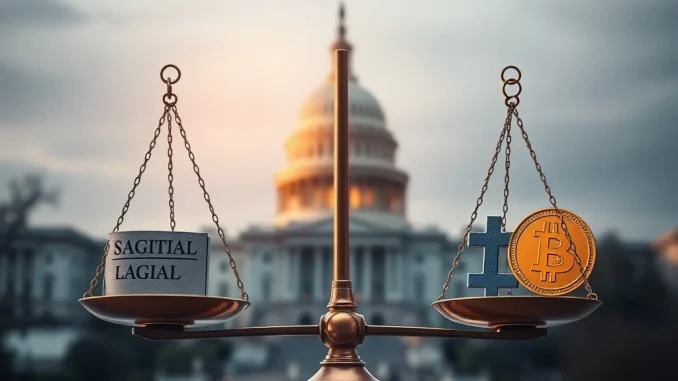
The landscape of digital assets in the United States is on the cusp of significant change. Investors and innovators eagerly await the release of a revised Digital Asset Bill from the U.S. Senate Banking Committee. This legislative update promises to reshape how cryptocurrencies are regulated, aiming for greater clarity in a previously ambiguous market.
Unveiling the Revised Digital Asset Bill
Today marks a pivotal moment for the cryptocurrency industry. The U.S. Senate Banking Committee plans to release a revised draft of the Digital Asset Market Structure (CLARITY) Act. This follows extensive feedback from stakeholders. Eleanor Terrett, host of Crypto in America, confirmed the impending release. The committee incorporated diverse perspectives. This ensures a more robust and practical framework. Ultimately, the bill seeks to provide much-needed legal certainty. This clarity will benefit both businesses and consumers alike.
Why Crypto Regulation US is Essential
Currently, the United States lacks a unified and comprehensive framework for crypto regulation US. This regulatory vacuum creates significant challenges. Innovation can be stifled, for instance. Investors also face heightened risks without clear guidelines. Market manipulation and fraud become more prevalent. A well-defined regulatory structure can foster trust. It also encourages responsible growth within the digital asset space. Furthermore, it helps the US maintain its competitive edge globally. Many other nations already develop their own frameworks. Clear rules attract legitimate businesses. They also protect consumers from bad actors. This revised bill aims to address these critical issues directly.
The CLARITY Act’s Core Tenets
The CLARITY Act is designed to establish a definitive regulatory framework. It aims to delineate the specific roles of the Securities and Exchange Commission (SEC) and the Commodity Futures Trading Commission (CFTC). These two agencies have often found themselves at odds. Their differing interpretations of digital assets have caused confusion. The bill seeks to resolve this jurisdictional ambiguity. A key provision also exempts certain cryptocurrencies from specific registration requirements. Specifically, these are conditions under the Securities Act of 1933. This exemption applies to digital assets that meet defined criteria. It acknowledges the unique characteristics of some cryptocurrencies. These assets may not fit traditional securities definitions. Consequently, this could streamline compliance for many projects. It would reduce regulatory burdens significantly.
Delineating SEC CFTC Crypto Oversight
The long-standing debate over which agency should oversee specific digital assets has caused considerable market uncertainty. The SEC CFTC Crypto divide often leaves projects in a gray area. The SEC typically regulates securities. Conversely, the CFTC oversees commodities. Many cryptocurrencies possess characteristics of both. This bill intends to draw clear lines. It will define when an asset falls under the SEC’s purview. It will also specify when the CFTC takes precedence. Such clarity is vital for market participants. It allows them to understand their compliance obligations. Ultimately, this reduces legal risks. It promotes a more predictable operating environment. This delineation is a cornerstone of the proposed legislation.
Impact on the US Senate Banking Committee’s Agenda
The US Senate Banking Committee plays a crucial role in financial legislation. This committee tackles complex economic issues. Their work on the Digital Asset Bill demonstrates a commitment to innovation. It also shows a dedication to investor protection. The release of this revised draft signals progress. It suggests a willingness to adapt existing laws. The committee has engaged extensively with industry experts. They have also considered public feedback. This iterative process is essential for effective policymaking. Passage of this bill could set a global precedent. It would position the US as a leader in digital asset regulation. However, the legislative journey remains challenging. It requires bipartisan support and careful consideration. Future debates will shape its final form. Yet, this revised draft represents a significant step forward.
The impending release of the revised Digital Asset Bill marks a significant milestone. It offers a clearer path forward for crypto regulation US. This crucial legislative effort by the US Senate Banking Committee seeks to bring much-needed structure. It defines roles for the SEC CFTC Crypto oversight. Furthermore, it clarifies the application of the CLARITY Act. The bill aims to foster innovation while protecting investors. Its ultimate success hinges on continued collaboration and thoughtful deliberation. Stakeholders across the digital asset ecosystem will watch its progress closely. This legislative development could profoundly shape the future of digital finance.
Frequently Asked Questions (FAQs)
Q1: What is the Digital Asset Market Structure (CLARITY) Act?
A1: The CLARITY Act is a proposed bill in the U.S. Senate. It aims to establish a clear regulatory framework for the cryptocurrency industry. Its primary goal is to define the roles of the SEC and CFTC concerning digital assets.
Q2: Why is a revised draft of the Digital Asset Bill being released?
A2: The U.S. Senate Banking Committee is releasing a revised draft after incorporating feedback. This process ensures the bill addresses concerns and incorporates diverse perspectives from industry stakeholders and experts.
Q3: How does the CLARITY Act aim to differentiate between SEC and CFTC roles?
A3: The Act seeks to delineate specific jurisdictional boundaries for the SEC (Securities and Exchange Commission) and the CFTC (Commodity Futures Trading Commission). This aims to resolve current ambiguities regarding which agency oversees particular digital assets.
Q4: Will all cryptocurrencies be exempt from the Securities Act of 1933 under this bill?
A4: No, the bill proposes to exempt only certain cryptocurrencies. These are digital assets that meet specific conditions outlined within the legislation. They would be exempt from the registration requirements of the Securities Act of 1933.
Q5: What is the potential impact of this bill on the crypto industry in the US?
A5: This bill could bring much-needed regulatory certainty to the US crypto industry. It aims to foster innovation, protect investors, and potentially streamline compliance for digital asset projects by providing clear rules and reducing jurisdictional confusion.
Q6: Who is Eleanor Terrett, and what is her role in this announcement?
A6: Eleanor Terrett is the host of Crypto in America. She reported on the U.S. Senate Banking Committee’s plan to release the revised draft of the Digital Asset Market Structure (CLARITY) Act.