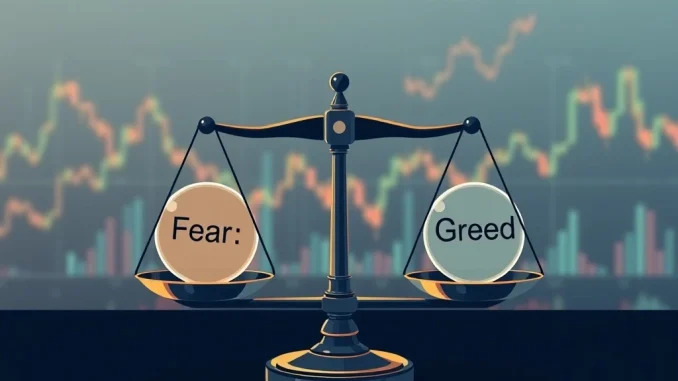
The **Crypto Fear & Greed Index** serves as a vital barometer for understanding the emotional state of the cryptocurrency market. This crucial indicator recently experienced a notable shift. Specifically, it has fallen four points, landing at 51. This movement places the index firmly in “Neutral” territory, moving away from the previous “Greed” zone. Consequently, this change reflects a waning of aggressive optimism among participants in the **crypto market**, as reported by data provider Alternative.me.
Understanding the Crypto Fear & Greed Index
To truly grasp the significance of this shift, it is essential to understand what the **Crypto Fear & Greed Index** represents. The index provides a comprehensive measure of prevailing **investor sentiment** in the cryptocurrency space. It operates on a simple scale, ranging from 0 to 100. A score of 0 signifies “Extreme Fear,” indicating that investors are highly apprehensive and likely selling off assets. Conversely, a score of 100 denotes “Extreme Greed,” suggesting widespread optimism and a potential for market overheating.
Furthermore, this index acts as more than just a simple mood ring for crypto. Many analysts and traders use it as a contrarian indicator. For example, periods of extreme fear often present potential buying opportunities for brave investors. Conversely, extreme greed can signal an impending market correction. Therefore, monitoring its fluctuations offers valuable insights into potential market turns.
The Shift to Neutral: What It Means for Bitcoin Sentiment
The recent four-point drop, pushing the index to 51, signifies a notable change in **Bitcoin sentiment** and the broader market. Moving from “Greed” to “Neutral” indicates that the exuberant optimism that characterized the market has cooled. Investors are no longer as aggressively bullish. Instead, a more balanced and cautious approach is taking hold. This neutral stance suggests a period of consolidation or uncertainty, where neither extreme fear nor extreme greed dominates decision-making.
Essentially, a neutral reading implies that the market lacks a strong directional bias. Prices might move sideways, or experience minor fluctuations, as investors await clearer signals. This can be a challenging period for short-term traders but often provides a more stable environment for long-term strategic planning. It encourages a closer look at fundamentals rather than pure speculation driven by emotion. Ultimately, this shift suggests a temporary pause in strong market conviction.
Key Components Driving Market Sentiment
The **Crypto Fear & Greed Index** is not a subjective measure. Instead, it is a sophisticated composite indicator, drawing data from several crucial sources. Each component contributes a specific weight to the final score, providing a holistic view of **market sentiment**. Understanding these factors helps to demystify how the index arrives at its readings. Let’s explore the key drivers:
- Volatility (25%): This factor measures the current volatility and maximum drawdowns of Bitcoin compared to its average over the last 30 and 90 days. High volatility often signals a fearful market, as investors react quickly to price swings. However, low volatility can sometimes precede significant moves.
- Trading Volume (25%): The current trading volume and market momentum are compared to average values. High trading volume in a rising market often indicates strong buying interest, suggesting greed. Conversely, high volume during a price drop can indicate panic selling or fear.
- Social Media Mentions (15%): This component analyzes the number of Bitcoin-related hashtags and interactions on various social media platforms. It also assesses the sentiment of these mentions. A surge in positive mentions often correlates with greed, while negative discussions point towards fear.
- Surveys (15%): Although this component is sometimes paused, when active, it gathers opinions from thousands of crypto investors weekly. These surveys directly gauge how participants feel about the market’s direction. Their responses directly contribute to the overall sentiment score.
- Bitcoin’s Market Cap Dominance (10%): This measures Bitcoin’s share of the total cryptocurrency market capitalization. A rising dominance often indicates fear, as investors tend to move into Bitcoin, perceived as a safer asset. A falling dominance can suggest greed, as funds flow into altcoins for higher speculative gains.
- Google Search Volume (10%): This tracks Google Trends data for Bitcoin-related search queries. A sudden increase in search volume for terms like “Bitcoin price manipulation” or “Bitcoin crash” can signal fear. Conversely, searches for “buy Bitcoin” or “Bitcoin rally” might indicate growing public interest and greed.
Collectively, these weighted factors paint a comprehensive picture. They move beyond simple price action to capture the underlying emotional currents shaping the **crypto market**.
Historical Context and Future Implications for Investor Sentiment
Examining the **Crypto Fear & Greed Index** through a historical lens offers crucial perspective. Throughout its history, extreme readings have often foreshadowed significant market events. For instance, during the depths of bear markets, the index frequently plunges into “Extreme Fear” (scores below 20). This period typically marks capitulation, where many investors sell at a loss. However, these moments have historically proven to be excellent long-term accumulation phases for patient investors. Buying when others are fearful often yields substantial returns.
Conversely, when the index climbs into “Extreme Greed” (scores above 80), it often signals market tops. This is when euphoria is rampant, and asset prices may become unsustainable. Savvy investors might consider taking profits during such times. Therefore, the index acts as a valuable counter-indicator, encouraging actions contrary to prevailing emotions. The current “Neutral” reading, however, suggests a different phase. It implies a market without strong conviction, potentially consolidating before its next major move. This phase demands careful analysis rather than impulsive reactions.
Navigating the Crypto Market with a Neutral Index
A neutral **Crypto Fear & Greed Index** reading presents both opportunities and challenges for investors. It means the market is not driven by extreme emotions, offering a chance for more rational decision-making. However, it also implies a lack of clear direction. Here are some strategies for navigating this period:
- Focus on Fundamentals: In a neutral market, projects with strong fundamentals, clear utility, and robust development teams tend to perform better in the long run. Researching whitepapers, roadmaps, and community engagement becomes even more critical.
- Dollar-Cost Averaging (DCA): Continuing a DCA strategy can be highly effective during neutral periods. This involves investing a fixed amount of money at regular intervals, regardless of price. It helps to average out the purchase price and reduces the risk associated with timing the market.
- Risk Management: This period is ideal for reviewing and adjusting your portfolio’s risk exposure. Ensure your allocations align with your long-term goals and risk tolerance. Diversification across different asset classes and cryptocurrencies remains vital.
- Stay Informed: Beyond the index, monitor macroeconomic news, regulatory updates, and significant technological advancements within the crypto space. These external factors can quickly shift sentiment and provide new directional cues.
- Avoid Impulsive Decisions: The absence of extreme emotional pressure allows for more measured responses. Resist the urge to chase pumps or panic-sell on minor dips. Patience is a virtue in a neutral market.
Ultimately, while the **Crypto Fear & Greed Index** is a powerful tool, it is just one piece of the puzzle. Combining its insights with thorough research and a disciplined approach will empower investors to make more informed decisions, regardless of the prevailing **investor sentiment**.
Beyond the Index: Broader Influences on Crypto Market Sentiment
While the **Crypto Fear & Greed Index** offers a valuable snapshot of emotional states, the broader **crypto market** is influenced by a multitude of factors. These external forces can rapidly alter **investor sentiment**, often overriding the signals from the index. Therefore, a comprehensive understanding requires looking beyond just this single metric.
Firstly, macroeconomic conditions play a significant role. Global inflation rates, interest rate decisions by central banks, and overall economic stability directly impact risk appetite. When traditional markets face uncertainty, investors often become more cautious with riskier assets like cryptocurrencies. Conversely, periods of economic growth and low interest rates can fuel speculative investments.
Secondly, regulatory developments are increasingly influential. Announcements from governments regarding crypto legislation, taxation, or the approval of new financial products (like spot Bitcoin ETFs) can trigger substantial price movements and sentiment shifts. Positive regulatory clarity tends to boost confidence, while restrictive measures can induce fear. Thirdly, technological advancements within the blockchain ecosystem are crucial. Upgrades to major networks, the emergence of new Layer 2 solutions, or breakthroughs in scalability and security can attract new users and capital, thereby improving overall **market sentiment**.
Finally, institutional adoption continues to be a major catalyst. When large financial institutions, corporations, or even sovereign nations integrate cryptocurrencies into their operations or balance sheets, it lends credibility and stability to the market. This influx of institutional capital often has a profound effect on prices and long-term **investor sentiment**. Therefore, while the index provides a pulse, a holistic view of the crypto landscape is essential for informed decision-making.
In conclusion, the shift of the **Crypto Fear & Greed Index** to a neutral 51 represents a significant cooling of the market’s previous exuberance. This change in **investor sentiment** suggests a period of consolidation and caution rather than extreme emotion. While the index is a powerful tool for gauging market psychology, smart investors understand it as one piece of a larger analytical framework. Combining its insights with a deep understanding of market fundamentals, macroeconomic trends, and robust risk management strategies remains paramount for navigating the dynamic and evolving **crypto market** successfully. Informed decisions, not emotional reactions, will always be the bedrock of sustainable success in this space.
Frequently Asked Questions (FAQs)
Q1: What is the Crypto Fear & Greed Index?
The Crypto Fear & Greed Index is a tool that measures the current sentiment of the cryptocurrency market. It ranges from 0 (Extreme Fear) to 100 (Extreme Greed), indicating whether investors are predominantly fearful or optimistic. It helps gauge the emotional state of the market, particularly regarding Bitcoin.
Q2: How is the Crypto Fear & Greed Index calculated?
The index is calculated using a combination of six weighted factors: volatility (25%), trading volume (25%), social media mentions (15%), surveys (15%), Bitcoin’s market cap dominance (10%), and Google search volume (10%). These factors collectively provide a comprehensive view of market sentiment.
Q3: What does a “Neutral” reading on the index signify?
A “Neutral” reading, such as the current 51, indicates that the market is not dominated by extreme emotions of fear or greed. It suggests a period of balance, consolidation, or uncertainty where investors are adopting a more cautious and less impulsive approach. This often means the market lacks a strong directional bias.
Q4: How should investors use the Crypto Fear & Greed Index?
Investors often use the index as a contrarian indicator. Extreme Fear can signal a potential buying opportunity, while Extreme Greed might suggest a good time to take profits. A neutral reading encourages a focus on fundamental analysis, risk management, and dollar-cost averaging rather than emotional trading.
Q5: Is the Crypto Fear & Greed Index the only indicator to follow?
No, the Crypto Fear & Greed Index is a valuable tool but should not be the sole basis for investment decisions. It’s crucial to combine its insights with other analyses, including fundamental research, technical analysis, macroeconomic trends, regulatory developments, and a robust understanding of overall market sentiment.
Q6: How does Bitcoin’s market cap dominance affect the index?
Bitcoin’s market cap dominance contributes 10% to the index. A rising dominance often suggests fear, as investors might be moving into Bitcoin as a perceived safe haven. Conversely, a falling dominance can indicate greed, as capital flows into altcoins seeking higher speculative gains.