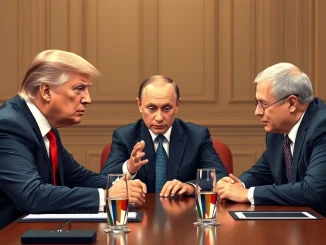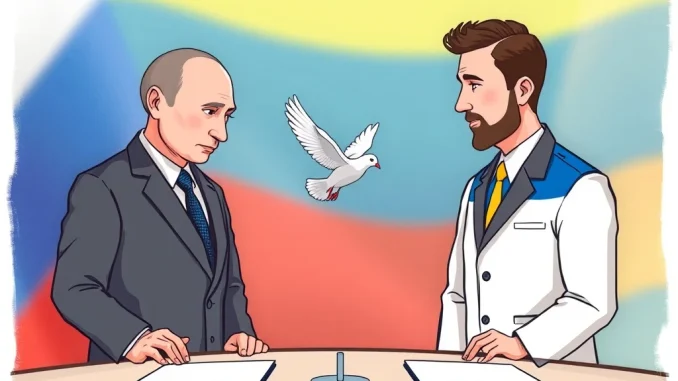
Geopolitical stability profoundly impacts global markets, and this includes the increasingly vital world of cryptocurrencies. Significant diplomatic developments can dramatically influence investor sentiment across all asset classes. Therefore, news regarding a potential Putin Zelenskyy meeting warrants close attention from all market participants, from traditional investors to crypto enthusiasts. This development could signal a crucial shift in the ongoing conflict, potentially leading to broader economic implications that resonate globally. Investors frequently monitor major global events for their ripple effects across financial assets. Understanding the intricate context of such high-level discussions is crucial for assessing future market trends and preparing for potential shifts in the economic landscape. A resolution, or even a pathway to one, could introduce a new era of stability, which historically benefits market growth and confidence.
Vladimir Putin Signals Readiness for Direct Talks
Russian President Vladimir Putin recently stated his readiness to meet directly with Ukrainian President Volodymyr Zelenskyy. This significant declaration, reported by Walter Bloomberg, marks a pivotal moment in the prolonged conflict. It opens a potential pathway for direct, high-stakes engagement between the two leaders. Previously, direct high-level talks have been infrequent or have stalled quickly. This new statement thus represents a notable shift in rhetoric, indicating a potential softening of positions or a strategic reassessment. Many observers are closely watching these developments, hoping for concrete steps towards de-escalation. The international community has long called for direct dialogue as the most viable route to peace. Now, a direct meeting might become a reality, potentially initiating a new phase of intense diplomatic efforts. Such a summit, if it materializes, would undoubtedly dominate global headlines and discussions, reflecting its immense geopolitical importance.
The announcement follows a period of intense fighting and diplomatic maneuvering. It suggests a possible recognition from the Russian side that direct leader-to-leader communication could be necessary. This move could also be a response to international pressure or a strategic play in the ongoing conflict narrative. President Putin’s statement, while not a firm commitment to a specific date or agenda, signals an openness. This openness itself is noteworthy. Analysts will dissect the precise wording and context of the statement. They will look for clues regarding Moscow’s current objectives. The readiness for a direct meeting contrasts with earlier stances. Therefore, it merits careful consideration. Such a meeting would involve intricate planning. It would also require careful management of expectations from both sides. The world anticipates further details with bated breath.
Understanding the Context of Russia Ukraine Talks
The conflict between Russia and Ukraine has deeply impacted global affairs for nearly a decade, escalating dramatically in February 2022. Millions of people have been displaced from their homes, and the tragic human costs continue to mount daily. Economically, the war has severely disrupted global supply chains. It has also fueled persistent inflation worldwide. Energy markets, in particular, felt significant pressure, leading to price spikes and increased volatility. Earlier attempts at Russia Ukraine talks often involved intermediaries, such as officials from Turkey, Belarus, or other European nations. These discussions, while important, yielded limited success in achieving a comprehensive peace. For instance, negotiations held in Istanbul in early 2022 showed initial promise for a ceasefire and a potential framework. However, those efforts eventually faltered, with both sides blaming the other for lack of progress.
Both nations have maintained firm positions on key issues, making resolution incredibly challenging. Ukraine insists on the restoration of its territorial integrity within its internationally recognized borders. Russia, conversely, demands recognition of its annexed territories and security guarantees. Yet, the possibility of a direct Putin Zelenskyy meeting offers a fresh perspective. It could potentially unlock new avenues for resolution that have previously been inaccessible. Observers believe a direct dialogue between the two leaders is essential to bypass previous communication hurdles and break through entrenched positions. The stakes remain incredibly high for both nations, as well as for regional and global stability. Therefore, the world watches with anticipation, hoping for a genuine step towards de-escalation and peace. This conflict has redefined international relations. Any progress towards its resolution would have profound geopolitical implications.
The Path to Peace Negotiations: Past and Present
Throughout the prolonged conflict, various attempts at peace negotiations have occurred, involving different formats and numerous international mediators. Early on, the Minsk Agreements (Minsk I in 2014 and Minsk II in 2015) aimed to resolve the conflict in the Donbas region of eastern Ukraine. These agreements, brokered by France and Germany, outlined steps for a ceasefire, withdrawal of heavy weapons, and political reforms. However, their implementation proved challenging, with both sides accusing the other of violations. Subsequent rounds of talks, often held in various European capitals, frequently stalled. Trust between the warring parties eroded significantly over time, making constructive dialogue increasingly difficult.
International bodies and individual nations have consistently urged dialogue and sought to find common ground. For example, Turkey and the United Nations have played crucial mediating roles, particularly in facilitating humanitarian corridors, prisoner exchanges, and critical grain deals to alleviate global food shortages. While these specific initiatives were important and provided some relief, they did not lead to a comprehensive peace settlement. A direct Putin Zelenskyy meeting could fundamentally change this dynamic. It allows for unfiltered, direct communication at the highest level. Leaders can directly address core issues, potentially bypassing the complexities and misinterpretations that can arise with multi-party discussions. Such a meeting carries immense symbolic weight, signaling a serious intent to negotiate. It also presents practical opportunities for immediate de-escalation measures. The global community views this potential development cautiously, yet hope for a genuine breakthrough remains strong. Achieving lasting peace requires significant political will and a willingness to compromise from both leaders. They must demonstrate this resolve to the international community. The world desperately needs a durable solution to this devastating conflict.
Moreover, the history of conflict resolution shows that direct engagement between top leaders is often a prerequisite for major breakthroughs. Even when initial talks fail, they can establish channels and build a foundation for future dialogue. Therefore, the very act of a Vladimir Putin and Zelenskyy meeting, regardless of its immediate outcome, could be a crucial step in a longer peace process. It represents a potential shift from entrenched positions to a more flexible approach. The diplomatic landscape is complex, with numerous stakeholders and competing interests. Navigating this requires experienced leadership. Both presidents face immense pressure from their respective populations and international allies. The ability to manage these pressures while pursuing peace will be paramount.
Significance of Direct Diplomatic Efforts
A direct meeting between President Putin and President Zelenskyy holds profound significance, representing the pinnacle of diplomatic efforts in this conflict. Firstly, it signals a potential willingness from both sides to engage directly in high-level discussions. This could effectively break through existing stalemates that have characterized the conflict for years. Direct engagement offers a unique opportunity to address sensitive topics face-to-face. Secondly, such a meeting provides an unparalleled platform for leaders. They can articulate their positions, concerns, and red lines without the filter of intermediaries. This direct communication can sometimes foster a greater degree of understanding. It may also lead to unexpected compromises that were previously deemed impossible. It allows for nuance and immediate feedback.
Thirdly, a high-profile summit could galvanize international support and create significant momentum for a comprehensive peace process. When leaders demonstrate commitment to dialogue, it often encourages other nations to intensify their own diplomatic backing. Past experience shows that direct leader-to-leader interactions are often crucial. They frequently lay the groundwork for major international agreements and conflict resolutions. Consider historical summits that ended major conflicts or led to significant treaties; a successful Putin Zelenskyy meeting could pave a similar path. It would, however, require meticulous preparation from both sides. Both nations must define their objectives clearly and realistically. The agenda for such talks would undoubtedly be complex, covering issues from territorial status to security guarantees. Nevertheless, the potential rewards are immense, including saving lives, reducing human suffering, and restoring stability to a volatile region. Therefore, the world awaits further details with keen interest, recognizing the monumental importance of such an event. True progress requires sustained dialogue, not just a single meeting.
Furthermore, the symbolic power of a direct meeting cannot be overstated. It sends a message of intent to the world. It suggests that despite deep animosities, a path to negotiation remains open. This alone can ease tensions and provide a glimmer of hope. For the populations affected by the war, it offers the possibility of an end to violence. For the international community, it represents a chance to avoid further escalation. The very act of sitting down together acknowledges a shared humanity. It suggests a potential for finding common ground. Even if the first meeting yields limited results, it establishes a precedent. It builds a foundation for future discussions. This is why such diplomatic efforts are so highly valued. They are the bedrock of international peace and security. The courage to engage directly, despite past grievances, is a testament to the urgent need for peace.
International Reactions and Future Outlook for Russia Ukraine Talks
The prospect of a Putin Zelenskyy meeting has drawn varied international reactions, ranging from cautious optimism to outright skepticism. Many nations across the globe welcome any initiative for dialogue, seeing it as an absolutely necessary step towards de-escalation and eventual peace. They believe that only through direct communication can a meaningful resolution be achieved. However, some remain deeply skeptical, pointing to the numerous previous failed attempts at negotiation. This skepticism also stems from the deep-seated nature of the conflict and the profound differences in core demands between the warring parties. Nevertheless, the general sentiment among international actors leans towards cautious optimism, acknowledging the potential for a breakthrough.
International leaders have consistently advocated for peace and firmly believe that direct talks are indispensable for moving forward. The European Union, for instance, has repeatedly called for an end to hostilities and supports all genuine diplomatic efforts. The United States also supports diplomatic solutions, provided they respect Ukraine’s sovereignty and territorial integrity. Any concrete steps towards meaningful peace negotiations would be widely applauded by the international community. However, significant challenges persist. Both sides hold fundamentally differing views on critical issues, including the status of annexed territories, the future of the Donbas, and Ukraine’s security posture. Overcoming these deep-seated differences will require immense political courage, flexibility, and exceptionally skillful negotiation from both leaders.
The future outlook for Russia Ukraine talks remains inherently uncertain. Yet, the stated readiness for a high-level meeting offers a glimmer of hope. It suggests a potential shift in strategy or a recognition of the need for a different approach. The international community must continue its unwavering support for dialogue. It needs to encourage constructive engagement without imposing unrealistic expectations. Only then can a lasting, equitable peace be achieved. The road ahead is undoubtedly long and fraught with obstacles, but every journey towards peace begins with a single, courageous step. This potential meeting could be that step. The world is watching how Vladimir Putin and Zelenskyy navigate this complex path. The outcome will shape not only their nations but also the broader geopolitical landscape for years to come.
The Broader Impact of a Potential Putin Zelenskyy Meeting
A successful Putin Zelenskyy meeting would have far-reaching implications that extend well beyond the immediate conflict zones. Beyond the cessation of hostilities, it could profoundly reshape geopolitical dynamics globally. For example, global energy markets, which have been severely disrupted, might begin to stabilize. Supply chains, fractured by sanctions and conflict, could also recover more quickly, easing inflationary pressures that have plagued economies worldwide. This would benefit consumers and businesses alike. Furthermore, a breakthrough meeting could positively influence international relations, fostering greater cooperation on other pressing global issues like climate change or food security. The current conflict has created significant divisions among nations and strained existing alliances. Progress in peace negotiations could help mend these rifts, potentially restoring a degree of predictability and trust to international affairs. Such an outcome would benefit all nations, especially those heavily affected by the war’s economic fallout and humanitarian crises.
Conversely, a failed meeting or one that yields no tangible progress could deepen frustrations and prolong the conflict, exacerbating global instability. Therefore, the stakes involved in this potential encounter are exceptionally high. The potential for a breakthrough carries immense weight, offering a pathway to a more stable, peaceful future. This potential for stability affects various sectors, from manufacturing to finance. It even impacts the broader financial landscape, including the highly sensitive cryptocurrency markets. Investors, including those deeply involved in crypto, often seek geopolitical calm and view stability favorably. Geopolitical certainty reduces risk premiums and encourages investment. Therefore, this diplomatic development is closely watched by a wide array of stakeholders. It represents a critical juncture for global affairs, with potential ripple effects across economies and societies. Sustained, genuine diplomatic efforts are essential to capitalize on this opportunity. The long-term economic recovery of both Ukraine and Russia also hinges on these peace efforts. International reconstruction efforts could begin. This would create significant investment opportunities. The global community stands ready to support a durable peace.
Moreover, the humanitarian aspect cannot be overlooked. Millions of refugees and internally displaced persons yearn for a safe return home. A peace agreement, even a preliminary one, would offer hope for these individuals. It would allow for the rebuilding of shattered communities and infrastructure. The psychological impact of prolonged conflict is devastating. Therefore, any step towards peace offers immense relief. The role of international law and institutions would also be reaffirmed. A negotiated settlement would underscore the importance of diplomacy over military force. This would strengthen the global order. It would send a powerful message to other potential aggressors. Thus, the implications of a successful meeting are truly global. They touch upon human rights, economic prosperity, and international security. The world hopes for a positive outcome. It eagerly anticipates the next steps in these critical Russia Ukraine talks.
The statement from President Vladimir Putin regarding his readiness to meet President Zelenskyy is a profoundly significant development. It offers a renewed hope for direct Russia Ukraine talks at the highest level. While the path to comprehensive peace negotiations remains arduous and fraught with challenges, this potential Putin Zelenskyy meeting represents a crucial, perhaps indispensable, step. It underscores the ongoing importance of high-level diplomatic efforts in resolving complex international conflicts. The world watches intently for further progress, recognizing the immense stakes involved. Any concrete move towards de-escalation and a lasting peace would be a welcome relief for millions. It could foster greater global stability, benefiting economies and societies worldwide. Such stability also profoundly influences market sentiment across all asset classes, including the dynamic cryptocurrency sector. Ultimately, the future of the conflict hinges on the willingness of both leaders to engage constructively and pursue genuine compromise. Dialogue remains the only viable path forward. This potential meeting could mark a turning point, finally bringing the prospect of peace closer and ushering in a new era of stability for the region and beyond.
Frequently Asked Questions (FAQs)
Q1: What is the main news about Vladimir Putin and Volodymyr Zelenskyy?
A1: Russian President Vladimir Putin has stated his readiness to meet directly with Ukrainian President Volodymyr Zelenskyy. This marks a significant development in the ongoing conflict between Russia and Ukraine.
Q2: Why is a direct Putin Zelenskyy meeting considered important?
A2: A direct meeting between the two leaders is crucial because it allows for high-level communication without intermediaries. It could potentially break stalemates, foster understanding, and create momentum for comprehensive peace negotiations, which have been difficult to achieve through other channels.
Q3: Have there been previous Russia Ukraine talks?
A3: Yes, there have been numerous rounds of Russia Ukraine talks, including those under the Minsk Agreements and early in the 2022 escalation, often with mediators like Turkey. However, these efforts largely failed to achieve a lasting peace or significant de-escalation.
Q4: What are the potential challenges for peace negotiations?
A4: Significant challenges for peace negotiations include deep-seated mistrust, differing views on territorial integrity, sovereignty, and security guarantees. Overcoming these complex issues will require substantial political will and skillful diplomacy from both sides.
Q5: How might this development impact global markets, including cryptocurrency?
A5: Geopolitical stability generally has a positive impact on global markets. A successful Putin Zelenskyy meeting leading to de-escalation could ease economic uncertainties, stabilize energy markets, and potentially improve investor sentiment across various asset classes, including cryptocurrencies, which often react to global stability.
Q6: What does “diplomatic efforts” mean in this context?
A6: In this context, “diplomatic efforts” refer to the various actions and strategies employed by nations and international bodies to resolve conflicts, maintain peace, and foster cooperation through negotiation, dialogue, and other non-military means. A direct meeting between the leaders is a prime example of such an effort.