The cryptocurrency landscape constantly evolves. Recently, a significant shift in market sentiment for Ethereum (ETH) has captured attention. Specifically, a notable decrease in ETH volatility signals a potential era of more predictable growth. This development offers crucial insights for investors and enthusiasts tracking the world’s second-largest cryptocurrency.
Understanding Declining ETH Volatility
Implied volatility is a key metric in financial markets. It measures the market’s expectation of future price swings for an asset. For Ethereum, short-term implied volatility for ETH options has recently seen a considerable drop. Data from Deribit, a leading on-chain options exchange, indicates this decline. It fell to 63% from 75% just last week, as reported by The Block.
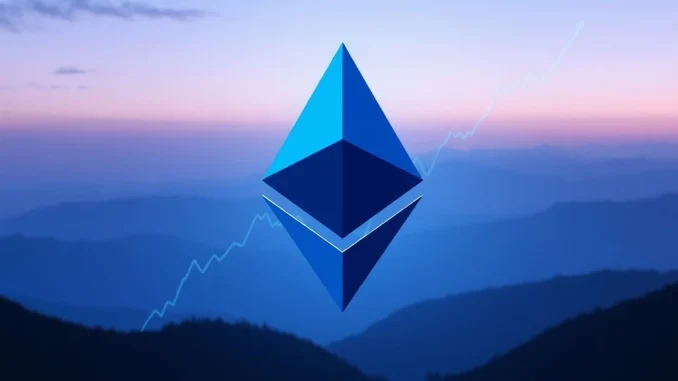
This reduction is more than just a number. It reflects a changing market perception. Lower implied volatility typically suggests that traders anticipate less erratic price movement. Instead, they expect a more stable and gradual price increase for Ethereum. This sentiment contrasts sharply with periods of high volatility, which often accompany rapid, unpredictable price swings.
What drives such a change? Often, it’s a combination of factors. These include improving market fundamentals, reduced macroeconomic uncertainty, or increasing institutional interest. For Ethereum, its ongoing development and network upgrades contribute to a more confident outlook.
Deribit’s Projections and Market Expectations for Ethereum Price
Deribit’s analysis extends beyond current volatility figures. The exchange provides valuable projections about the future of the crypto market, specifically concerning Ethereum. According to Deribit, the market is now anticipating a measured ascent for ETH. This suggests a shift away from the speculative, high-risk trading often associated with crypto.
A stable upward trend is generally preferred by long-term investors. It allows for more predictable capital appreciation and reduces the risk of sudden, significant losses. Therefore, this outlook from Deribit could attract a broader range of investors, including those who are typically more risk-averse. They might now view Ethereum as a more mature and stable investment vehicle.
Moreover, Deribit highlighted another crucial trend: the growing influence of ETH strategy firms. These entities manage substantial capital and employ sophisticated trading strategies. Their increasing involvement can provide additional stability and liquidity to the Ethereum ecosystem. This institutional participation often acts as a bullish signal for an asset.
The Role of ETH Strategy Firms in Ethereum’s Future
ETH strategy firms play an increasingly vital role in the Ethereum ecosystem. These firms leverage various financial instruments and strategies to generate returns from their ETH holdings. Their activities often include staking, yield farming, and options trading. Currently, these firms hold approximately 4% of the total ETH supply.
Deribit projects a significant increase in this share. They anticipate it will rise to between 6% and 10% by the end of the year. This projected growth is highly significant for several reasons:
- Increased Demand: A higher percentage held by strategy firms means increased demand for ETH. These firms often accumulate large quantities to execute their strategies.
- Market Maturation: The growing presence of sophisticated firms indicates the maturing of the Ethereum market. It shows that professional entities view ETH as a viable asset for complex financial operations.
- Price Support: Large holdings by strategy firms can provide a strong foundation for the Ethereum price. These firms are less likely to engage in impulsive selling, contributing to price stability.
- Ecosystem Development: Their involvement often fuels innovation within the decentralized finance (DeFi) space. This further strengthens Ethereum’s utility and value proposition.
The commitment of these firms underscores a long-term bullish sentiment. They are investing resources and capital based on a positive outlook for Ethereum’s fundamental value and future growth.
Broader Implications for the Crypto Market
The observed trends in ETH options and volatility do not exist in isolation. They reflect broader shifts within the entire crypto market. As Ethereum matures, its influence on other altcoins and the overall market sentiment grows. A stable Ethereum often contributes to a more stable wider crypto environment.
Historically, high volatility has been a hallmark of cryptocurrency markets. While it offers opportunities for quick gains, it also carries significant risks. A move towards lower volatility, especially for a major asset like ETH, could signal a new phase for digital assets. This phase might be characterized by greater institutional adoption and less speculative trading.
Furthermore, the growth of on-chain options exchanges like Deribit highlights the increasing sophistication of crypto financial products. These platforms offer tools that allow investors to hedge risks and express nuanced market views. This development is crucial for the overall health and maturity of the digital asset space.
Factors Influencing Ethereum’s Stability and Price Growth
Several underlying factors contribute to Ethereum’s potential for stable price growth. The transition to Ethereum 2.0 (now known as the Merge and subsequent upgrades) has been a major catalyst. This move from Proof-of-Work to Proof-of-Stake significantly reduced energy consumption. It also introduced staking rewards, making ETH a productive asset.
The thriving ecosystem of decentralized applications (dApps) and decentralized finance (DeFi) protocols built on Ethereum also plays a critical role. These applications drive demand for ETH as gas fees and collateral. As the utility of the Ethereum network expands, so does the intrinsic value of its native token.
Global macroeconomic conditions also exert influence. Factors such as inflation, interest rates, and regulatory developments can impact investor sentiment. However, if Ethereum demonstrates resilience and continues to build its utility, it can potentially weather broader economic headwinds more effectively. The reduced ETH volatility suggests that the market is already factoring in some of these external variables with a more optimistic long-term view.
Navigating the Future: What Investors Should Consider
For investors, the current market signals present both opportunities and considerations. The anticipation of a gradual price increase suggests that ‘buy the dip’ strategies might become less frequent. Instead, a more consistent, long-term accumulation approach could prove beneficial. Understanding the implications of declining ETH volatility is key.
It is crucial to monitor not only price movements but also fundamental developments. These include network upgrades, dApp adoption rates, and regulatory clarity. The increasing share of ETH held by strategy firms indicates a professional vote of confidence. However, individual investors should always conduct their own research.
The crypto market remains dynamic. While current indicators point towards stability for Ethereum, unforeseen events can always occur. Diversification and a clear investment strategy remain paramount. Utilizing platforms like Deribit for market insights can help investors stay informed about evolving trends and sentiment.
Conclusion: A New Chapter for Ethereum’s Price Trajectory
The recent decline in short-term implied volatility for ETH options marks a significant development for Ethereum. It suggests a growing market consensus for a stable and gradual price increase. This sentiment is further bolstered by projections of increasing ETH holdings by sophisticated strategy firms. These factors combine to paint a picture of a maturing asset. Ethereum is transitioning from a highly volatile speculative asset to a more predictable investment. As the network continues to evolve and its ecosystem expands, this newfound stability could usher in a new chapter for the Ethereum price, attracting broader participation and reinforcing its position in the digital economy.
Frequently Asked Questions (FAQs)
What does declining ETH volatility mean for investors?
Declining ETH volatility suggests that the market expects less erratic price movements. This often indicates a more stable and gradual price increase, which can be appealing to long-term investors seeking more predictable returns.
How do ETH options relate to market sentiment?
ETH options reflect market sentiment through their implied volatility. When implied volatility falls, it means traders anticipate smaller price swings in the future. This indicates a more confident and less speculative outlook on the Ethereum price.
Who are ETH strategy firms, and why are their holdings important?
ETH strategy firms are professional entities that use sophisticated trading and investment strategies with Ethereum. Their increasing holdings indicate growing institutional confidence and demand for ETH. This can provide significant price support and contribute to market maturity.
What role does Deribit play in these market insights?
Deribit is a leading on-chain options exchange that provides critical data on implied volatility and market sentiment for cryptocurrencies like Ethereum. Its reports and projections offer valuable insights into market expectations and future trends.
Is a stable Ethereum price good for the overall crypto market?
Generally, yes. As a major cryptocurrency, a more stable Ethereum can contribute to greater stability across the broader crypto market. It can attract more traditional investors and reduce the perception of excessive risk in digital assets.
What factors could influence Ethereum’s price stability going forward?
Key factors include continued network upgrades (like the post-Merge developments), growth in decentralized applications (dApps) and DeFi, regulatory clarity, and overall macroeconomic conditions. Strong fundamentals and increasing utility will support long-term stability.