The landscape of digital finance continues its rapid evolution. Indeed, many traditional financial giants are now carefully navigating the world of cryptocurrencies. Recently, a significant statement emerged from a major player. Christian Rau, Mastercard’s Head of Crypto for Europe, revealed the company’s current stance. Specifically, Mastercard has no immediate plans to develop its own proprietary blockchain. This news provides crucial insight into their approach to Mastercard crypto initiatives.
Mastercard Crypto Strategy: Complementing Existing Systems
Mastercard views cryptocurrency as a complementary technology. It aims to enhance, rather than replace, the established global payment system. This perspective shapes their ongoing integration efforts. Rau’s comments, made in a recent interview, underscore this strategic direction. Furthermore, they highlight a pragmatic approach to digital assets. Mastercard is not building a new foundation. Instead, it is building upon its existing robust infrastructure.
The company focuses on integrating cryptocurrencies and stablecoins into its vast global network. This process happens gradually. Importantly, it emphasizes practical applications. Key areas of focus include:
- On- and Off-Ramp Functions: These facilitate smooth conversions between crypto and fiat currency.
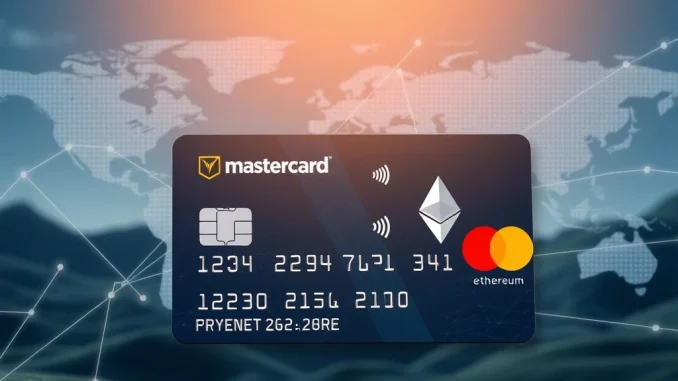
- Crypto-Linked Card Issuance: Such cards allow users to spend their digital assets in traditional retail environments.
These initiatives ensure that crypto assets become more accessible. They also make them more usable for everyday transactions. Therefore, Mastercard acts as a bridge. It connects the innovative world of digital assets with conventional financial services.
Mastercard Blockchain: An Open-Minded Approach
While a proprietary blockchain is not currently on the agenda, Mastercard remains flexible. Rau confirmed that the company could review this possibility if future necessities arise. This open stance reflects a commitment to innovation. It also shows a readiness to adapt to market demands. Consequently, Mastercard is not dismissing blockchain technology. Instead, it leverages existing solutions.
The company actively explores various blockchain applications. These include those developed by third parties. This approach allows Mastercard to benefit from ongoing industry advancements. They do not need to incur the significant costs and development time of building their own chain. Ultimately, their goal is to provide secure and efficient payment solutions. They will use the best available technologies to achieve this.
The Role of Stablecoins in Crypto Payments
Mastercard does not perceive stablecoins as a threat. On the contrary, they view them as a valuable technological advancement. Stablecoins offer distinct advantages. They are designed to maintain a stable value. This stability makes them ideal for everyday transactions. Therefore, their integration into Mastercard’s network holds significant promise.
Key benefits of stablecoins, as highlighted by Rau, include:
- Improved Payment Speeds: Transactions can settle much faster than traditional banking methods.
- Mitigation of Foreign Exchange Risk: Stablecoins pegged to fiat currencies reduce volatility. This protects users from unpredictable currency fluctuations.
These features enhance the overall efficiency of crypto payments. They also make digital asset transactions more predictable. This reliability is crucial for widespread adoption. As a result, Mastercard is actively working to incorporate stablecoins. This will further streamline its global payment offerings.
Enhancing Global Payment Systems with Digital Assets
Mastercard’s strategy aims to strengthen existing payment systems. It does not seek to disrupt them entirely. The integration of crypto and stablecoins adds new layers of functionality. It also introduces greater efficiency. For instance, cross-border payments often involve complex processes. They can also incur high fees. Digital assets can simplify these transactions. They offer a faster and more cost-effective alternative.
The company’s focus on on- and off-ramp services is particularly important. These services bridge the gap between traditional finance and the crypto economy. They allow consumers and businesses to easily move between the two. Furthermore, crypto-linked cards extend the utility of digital assets. Users can spend their crypto at millions of merchant locations worldwide. This expands the reach of digital currencies significantly. Mastercard’s role is to facilitate this seamless interaction. They aim to make digital assets a practical choice for everyone.
Future Outlook for Mastercard and Digital Currencies
Mastercard’s cautious yet progressive stance reflects a long-term vision. They are not chasing every new trend. Instead, they are strategically integrating proven technologies. This approach ensures stability and security. It also maintains compliance with regulatory standards. The company continues to monitor the evolving crypto landscape closely. They remain ready to adapt their strategies as needed. Their ultimate goal is to offer diverse and secure payment options. These options must cater to the needs of a global customer base.
In conclusion, Mastercard is clearly committed to digital innovation. They are embracing cryptocurrencies and stablecoins. However, they are doing so within a framework that prioritizes stability and integration. Their strategy focuses on enhancing current capabilities. It also ensures the continued relevance of their extensive global network. This measured approach positions Mastercard as a key enabler in the future of digital payments.
Frequently Asked Questions (FAQs)
Q1: Does Mastercard plan to launch its own proprietary blockchain?
A1: Currently, Mastercard has no plans to develop its own proprietary blockchain. Christian Rau, Head of Crypto for Europe, stated that while they remain open to reviewing the possibility if necessary, their focus is on integrating existing blockchain technologies and digital assets into their network.
Q2: How does Mastercard view stablecoins?
A2: Mastercard views stablecoins not as a threat, but as a useful technology. They believe stablecoins can significantly improve payment speeds and help mitigate foreign exchange risk, making them a valuable tool for enhancing global payment systems.
Q3: What are Mastercard’s main initiatives in the crypto space?
A3: Mastercard is primarily focused on integrating cryptocurrencies and stablecoins into its global network through on- and off-ramp functions for converting between crypto and fiat currency, and the issuance of crypto-linked cards that allow spending digital assets at merchant locations.
Q4: Why does Mastercard prefer integrating existing crypto rather than building its own?
A4: Mastercard’s strategy is to complement and enhance existing payment systems. By integrating existing and proven crypto solutions, they can leverage established technologies, benefit from industry advancements, and avoid the significant investment and development time required to build a new proprietary blockchain.
Q5: How do Mastercard’s crypto initiatives benefit traditional payment systems?
A5: Mastercard’s crypto initiatives aim to enhance traditional payment systems by offering faster transaction speeds, reducing foreign exchange risks, and providing more accessible on- and off-ramps for digital assets. This creates a more efficient and versatile global payment ecosystem for users and businesses.