Understanding the movements of significant market participants is crucial for anyone navigating the dynamic world of cryptocurrency. Recent data from Glassnode, a prominent on-chain analytics firm, offers vital insights into the behavior of Bitcoin long-term holders (LTHs). This analysis reveals a notable uptick in selling activity from these experienced investors. However, it also clarifies that this trend remains within expected parameters for the current crypto market cycle.
Decoding Bitcoin Long-Term Holder Behavior
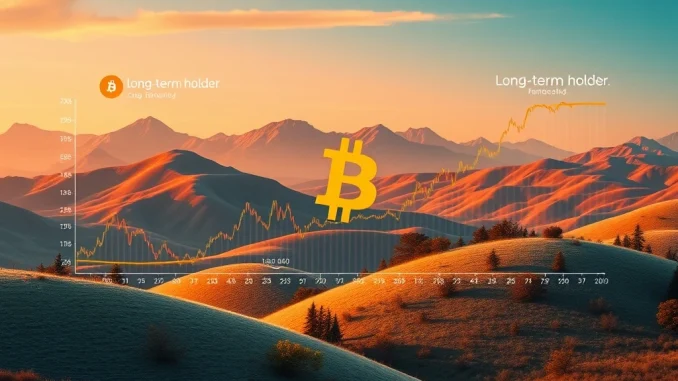
Long-term holders represent a cornerstone of the Bitcoin ecosystem. They typically acquire BTC and hold it for extended periods, often years, demonstrating strong conviction in its future value. Consequently, their selling behavior often signals shifts in market sentiment or profit-taking strategies. The latest Glassnode report indicates that these seasoned investors have recently increased their divestment.
Specifically, approximately 97,000 BTC were sold on August 29. This figure, while substantial, requires deeper context. Glassnode’s data meticulously breaks down this selling by different holding durations, providing a clearer picture of which cohorts are most active. This detailed segmentation helps analysts understand the motivations behind the sales.
Analyzing Recent BTC Selling Pressure
The recent surge in BTC selling pressure originates from various long-term holder groups. The report highlights specific cohorts contributing to this activity:
- One to Two Years Holders: This group sold a significant 34,500 BTC. These holders likely acquired their Bitcoin during the previous bull run’s latter stages or early bear market, potentially realizing gains or rebalancing portfolios.
- Six to Twelve Months Holders: Contributing 16,600 BTC to the selling pressure, these investors bought more recently, perhaps during the market recovery phases of late 2022 or early 2023.
- Three to Five Years Holders: These very long-term holders divested 16,000 BTC. Their selling could reflect strategic profit-taking after significant appreciation over several years.
While the August 29 selling event marked the largest single-day outflow from LTHs this year, Glassnode emphasizes its normalcy. The firm clarified that these levels do not signify panic or capitulation. Instead, they align with typical profit-taking and distribution patterns observed during various phases of a crypto market cycle.
Contextualizing Selling Trends Within the Crypto Market Cycle
Understanding the current selling activity requires historical perspective. Market cycles in cryptocurrency are characterized by periods of accumulation, growth, distribution, and correction. Long-term holders play a critical role in these cycles, often accumulating during bear markets and distributing during bull markets.
The Glassnode report explicitly states that current selling pressure, despite its increase, has not reached the peak levels seen in more extreme market conditions. For instance, it did not compare to the intense selling observed during significant market downturns, such as the period following the FTX collapse in November 2022. During such times, LTHs might sell out of necessity or fear, leading to much larger and more concentrated outflows. This distinction is vital for accurate Bitcoin price analysis.
Therefore, while the volume of BTC sold is noteworthy, its context within the broader market structure suggests a healthy, albeit cautious, market. This behavior indicates that LTHs are not in a state of distress but are rather engaging in strategic portfolio management. Such actions are a natural part of a maturing asset class.
Implications for Bitcoin Price Analysis
The behavior of Bitcoin long-term holders often serves as a key indicator for market analysts. When LTHs sell, it can temporarily increase supply on exchanges, potentially exerting downward pressure on prices. However, if this selling is orderly and within a ‘normal range,’ it suggests that the market can absorb the supply without significant disruption.
Conversely, aggressive selling by LTHs could signal deeper issues, such as a loss of confidence or impending market weakness. The current situation, as per Glassnode, does not point to such an alarming scenario. Instead, it suggests that a segment of LTHs is realizing profits or rebalancing their holdings after periods of appreciation, a common occurrence in a recovering or consolidating market.
Investors and traders should monitor these metrics closely. While current LTH selling is deemed normal, a sustained increase beyond these levels could indicate a shift in market dynamics. The key takeaway from the Glassnode report is that the market is processing these sales without significant alarm bells ringing.
The Role of On-Chain Data in Understanding Bitcoin
On-chain analytics, like those provided by Glassnode, offer unparalleled transparency into the Bitcoin network. By tracking the movement of coins directly on the blockchain, analysts can gain insights into the behavior of different investor cohorts, their holding periods, and their realized profits or losses. This data is far more granular than traditional market indicators.
The ability to differentiate between short-term speculators and Bitcoin long-term holders is invaluable. It allows for a more nuanced understanding of market sentiment and potential future price movements. For example, consistent accumulation by LTHs during bear markets often precedes bull runs, while their distribution during rallies can signal market tops.
The current analysis underscores the power of on-chain data in providing clarity amid market fluctuations. It helps to cut through the noise and focus on fundamental investor behavior. This deep dive into BTC selling pressure, informed by robust data, empowers investors to make more informed decisions.
In conclusion, while the recent rise in selling from Bitcoin long-term holders has captured attention, the detailed analysis from Glassnode provides a reassuring perspective. The activity remains within a normal range for the current crypto market cycle, suggesting strategic profit-taking rather than a widespread loss of confidence. Continuous monitoring of these on-chain metrics will be essential for navigating the evolving landscape of Bitcoin price analysis.
Frequently Asked Questions (FAQs)
Q1: What is a Bitcoin Long-Term Holder (LTH)?
A Bitcoin Long-Term Holder (LTH) is typically an investor who has held their Bitcoin for an extended period, usually 155 days or more, without moving it. These holders often have strong conviction in Bitcoin’s long-term value and are less reactive to short-term price fluctuations.
Q2: Why does LTH selling pressure matter for Bitcoin?
LTH selling pressure is significant because these investors hold a substantial portion of the circulating Bitcoin supply. Their decision to sell can indicate a shift in market sentiment, strategic profit-taking, or a response to major market events, thus influencing overall market supply and demand dynamics.
Q3: What does ‘normal range’ mean in the context of LTH selling?
‘Normal range’ means that the current volume of LTH selling, while elevated, is consistent with typical behavior observed during specific phases of a crypto market cycle, such as profit-taking after price appreciation. It does not suggest panic selling or a capitulation event, which would involve significantly higher and more aggressive outflows.
Q4: How does the Glassnode report help in Bitcoin price analysis?
The Glassnode report provides on-chain data, offering deep insights into investor behavior, including that of LTHs. By analyzing metrics like coin movements, holding periods, and realized profits/losses, it helps investors understand underlying market sentiment and potential supply/demand shifts, which are crucial for accurate Bitcoin price analysis.
Q5: Should investors be concerned about the recent BTC selling pressure?
According to the Glassnode report, the recent BTC selling pressure from LTHs, while notable, remains within a ‘normal range’ for the current market cycle. This suggests it is more likely strategic profit-taking rather than a sign of widespread concern or market weakness. Investors should monitor ongoing trends but avoid immediate alarm based solely on this data point.