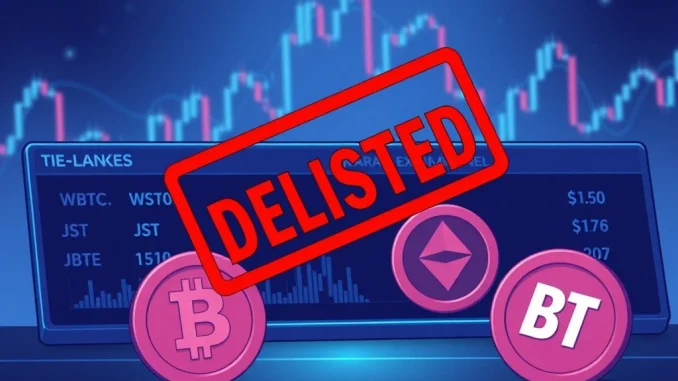
Cryptocurrency users are facing a significant announcement from OKX. The prominent exchange has revealed its decision to delist several **spot trading pairs**, a move that impacts a range of digital assets. This **OKX delisting** includes well-known tokens like Wrapped Bitcoin (WBTC) alongside JST, BTT, ERN, GLMR, and MOVR. Investors must understand the implications of this action. Furthermore, they need to take immediate steps to manage their portfolios effectively. This development highlights the dynamic nature of the crypto market.
OKX Delisting: The Official Announcement Unveiled
OKX officially announced the **delisting** of six specific **spot trading pairs** on its platform. This decision reflects ongoing efforts to maintain a robust and liquid trading environment. The affected pairs are WBTC/BTC, JST/USDT, BTT/USDT, ERN/USDT, GLMR/USDT, and MOVR/USDT. These delistings are scheduled to occur between 8:00 a.m. and 10:00 a.m. UTC on September 8.
Consequently, users holding these assets or actively trading these pairs must take action. The exchange has provided a clear timeline for the cessation of trading services. This ensures a structured transition for all affected users. Ultimately, the announcement aims to provide transparency and allow sufficient time for users to respond.
Understanding the Impact of WBTC Delist and Other Tokens
The **WBTC delist** from **spot trading pairs** on OKX is particularly noteworthy. WBTC, or Wrapped Bitcoin, represents Bitcoin on the Ethereum blockchain. It allows Bitcoin holders to participate in decentralized finance (DeFi) ecosystems. Its delisting might signal a re-evaluation of specific wrapped assets or liquidity concerns within that particular pair on the exchange.
For the other listed tokens—JST, BTT, ERN, GLMR, and MOVR—their removal also carries weight. Each project serves different purposes within the crypto space. JST supports the JUST DeFi ecosystem. BTT powers the BitTorrent network. ERN is for Ethernity Chain NFTs. GLMR is the native token of Moonbeam, a Polkadot parachain. MOVR is the native token of Moonriver, Moonbeam’s canary network. The delisting of these **spot trading pairs** means they will no longer be available for direct exchange against BTC or USDT on OKX’s spot market.
Why Crypto Delisting Occurs: Factors Behind Exchange Decisions
A **crypto delisting** event, such as the one announced by OKX, is not uncommon in the fast-evolving digital asset landscape. Exchanges regularly review their listed assets to ensure compliance, liquidity, and overall market health. Several factors typically contribute to such decisions.
- Low Liquidity and Trading Volume: Tokens with consistently low trading volumes can lead to poor price discovery and high slippage. This creates a suboptimal trading experience for users.
- Project Development and Performance: Exchanges assess whether projects continue to meet their initial promises or maintain active development. Stagnant projects may face delisting.
- Regulatory Concerns: The regulatory environment for cryptocurrencies is constantly changing. Exchanges often delist assets that pose potential regulatory risks.
- Security Issues: Any security vulnerabilities discovered within a token’s network or smart contract can lead to its removal to protect users.
- User Feedback and Market Demand: Sometimes, a lack of sustained user interest or market demand for a particular asset influences delisting decisions.
These criteria help **OKX exchange** maintain a high-quality and secure trading environment for its global user base. Therefore, delistings are often a necessary step to optimize the platform’s offerings.
Navigating Changes to Spot Trading Pairs: A User’s Guide
Users affected by the **OKX delisting** must take prompt action. The exchange will cease trading for the specified **spot trading pairs** on September 8. This means users cannot buy or sell these tokens against their respective pairs after the deadline. Consequently, any open orders for these pairs will be automatically canceled.
The most crucial step is to withdraw affected assets. OKX typically provides a grace period for withdrawals after delisting. However, users should not delay this process. For instance, if you hold WBTC, you should consider withdrawing it to an external wallet or converting it to another supported cryptocurrency before the deadline. Furthermore, users with active positions in these pairs must close them to avoid potential losses or complications. This proactive approach ensures asset security and avoids any last-minute issues.
What This Means for OKX Exchange Users and the Market
For **OKX exchange** users, this **crypto delisting** signals the platform’s commitment to curating its asset offerings. While delistings can be inconvenient for holders of specific tokens, they often contribute to a healthier overall trading ecosystem. By removing underperforming or risky assets, OKX aims to focus resources on more liquid and compliant cryptocurrencies. This strategy benefits the majority of its users.
Moreover, this move by OKX reflects broader trends in the cryptocurrency market. Exchanges worldwide are enhancing their scrutiny of listed assets. They prioritize compliance, security, and sustained project viability. This trend contributes to the maturation of the crypto industry. It also helps in building greater trust among institutional and retail investors. Ultimately, such actions shape the future direction of digital asset trading platforms.
The Broader Implications of Exchange Delistings
Exchange delistings carry broader implications for the cryptocurrency market. Firstly, they can impact the liquidity and perceived legitimacy of the delisted projects. Projects losing major exchange support might struggle to maintain their market capitalization and user base. Secondly, these actions emphasize the importance of diversification for investors. Relying heavily on a single token or exchange carries inherent risks. Therefore, a diversified portfolio can mitigate the impact of such events.
Lastly, delistings serve as a reminder of the dynamic nature of the crypto space. Market conditions, regulatory frameworks, and project performance are constantly evolving. Investors must stay informed and adapt their strategies accordingly. The **OKX delisting** serves as a case study in this continuous evolution.
Conclusion: Staying Informed in a Dynamic Market
The **OKX delisting** of **WBTC** and five other **spot trading pairs** marks an important event for the exchange and its users. It underscores the continuous efforts by major platforms like **OKX exchange** to refine their offerings and maintain market integrity. Users must act swiftly to manage their affected assets before the September 8 deadline. This proactive approach will prevent potential issues and ensure the security of their holdings. Staying informed about exchange announcements and market developments is crucial for navigating the ever-changing landscape of cryptocurrency investments.
Ultimately, while delistings can present challenges, they are a part of the necessary evolution of the crypto market. They help ensure that trading platforms remain robust, secure, and compliant. Always prioritize official announcements from exchanges. Furthermore, ensure you understand the terms and conditions associated with your digital assets.
Frequently Asked Questions (FAQs)
Q1: What exactly does an OKX delisting mean for my assets?
An **OKX delisting** means that the specified **spot trading pairs** will no longer be available for trading on the exchange. You will not be able to buy or sell these tokens against their respective pairs after the announced date. However, you typically retain ownership of your tokens and can withdraw them to an external wallet.
Q2: Which specific tokens are being delisted by OKX?
OKX is delisting the **spot trading pairs** for WBTC, JST, BTT, ERN, GLMR, and MOVR. Specifically, these are WBTC/BTC, JST/USDT, BTT/USDT, ERN/USDT, GLMR/USDT, and MOVR/USDT.
Q3: What should I do if I hold WBTC or other delisted tokens on OKX?
If you hold **WBTC** or any of the other delisted tokens, you must withdraw them to a private wallet or another exchange that supports them. Alternatively, you can convert them to another supported cryptocurrency on OKX before the delisting deadline. Ensure all open orders for these pairs are canceled.
Q4: When is the delisting scheduled to take place?
The delistings are scheduled to occur between 8:00 a.m. and 10:00 a.m. UTC on September 8. It is crucial to complete any necessary actions before this time.
Q5: Why did OKX decide on this crypto delisting?
Exchanges like **OKX exchange** often delist assets due to factors such as low liquidity, failure to meet listing criteria, project inactivity, or regulatory concerns. These decisions aim to maintain a healthy, secure, and compliant trading environment for users.
Q6: Will I still be able to withdraw my delisted tokens after September 8?
OKX typically provides a withdrawal period after delisting. However, this period is usually limited. It is highly recommended to withdraw your tokens well in advance of the delisting date to avoid any potential complications or loss of access to your funds.