The cryptocurrency market recently witnessed a significant milestone. Altcoin futures open interest has surged to an unprecedented level, reaching a staggering $61.7 billion. This remarkable increase signals a pivotal shift in how traders engage with digital assets, particularly altcoins. Indeed, this development underscores the growing influence and potential risks within the broader crypto ecosystem. Investors and analysts are closely monitoring these trends to understand their full implications.
Altcoin Futures Open Interest Hits Unprecedented Heights
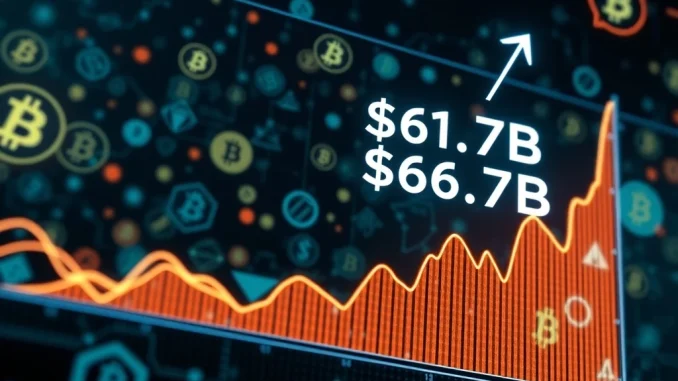
On August 22, the daily open interest (OI) for altcoin futures saw an extraordinary jump. Specifically, it rose by approximately $9.2 billion in a single day. This rapid inflow propelled the total altcoin futures open interest to an all-time high of $61.7 billion. Glassnode, a prominent on-chain analytics firm, reported this significant event via an X post. Such a dramatic increase clearly highlights the escalating engagement in altcoin derivatives markets. Consequently, market participants must understand what this surge truly represents.
Open interest refers to the total number of outstanding derivative contracts, such as futures or options, that have not yet been settled. Therefore, a high OI indicates significant market activity and investor interest. When this figure reaches a new record, it suggests a substantial amount of capital is being deployed in these speculative instruments. This trend points to a growing appetite for leveraged positions on altcoins. Furthermore, it implies a collective market sentiment anticipating significant price movements.
Understanding the Dynamics of Altcoin Futures
Altcoin futures are derivative contracts. They allow traders to speculate on the future price of various cryptocurrencies, excluding Bitcoin. These contracts do not require traders to own the underlying asset. Instead, they agree to buy or sell a specific altcoin at a predetermined price on a future date. This mechanism offers flexibility. It enables traders to profit from both rising and falling markets. Moreover, futures markets are often used for hedging existing spot positions or for pure speculation.
The recent surge in altcoin futures trading volume reflects increased sophistication in the digital asset space. Traders are increasingly utilizing complex financial instruments. This evolution brings both opportunities and challenges. Specifically, it amplifies the potential for substantial gains. However, it also introduces heightened risks. The ability to use leverage within these markets is a key factor. It allows traders to control larger positions with a relatively small amount of capital. This amplification mechanism drives much of the observed market behavior.
The Impact on Crypto Market Volatility
Glassnode specifically highlighted a crucial aspect of this trend. They noted, “Such rapid inflows highlight how altcoins are increasingly driving leverage, volatility, and fragility across digital asset markets.” This statement underscores a critical concern. Elevated crypto market volatility often accompanies high leverage. When many traders use borrowed funds, even small price swings can trigger liquidations. These forced sales can create cascading effects. Consequently, they lead to more significant price drops or surges.
Increased volatility can attract more speculative traders. These participants often seek quick profits. However, it also deters more cautious investors. This dynamic creates a challenging environment. Furthermore, it makes price prediction more difficult. Therefore, understanding the interplay between open interest, leverage, and market movements becomes essential. Traders must exercise extreme caution. They need robust risk management strategies to navigate these turbulent conditions effectively.
Decoding Digital Asset Leverage
Digital asset leverage allows traders to magnify their potential returns. By borrowing funds, traders can open positions much larger than their initial capital. For example, with 10x leverage, a $1,000 investment can control a $10,000 position. While this can lead to substantial profits, it also significantly amplifies losses. A small adverse price movement can quickly wipe out an entire margin balance. Indeed, this inherent risk is a defining characteristic of leveraged trading.
The growing popularity of digital asset leverage in altcoin markets indicates several factors. Firstly, traders perceive higher growth potential in altcoins compared to more established assets like Bitcoin. Secondly, improved accessibility to sophisticated trading platforms contributes to this trend. Finally, the desire for quick returns drives many participants. However, this increased leverage also makes the market more susceptible to sudden shifts. It can lead to rapid price corrections. Therefore, prudent management of leveraged positions is vital for market stability and individual financial safety.
Implications of Record High Open Interest
The attainment of a record high open interest figure carries multiple implications for the broader cryptocurrency landscape. Firstly, it suggests a strong, albeit speculative, belief in the future performance of altcoins. This bullish sentiment often fuels further investment. Secondly, it indicates a mature derivatives market. This maturity offers more tools for sophisticated traders. However, it also raises concerns about potential market overheating. An over-leveraged market can be highly unstable.
A high open interest can also be a precursor to significant liquidation events. If the market moves sharply against the prevailing leveraged positions, a cascade of liquidations could occur. This scenario would lead to rapid price declines. Conversely, a squeeze of short positions could trigger a sharp upward rally. Therefore, market participants must closely monitor funding rates and market sentiment indicators. These metrics provide valuable insights into potential future price action. Ultimately, understanding these implications helps traders make more informed decisions.
Navigating the Evolving Digital Asset Landscape
The current environment demands a cautious yet informed approach from investors. The surge in altcoin futures open interest signifies both immense opportunity and considerable risk. Therefore, understanding market dynamics is paramount. Investors should prioritize robust risk management strategies. This includes setting stop-loss orders. It also involves managing position sizes appropriately. Furthermore, diversifying portfolios can mitigate single-asset risks. Continuous education about market trends and technical analysis remains crucial.
Staying informed about regulatory developments also holds importance. Regulators worldwide are increasingly scrutinizing leveraged trading products. Changes in regulations could impact market access and trading conditions. Moreover, utilizing reliable data sources, like Glassnode, provides critical insights. These insights help in assessing market health and potential vulnerabilities. Ultimately, a well-rounded strategy, combining knowledge, discipline, and adaptability, will best serve participants in this rapidly evolving digital asset market.
Conclusion: A New Era for Altcoin Trading
The record-breaking $61.7 billion in altcoin futures open interest marks a significant moment for the cryptocurrency industry. It reflects a maturing market with increasing participation and complex trading strategies. While this growth presents exciting opportunities for investors, it also brings amplified risks, particularly concerning leverage and market fragility. As altcoins continue to drive a substantial portion of market activity, understanding these dynamics becomes indispensable. Prudent risk management and continuous market analysis will be key for navigating this evolving landscape successfully.
Frequently Asked Questions (FAQs)
1. What is Altcoin Futures Open Interest?
Altcoin futures open interest refers to the total number of outstanding futures contracts for altcoins (cryptocurrencies other than Bitcoin) that have not yet been closed or settled. It represents the total value of active contracts, indicating the amount of capital currently exposed to altcoin price speculation through derivatives.
2. Why is $61.7 Billion Considered a Record High for Altcoin Futures OI?
The $61.7 billion figure is a record high because it represents the largest amount of capital ever deployed in outstanding altcoin futures contracts. This unprecedented level signifies a substantial increase in investor interest and speculative activity in altcoin derivatives markets, as reported by analytics firms like Glassnode.
3. How Does Digital Asset Leverage Affect Altcoin Futures Trading?
Digital asset leverage allows traders to control larger positions in altcoin futures with a smaller initial capital outlay. While it can magnify potential profits from favorable price movements, it also significantly amplifies potential losses. High leverage can lead to rapid liquidations during adverse market shifts, increasing overall market volatility.
4. What are the Risks Associated with High Altcoin Futures Open Interest?
High open interest, especially when coupled with significant leverage, can increase market fragility. It raises the risk of large liquidation cascades if prices move sharply against prevailing positions. This can lead to exaggerated price swings, heightened volatility, and potential market instability, as warned by Glassnode.
5. Which Types of Altcoins Are Typically Involved in Futures Trading?
Many prominent altcoins are involved in futures trading. These often include large-cap altcoins like Ethereum (ETH), Solana (SOL), Cardano (ADA), Ripple (XRP), and various DeFi tokens. Exchanges typically list futures contracts for altcoins with sufficient liquidity and market demand.
6. How Can Traders Manage Risk in a High Open Interest Altcoin Futures Market?
Traders can manage risk by implementing strict risk management strategies. These include setting stop-loss orders to limit potential losses, carefully managing position sizes relative to their capital, avoiding excessive leverage, diversifying their portfolios, and continuously monitoring market indicators and news. Understanding market sentiment and potential liquidation levels is also crucial.