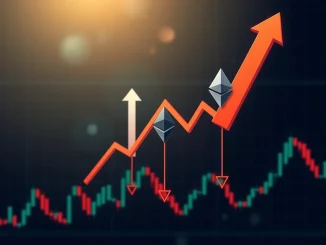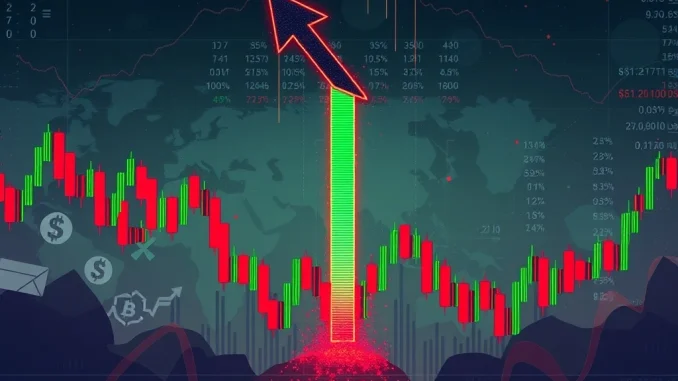
The cryptocurrency market recently witnessed a dramatic event. Specifically, $103 million worth of crypto futures were liquidated in just one hour. This rapid sell-off has captured significant attention across the industry. Such substantial liquidations highlight the inherent risks and rapid shifts within the digital asset space. Furthermore, it underscores the intense market volatility that often characterizes cryptocurrency trading.
Understanding Crypto Liquidations: A Deeper Dive
What exactly are crypto liquidations? They occur when an exchange forcibly closes a trader’s leveraged position. This happens due to a partial or total loss of the trader’s initial margin. Essentially, the trader’s collateral is no longer sufficient to maintain the open position. This process is automatic. It prevents further losses for both the trader and the exchange. Major exchanges facilitate these futures contracts. They also implement strict risk management protocols.
Futures contracts are agreements to buy or sell an asset at a predetermined price on a future date. In crypto, these contracts often involve high leverage. This means traders can control large positions with a relatively small amount of capital. While leverage can amplify profits, it also significantly increases potential losses. Therefore, even small price movements can trigger a liquidation. This recent $103 million event serves as a stark reminder of these amplified risks.
The Mechanics of Futures Liquidation
A futures liquidation is a critical mechanism in derivatives trading. When a trader opens a leveraged position, they put up a small amount of collateral, known as margin. The exchange then lends them the rest of the funds to execute the trade. If the market moves against the trader’s position, their margin begins to deplete. Once the margin falls below a certain threshold, known as the maintenance margin, the exchange issues a margin call. If the trader fails to add more funds, the position is automatically closed.
This automated closure is the liquidation. It ensures that the trader does not incur a negative balance. It also protects the exchange from absorbing those losses. Liquidations can create a cascading effect. As positions are closed, market sell orders are triggered. This can push prices down further. This downward pressure then triggers more liquidations, creating a feedback loop. Such events contribute significantly to market instability. The recent $103 million liquidation is a clear example of this dynamic.
The Role of Bitcoin Futures in Market Movements
While the liquidation figures encompass various cryptocurrencies, Bitcoin futures often dominate these statistics. Bitcoin, as the largest cryptocurrency by market capitalization, heavily influences the broader market. Its price movements frequently set the tone for altcoins. Consequently, large liquidations in Bitcoin futures can send ripples throughout the entire crypto ecosystem. Traders often use Bitcoin futures to speculate on its future price or to hedge existing spot positions.
The sheer volume of Bitcoin futures trading means that liquidations in this segment can be particularly impactful. For instance, a sudden price drop in Bitcoin can quickly wipe out leveraged long positions. Conversely, a sharp price increase can liquidate short positions. This constant interplay between price action and leveraged positions makes Bitcoin futures a focal point for market observers. The scale of recent liquidations suggests a significant price swing that caught many traders off guard.
Leveraged Trading: High Rewards, Higher Risks
Leveraged trading allows participants to magnify their exposure to price movements. It is a double-edged sword. A small initial investment can control a much larger position. This amplifies potential gains. However, it equally amplifies potential losses. For example, a 10x leverage means a 1% price move against your position results in a 10% loss of your margin. If the market moves 10% against you, your entire margin is wiped out, leading to liquidation.
Many retail traders are drawn to leveraged trading due to the promise of quick, substantial profits. Yet, without robust risk management strategies, it can lead to rapid capital depletion. The past hour’s $103 million liquidation serves as a stark reminder of this reality. It highlights the unforgiving nature of highly leveraged positions in volatile markets. Traders must understand the inherent risks before engaging in such activities. Proper risk management is paramount for survival in this environment.
Analyzing Recent Market Volatility
The cryptocurrency market is renowned for its rapid price swings. This inherent market volatility is a defining characteristic. The recent $103 million liquidation in an hour, alongside $378 million over 24 hours, underscores this point. Such significant figures indicate a sharp, sudden price movement that triggered widespread margin calls. This kind of volatility can stem from various factors. Macroeconomic news, regulatory announcements, or even large institutional trades can all contribute.
For instance, unexpected interest rate hikes or geopolitical events can cause a ripple effect across global financial markets, including crypto. Similarly, news about a major crypto project or a regulatory crackdown can trigger rapid price adjustments. This high volatility creates both opportunities and substantial risks for traders. It demands constant vigilance and adaptable trading strategies. Traders must remain aware of both technical and fundamental market indicators.
Impact on Traders and Market Sentiment
Massive liquidations have a profound impact on individual traders. Those on the wrong side of the market movement experience significant financial losses. This can be devastating for personal portfolios. Beyond individual losses, these events also affect overall market sentiment. A wave of liquidations can foster fear and uncertainty. This often leads to further selling pressure as remaining traders de-risk their positions. The market then becomes more susceptible to further downturns.
Conversely, a large liquidation event can sometimes ‘reset’ the market. It can flush out overleveraged positions. This potentially creates a healthier, more stable base for future price appreciation. However, the immediate aftermath is usually characterized by heightened caution. Traders become more hesitant to take on new leveraged positions. This shift in sentiment can influence short-term market dynamics. It often takes time for confidence to rebuild after such significant events.
Navigating the Volatile Crypto Landscape
Given the inherent volatility and the potential for large-scale liquidations, prudent risk management is essential. Traders should always consider the appropriate level of leverage for their risk tolerance. Over-leveraging is a common pitfall. Diversifying portfolios can also help mitigate risk. Spreading investments across different assets reduces exposure to any single asset’s price fluctuations. Furthermore, setting stop-loss orders is a crucial strategy.
A stop-loss order automatically closes a position when the price reaches a predetermined level. This limits potential losses. Continuous education about market dynamics and technical analysis is also beneficial. Staying informed about macroeconomic trends and crypto-specific news helps traders anticipate potential market shifts. While no strategy can eliminate risk entirely, these practices can significantly improve a trader’s chances of navigating volatile periods successfully. The recent $103 million event serves as a powerful lesson for all market participants.
The Road Ahead for Crypto Futures
The crypto futures market continues to grow. It attracts both retail and institutional participants. Its development brings increased liquidity and sophisticated trading tools. However, the events of the past hour and day remind us of its inherent dangers. Regulatory bodies worldwide are also paying closer attention to leveraged crypto products. They aim to protect investors and maintain market integrity. Potential regulations could impact how these products are offered and traded.
As the market matures, we may see further evolution in risk management practices and product offerings. Exchanges might implement stricter leverage limits. They could also enhance transparency around liquidation mechanisms. Ultimately, the future of crypto futures will likely involve a balance between innovation and investor protection. Understanding the risks, especially concerning rapid liquidations, remains paramount for anyone participating in this dynamic space.
The $103 million liquidation event serves as a critical data point. It illustrates the ongoing intensity and unpredictable nature of the crypto market. Traders must approach leveraged positions with extreme caution. Continuous learning and adaptive strategies are vital for navigating this high-stakes environment effectively. The market remains an exciting but challenging arena for all participants.
Frequently Asked Questions (FAQs)
Q1: What is a crypto liquidation?
A crypto liquidation occurs when an exchange automatically closes a trader’s leveraged position. This happens because their initial margin or collateral has fallen below a required level, typically due to adverse price movements. It prevents further losses for the trader and the exchange.
Q2: Why do large crypto liquidations happen?
Large crypto liquidations are usually triggered by significant and rapid price movements in the market. When prices move sharply against many traders’ leveraged positions, their collateral becomes insufficient. This leads to a cascade of automatic closures, especially during periods of high market volatility.
Q3: How does leveraged trading contribute to liquidations?
Leveraged trading allows traders to open positions larger than their actual capital. While this amplifies potential profits, it also magnifies losses. Even small price changes can quickly deplete a trader’s margin when high leverage is used, leading to faster and more frequent liquidations.
Q4: What is the significance of $103 million in crypto liquidations in one hour?
The liquidation of $103 million in crypto futures within a single hour signifies an extremely sharp and sudden market movement. It indicates that a large number of leveraged positions were wiped out very quickly, highlighting intense market volatility and significant financial impact on traders.
Q5: How can traders protect themselves from liquidations?
Traders can protect themselves by using lower leverage, setting stop-loss orders to limit potential losses, diversifying their portfolios, and consistently managing their risk exposure. Understanding market dynamics and staying informed about news events also helps in making more informed trading decisions.
Q6: Are Bitcoin futures always the primary cause of liquidations?
While Bitcoin futures often account for a significant portion of liquidations due to Bitcoin’s market dominance and high trading volume, liquidations can occur across various cryptocurrency futures. Major price movements in any highly traded altcoin can also lead to substantial liquidations in their respective futures contracts.