Geopolitical shifts often send ripples across global markets, influencing everything from traditional stocks to the volatile world of cryptocurrencies. In a recent development, President Donald Trump reportedly expressed a firm stance on the ongoing conflict in Eastern Europe. This significant declaration could reshape future diplomatic efforts and market sentiment alike. Understanding the nuances of this position is crucial for anyone monitoring global stability and its broader economic implications.
Trump Ceasefire Position: A Bold Declaration
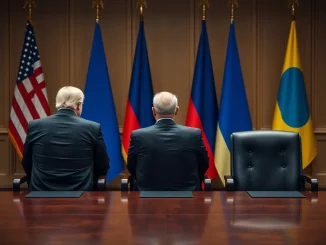
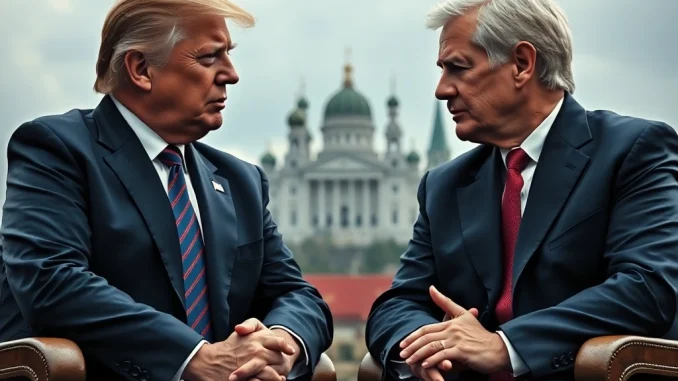
During a bilateral meeting with Ukrainian President Volodymyr Zelensky, former U.S. President Donald Trump conveyed a clear message. He indicated that a ceasefire might not be the immediate solution needed. This perspective, as reported by Walter Bloomberg on X, marks a notable departure from some previous calls for a cessation of hostilities. Instead, Trump suggested a different path forward. This approach focuses on a more definitive resolution to the protracted conflict. Such a position carries significant weight on the international stage.
Earlier statements from Trump provided further context for this viewpoint. He previously observed that Russian President Vladimir Putin appeared to favor an ‘end-of-war agreement’ over a simple ceasefire. This distinction is crucial. A ceasefire typically halts fighting temporarily. However, it does not necessarily resolve underlying issues. An end-of-war agreement, conversely, aims for a comprehensive settlement. It seeks to address the root causes of the conflict. Therefore, Trump’s alignment with Putin’s preference for a final agreement suggests a strategy. This strategy prioritizes long-term stability over short-term pauses in fighting.
Zelensky Talks and Diplomatic Implications
The bilateral discussions between President Trump and President Zelensky are pivotal. They occur at a critical juncture in the **Russia Ukraine conflict**. Ukraine has consistently sought international support. Its primary goal is to restore its territorial integrity. Zelensky has emphasized that any peace agreement must respect Ukraine’s sovereignty. His government has also rejected any territorial concessions. These talks with Trump, therefore, carry immense importance. They could influence future aid packages and diplomatic strategies. The nature of these discussions also highlights the complex web of international relations. Many nations are involved in mediating or supporting either side.
Furthermore, the U.S. plays a central role in supporting Ukraine. Its policy decisions have a profound impact on the conflict’s trajectory. Trump’s direct communication with Zelensky underscores this influence. It also signals a potential shift in the diplomatic landscape. The content of these discussions will undoubtedly be scrutinized by allies and adversaries alike. They will seek to understand the implications for future peace initiatives. A unified front among Western nations remains a key factor. Yet, differing approaches to conflict resolution can emerge. These differences might complicate efforts to achieve lasting peace.
Understanding the Russia Ukraine Conflict Landscape
The ongoing **Russia Ukraine conflict** began in February 2022. It has since caused widespread devastation. Millions of Ukrainians have been displaced. Cities have suffered extensive damage. The conflict has also triggered significant geopolitical realignments. Western nations, led by the U.S., have provided substantial military and financial aid to Ukraine. Sanctions against Russia have also been imposed. These measures aim to cripple Russia’s economy. They also intend to pressure Moscow to withdraw its forces. Despite these efforts, the fighting continues relentlessly. Both sides remain committed to their objectives.
Numerous attempts at mediation have failed. Peace talks have repeatedly stalled. This stalemate highlights the deep-seated disagreements between Kyiv and Moscow. Ukraine insists on the full restoration of its 1999 borders. Russia, however, demands recognition of its annexed territories. These irreconcilable positions make a straightforward ceasefire challenging. A temporary pause might only allow one side to regroup. It could also solidify current front lines. Consequently, a more comprehensive agreement becomes essential for a durable peace. This is the context in which Trump’s remarks gain significance.
Putin End-of-War Preference: A Deeper Look
President Vladimir Putin’s stated preference for an ‘end-of-war agreement’ is not new. He has consistently articulated a desire for a final settlement. This settlement would address Russia’s security concerns. It would also formalize the status of territories it now controls. For Putin, a mere ceasefire without a political resolution is insufficient. Such a temporary measure would leave core issues unresolved. This could lead to renewed conflict in the future. Therefore, Russia seeks a comprehensive package. This package would include security guarantees and territorial acknowledgements. These are critical components from Moscow’s perspective.
This preference contrasts sharply with Ukraine’s immediate needs. Ukraine often prioritizes a ceasefire to alleviate humanitarian suffering. It also seeks to create conditions for withdrawal of Russian forces. However, Putin’s emphasis on a definitive ‘end-of-war’ suggests a different strategic goal. He aims for a resolution that permanently alters the regional security architecture. This includes ensuring Ukraine’s neutrality. It also involves preventing its integration into Western military alliances. Understanding this distinction is vital. It sheds light on the complexities of achieving a lasting peace. It also explains why simple ceasefires have not gained traction.
Impact on US Foreign Policy and Global Dynamics
President Trump’s remarks carry significant implications for **US foreign policy**. A shift in approach could reshape the international coalition supporting Ukraine. Allies might need to re-evaluate their strategies. The U.S. role as a global leader in conflict resolution is also under scrutiny. Trump’s ‘America First’ approach has often prioritized national interests. It has sometimes led to skepticism about traditional alliances. His stance on the ceasefire could signal a more transactional approach to diplomacy. This approach would seek concrete outcomes rather than incremental steps.
Moreover, the statement comes amidst an election year. Foreign policy debates often become central to political campaigns. Trump’s position could resonate with voters. They might be weary of prolonged foreign entanglements. Conversely, it could draw criticism from those advocating for robust support for Ukraine. The outcome of these discussions will undoubtedly influence global dynamics. It will impact the balance of power and future security arrangements in Europe. Therefore, the world watches closely. The implications for peace and stability are profound.
Distinguishing Ceasefire from End-of-War Agreement
It is important to clarify the terms ‘ceasefire’ and ‘end-of-war agreement.’ These terms are often used interchangeably. However, they denote distinct diplomatic outcomes. A **ceasefire** is a temporary suspension of hostilities. Its primary purpose is to halt immediate fighting. It often allows for humanitarian aid. It can also create space for negotiations. Yet, it does not imply a resolution of the conflict. The underlying political issues remain unresolved. Examples include the numerous ceasefires during the Syrian Civil War. Many of these eventually collapsed.
An **end-of-war agreement**, conversely, signifies a comprehensive settlement. This involves formal peace treaties. It includes agreements on borders, security guarantees, and political structures. Such an agreement aims to permanently conclude the conflict. It addresses the core grievances of all parties. The Dayton Accords, which ended the Bosnian War, serve as an example. They established a lasting peace. Trump’s emphasis on an ‘end-of-war agreement’ suggests a preference for a definitive resolution. This contrasts with temporary pauses in fighting. It reflects a desire to move beyond a protracted stalemate. This distinction is critical for understanding the diplomatic challenges ahead.
Future Outlook and Geopolitical Chessboard
The path forward for the **Russia Ukraine conflict** remains uncertain. Trump’s recent statements add another layer of complexity. His preference for an ‘end-of-war agreement’ aligns with Putin’s stated goals. However, it clashes with Ukraine’s immediate needs. Ukraine seeks to regain lost territories. It also aims to secure its future sovereignty. Any comprehensive agreement would require significant concessions from both sides. This appears unlikely in the current climate. Furthermore, the reactions of NATO allies will be crucial. They have largely supported Ukraine’s defensive efforts. Any shift in U.S. policy could test these alliances.
The geopolitical chessboard is constantly evolving. International pressure, economic sanctions, and military aid continue to shape the conflict. Diplomatic efforts will undoubtedly intensify. However, the conditions for a lasting peace remain elusive. The world watches to see if a new approach can unlock a resolution. Whether it’s a ceasefire or a comprehensive agreement, the human cost of the conflict remains immense. The global community hopes for an end to the hostilities. It seeks a future built on stability and respect for international law.
Frequently Asked Questions (FAQs)
Q1: What did President Trump say about a ceasefire with Zelensky?
President Trump reportedly told Ukrainian President Volodymyr Zelensky that he does not believe a ceasefire is needed for the ongoing Russia-Ukraine conflict. He indicated a preference for a more comprehensive ‘end-of-war agreement’ rather than a temporary pause in fighting.
Q2: Why does Trump prefer an ‘end-of-war agreement’ over a ceasefire?
Trump’s preference for an ‘end-of-war agreement’ aligns with Russian President Vladimir Putin’s stated position. A ceasefire is a temporary halt to fighting, while an end-of-war agreement seeks a definitive and comprehensive political resolution to the conflict, addressing underlying issues and potentially establishing new security arrangements.
Q3: How does this stance impact the Russia-Ukraine conflict?
This stance suggests a potential shift in the diplomatic approach to the conflict. It implies a focus on achieving a permanent settlement rather than incremental pauses. It could influence future international mediation efforts and the nature of peace talks, potentially prolonging active conflict until a broader agreement is reached.
Q4: What are the implications for US foreign policy?
Trump’s position could signal a re-evaluation of US foreign policy regarding the conflict. It might lead to a different strategy concerning aid to Ukraine and engagement with Russia. This could also affect the unity and strategy of the international coalition supporting Ukraine, prompting allies to reassess their own approaches.
Q5: How does a ‘ceasefire’ differ from an ‘end-of-war agreement’?
A ceasefire is a temporary suspension of hostilities to stop immediate fighting and allow for humanitarian efforts or initial talks, but it doesn’t resolve the core conflict. An ‘end-of-war agreement’ is a comprehensive, formal resolution that includes political settlements, border definitions, and security guarantees, aiming for a permanent conclusion to the conflict.