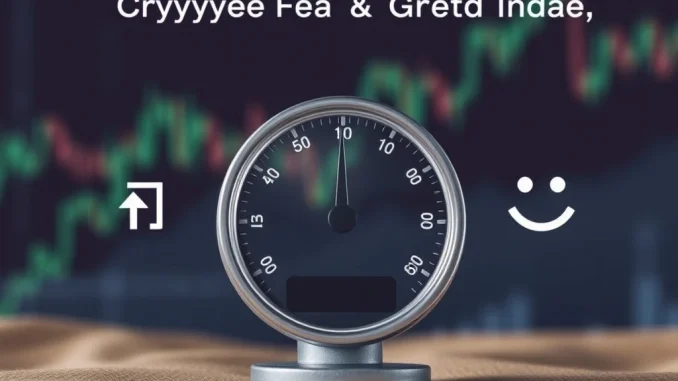
Understanding the collective mood of cryptocurrency investors is a critical component of navigating the volatile digital asset landscape. The Crypto Fear & Greed Index serves as a valuable barometer for this very purpose. This essential tool provides insights into whether market participants are feeling overly fearful or excessively greedy. Its movements often signal potential shifts in market dynamics. On August 16, the index registered 56, marking a four-point decrease from the previous day. Despite this dip, the index firmly remained within the ‘Greed’ territory. This reading indicates a continued positive, yet slightly tempered, outlook among investors.
Understanding the Crypto Fear & Greed Index
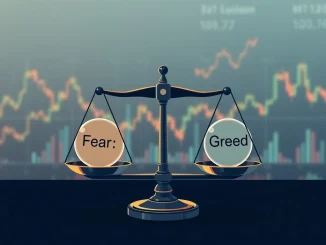
The Crypto Fear & Greed Index is a sophisticated metric designed to capture the prevailing emotional state of the cryptocurrency market. It offers a quantifiable measure of sentiment, ranging from 0 to 100. A score of 0 signifies ‘Extreme Fear,’ indicating that investors are highly apprehensive and potentially overselling. Conversely, a score of 100 represents ‘Extreme Greed,’ suggesting that the market might be overheated and due for a correction. This index provides a snapshot of market psychology, helping investors make more informed decisions.
Many traders and analysts closely monitor the index. It helps them gauge when the market might be ripe for a reversal. Historically, periods of extreme fear have presented buying opportunities for long-term investors. Conversely, times of extreme greed often precede price pullbacks. The index acts as a counter-indicator for some, suggesting that one should be cautious when others are greedy, and brave when others are fearful.
Deconstructing the Index: Key Factors Influencing Bitcoin Sentiment
The comprehensive nature of the Crypto Fear & Greed Index stems from its reliance on multiple data points. It aggregates information from six distinct factors, each contributing a specific weight to the final score. These factors provide a holistic view of the market’s underlying drivers and contribute significantly to understanding overall Bitcoin sentiment:
- Volatility (25%): This component measures the current volatility and maximum drawdowns of Bitcoin compared to its average over the last 30 and 90 days. Higher volatility often indicates fear.
- Market Momentum/Volume (25%): This factor analyzes the current volume and market momentum. High buying volumes in a rising market typically signal greed.
- Social Media (15%): The index scans various social media platforms for specific keywords and analyzes the sentiment of posts. Increased discussion and positive sentiment can indicate growing greed.
- Surveys (15%): This component gathers data from weekly polls, asking investors about their market outlook. However, it is important to note that surveys are currently paused, which may slightly alter the index’s sensitivity.
- Bitcoin Dominance (10%): Bitcoin’s share of the total crypto market capitalization is assessed. A rising Bitcoin dominance can suggest fear, as investors often flock to Bitcoin as a ‘safe haven’ during uncertain times.
- Google Trends (10%): This factor examines search query data for Bitcoin-related terms. A surge in searches for ‘Bitcoin price manipulation’ or ‘Bitcoin crash’ indicates fear, while searches for ‘buy Bitcoin’ suggest greed.
The combination of these diverse metrics allows the index to offer a nuanced perspective on prevailing crypto market sentiment.
Navigating Market Sentiment Analysis: What 56 Means
The current reading of 56 on the Greed Index places the market squarely in the ‘Greed’ zone. While this is a decrease from the previous day’s 60, it still signifies a predominantly optimistic outlook among investors. A score in the mid-50s suggests confidence without reaching extreme euphoria. It indicates that participants are willing to buy, but perhaps with a degree of caution. This level of greed is often considered healthy for a bull market, as it avoids the frothy conditions seen at much higher readings.
A slight decline in the index can reflect several underlying dynamics. It might be due to minor price corrections, a decrease in trading volume, or a subtle shift in social media chatter. Investors should interpret this dip not as a sign of impending doom, but rather as a minor adjustment. It suggests the market is consolidating its gains. Furthermore, this mid-range ‘Greed’ indicates that there is still room for growth before the market becomes excessively overbought. Therefore, for those performing market sentiment analysis, 56 suggests a generally positive but not overly exuberant environment.
Leveraging the Greed Index for Informed Decisions
For investors and traders, the Greed Index serves as a valuable supplementary tool for their decision-making process. It provides an emotional overlay to fundamental and technical analysis. When the index moves into ‘Extreme Fear,’ it often signals a potential bottom. This can be an opportune moment for contrarian investors to consider accumulating assets. Conversely, when the index surges into ‘Extreme Greed,’ it may suggest a local top. This could be a signal for investors to take profits or reduce their exposure. However, it is crucial to remember that the index is not a standalone trading signal. It should always be used in conjunction with other analytical methods.
The index helps validate or challenge one’s own emotional biases. If you feel extremely bullish but the index shows ‘Extreme Fear,’ it might be worth re-evaluating your position. Similarly, if you are fearful but the index shows ‘Extreme Greed,’ it could be a sign to temper your expectations. Ultimately, the Crypto Fear & Greed Index provides a unique lens through which to view the often irrational human element in financial markets.
Conclusion: Monitoring Crypto Market Sentiment
The recent movement of the Crypto Fear & Greed Index to 56, while remaining in ‘Greed,’ offers valuable insights into the current state of crypto market sentiment. It reflects a market that is still confident but perhaps slightly less ebullient than before. Understanding the factors that contribute to this index allows investors to better gauge the collective mood. This knowledge empowers them to make more strategic decisions. As the market continues its dynamic journey, closely monitoring this and other sentiment indicators will remain essential for navigating the complex world of cryptocurrencies.
Frequently Asked Questions (FAQs)
Q1: What is the Crypto Fear & Greed Index?
The Crypto Fear & Greed Index is a tool that measures the current emotional state of the cryptocurrency market. It ranges from 0 (Extreme Fear) to 100 (Extreme Greed), helping investors gauge whether the market is overly fearful or excessively confident.
Q2: How is the Crypto Fear & Greed Index calculated?
The index is calculated using six weighted factors: volatility (25%), market momentum/volume (25%), social media (15%), surveys (15%), Bitcoin dominance (10%), and Google Trends (10%). These factors are combined to produce a single sentiment score.
Q3: What does a score of 56 on the Greed Index signify?
A score of 56 indicates that the market is in the ‘Greed’ zone. This suggests that investors are generally optimistic and willing to buy, but it is not at an extreme level of euphoria. It often represents a healthy, confident market outlook.
Q4: Can the Crypto Fear & Greed Index predict market movements?
While the index is a valuable indicator of market sentiment, it is not a direct predictor of future price movements. It serves as a contrarian tool for some, suggesting potential buying opportunities during extreme fear and caution during extreme greed. Always use it in conjunction with other market analysis tools.
Q5: Why are surveys currently paused in the index calculation?
The provided information states that surveys are currently paused. The exact reason for this pause is not specified, but it means that the 15% weighting normally attributed to survey data is temporarily excluded from the index’s calculation, potentially making other factors slightly more influential in the interim.