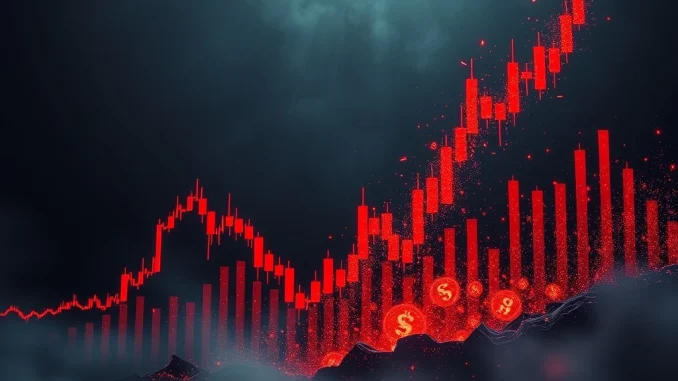
The cryptocurrency market experienced a dramatic event recently. Over $141 million worth of crypto futures liquidated within a single hour. This sudden downturn highlights the inherent risks of leveraged trading. Furthermore, the past 24 hours saw total liquidations soar to an astounding $502 million. Such significant figures capture the attention of investors globally. They also underscore the volatile nature of digital assets.
Understanding Crypto Liquidations and the Futures Market
Many investors wonder about the term ‘liquidation.’ Simply put, a liquidation occurs when an exchange forcefully closes a trader’s leveraged position. This happens due to a partial or total loss of the trader’s initial margin. Traders use leverage to amplify their potential returns. However, it also magnifies potential losses. When the market moves against a highly leveraged position, the exchange steps in. They close the position to prevent further losses to the trader and the exchange itself. This mechanism protects all parties involved. Therefore, understanding this process is crucial for anyone engaging with the futures market.
Futures contracts are agreements to buy or sell an asset at a predetermined price on a specific future date. In the crypto world, these contracts allow traders to speculate on price movements without owning the underlying asset. Major exchanges offer these products. They attract both institutional and retail investors. However, the use of leverage makes these instruments particularly risky. A small price swing can trigger large losses. This leads directly to liquidations. Therefore, careful risk management is essential.
The Mechanics Behind Massive Liquidations
Several factors contribute to large-scale crypto liquidations. Primarily, sudden and sharp price movements are the main culprits. When Bitcoin or other major cryptocurrencies experience rapid drops or spikes, leveraged positions quickly become unprofitable. Here are key contributing factors:
- Sudden Price Swings: Unexpected market shifts can quickly deplete a trader’s margin.
- High Leverage: Using high leverage ratios means even minor price changes can lead to liquidation.
- Market Contagion: Liquidations can cascade. One liquidation triggers others as prices continue to move.
- Economic News: Macroeconomic announcements or regulatory news can also cause market instability.
For example, a sudden drop in Bitcoin futures prices would impact all leveraged long positions. Similarly, a rapid price surge would liquidate leveraged short positions. These events often create a ‘long squeeze’ or ‘short squeeze.’ This intensifies market movements. Ultimately, it causes more liquidations. This creates a feedback loop.
Analyzing the Impact of Recent Cryptocurrency Volatility
The recent $141 million liquidation event is a stark reminder of cryptocurrency volatility. Such significant liquidations signal market instability. They can also indicate a shift in market sentiment. When a large number of positions are closed, it often adds further downward pressure on prices. This is because the underlying assets might be sold off. This amplifies the initial price move. Moreover, it can shake investor confidence. Traders become more cautious. This leads to reduced trading activity. It also encourages de-leveraging across the market.
Historically, similar large-scale liquidation events have preceded periods of consolidation or further price discovery. Traders often use liquidation data as a key indicator. It helps them gauge market sentiment and potential future price action. High liquidation volumes suggest excessive speculation. They also point to a market potentially vulnerable to corrections. Conversely, low liquidation volumes might indicate a more stable market environment. Therefore, monitoring these metrics is vital for informed decision-making.
Navigating Leveraged Trading Safely
While leveraged trading offers the potential for high returns, it carries substantial risks. For this reason, traders must approach it with caution. Implementing robust risk management strategies is paramount. Here are some essential tips:
- Use Stop-Loss Orders: Always set stop-loss orders. These automatically close your position at a predetermined price. They limit potential losses.
- Manage Leverage Wisely: Avoid excessive leverage. Start with lower ratios until you gain experience.
- Diversify Your Portfolio: Do not put all your capital into a single leveraged trade.
- Understand Market Conditions: Stay informed about market news and trends. Volatile periods demand extra caution.
- Only Risk What You Can Afford to Lose: Never trade with funds essential for your daily life.
Responsible trading practices are the cornerstone of long-term success. Many experienced traders advocate for a disciplined approach. They emphasize understanding market cycles. They also stress the importance of continuous learning. Ultimately, protecting your capital should always be the top priority. This prevents being caught off guard by sudden market shifts.
The Broader Implications for the Crypto Market
These massive liquidations affect more than just individual traders. They also send ripples throughout the entire crypto ecosystem. Firstly, they can impact market liquidity. When large positions are closed, it can temporarily reduce the depth of order books. This makes price movements more pronounced. Secondly, it can influence institutional interest. Large, unpredictable swings might deter traditional financial institutions. They often seek more stable environments. However, volatility is a hallmark of nascent markets. The crypto market is still evolving.
Furthermore, these events contribute to the ongoing narrative around cryptocurrency regulation. Regulators worldwide are scrutinizing the digital asset space. High-leverage products are often a point of concern. They can pose systemic risks if not managed properly. Therefore, market participants should anticipate potential regulatory changes. These changes might aim to mitigate such extreme volatility. They could also introduce stricter rules for derivatives trading. This could shape the future landscape of the crypto industry significantly.
In conclusion, the recent $141 million liquidation event serves as a powerful reminder. It highlights the dynamic and often unpredictable nature of the futures market. While opportunities for profit exist, the risks associated with leveraged trading are substantial. Investors must prioritize education, risk management, and a disciplined approach. Staying informed about market developments is crucial. Understanding the mechanics of liquidations empowers traders. It helps them navigate the complex world of cryptocurrency with greater confidence. The market will undoubtedly continue to evolve. Vigilance remains key for all participants.
Frequently Asked Questions (FAQs)
Q1: What exactly are crypto liquidations?
Crypto liquidations occur when an exchange automatically closes a trader’s leveraged position. This happens because the market moves against their trade, causing their margin to fall below a required level. It prevents further losses for both the trader and the exchange.
Q2: Why did $141 million worth of futures liquidate in one hour?
Such a large liquidation volume typically results from a sudden and significant price movement in the underlying cryptocurrency. When prices drop sharply, highly leveraged ‘long’ positions (betting on price increases) are forced to close. Conversely, a rapid price surge would liquidate ‘short’ positions.
Q3: How does leverage contribute to liquidations in the futures market?
Leverage allows traders to control a large position with a relatively small amount of capital. While it amplifies potential profits, it also magnifies losses. A small adverse price movement can quickly wipe out the initial margin, leading to liquidation.
Q4: Are crypto liquidations common?
Yes, liquidations are a regular occurrence in the highly volatile cryptocurrency derivatives market. Large-scale liquidation events, like the recent $141 million one, tend to happen during periods of extreme price swings or market uncertainty.
Q5: How can traders protect themselves from liquidations?
Traders can protect themselves by using stop-loss orders, avoiding excessive leverage, diversifying their portfolios, and closely monitoring market conditions. Only trade with capital you can afford to lose, and prioritize risk management above all else.