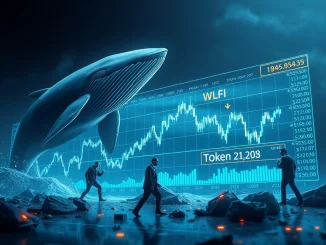
A recent report by Whale Alert captured the crypto world’s attention. Indeed, a colossal **USDT transfer** of 400,000,000 USDT occurred. This massive sum moved from Aave to the HTX exchange. The transaction is valued at approximately $400 million. Such large movements often signal significant shifts in market sentiment or strategy. Consequently, they warrant close examination by investors and analysts alike. This event highlights the dynamic nature of on-chain activity. It also underscores the importance of monitoring **large crypto movement** for market insights.
Understanding the USDT Transfer Dynamics
The reported **USDT transfer** involved a substantial amount of Tether. USDT is the largest stablecoin by market capitalization. Its value is pegged to the US dollar. Therefore, it serves as a crucial bridge between fiat and cryptocurrency markets. Whale Alert, a prominent blockchain tracker, accurately reported this transaction. They specialize in identifying and publicizing significant on-chain movements. Their alerts provide real-time transparency into the activities of major market participants. This specific transfer originated from Aave. Aave is a leading decentralized finance (DeFi) lending protocol. The funds then arrived at HTX. HTX, formerly Huobi, is a well-known centralized cryptocurrency exchange. This movement from a DeFi platform to a CeFi exchange is particularly noteworthy. It suggests a potential change in the whale’s financial strategy. Furthermore, it impacts the liquidity dynamics on the receiving platform.
Key details of the transaction include:
- Amount: 400,000,000 USDT
- Approximate Value: $400,000,000 USD
- Origin: Aave Protocol
- Destination: HTX Exchange
- Reported By: Whale Alert
Decoding Crypto Whale Motives
A **crypto whale** is an individual or entity holding substantial amounts of cryptocurrency. Their movements often precede significant market shifts. Therefore, tracking their actions provides valuable insights. When a whale moves 400 million USDT, several motivations could be at play. Firstly, they might be preparing for large-scale trading. Moving funds to an exchange facilitates quicker execution of buy or sell orders. Secondly, the whale could be consolidating assets. They might be shifting funds from a DeFi protocol to a centralized exchange for easier management. Thirdly, arbitrage opportunities are a common driver. Price discrepancies for certain assets between Aave’s ecosystem and HTX could incentivize such a transfer. Fourthly, over-the-counter (OTC) deals often involve large stablecoin movements. Whales may use exchanges as intermediaries for private, off-market transactions. Finally, liquidity provision could be a factor. The whale might intend to provide liquidity for specific trading pairs on HTX. This enables them to earn trading fees. Understanding these potential motives is crucial for interpreting the broader market implications of this **large crypto movement**.
The Significance of the Aave HTX Transaction
The specific path of this **Aave HTX transaction** holds considerable weight. Aave represents the decentralized finance ecosystem. Users deposit crypto into Aave to earn interest or borrow against their holdings. This process is permissionless and governed by smart contracts. HTX, conversely, operates as a centralized entity. It offers a wide range of trading services, requiring user registration and KYC (Know Your Customer) procedures. The transfer from Aave to HTX indicates a shift from a DeFi-centric strategy to a CeFi-oriented one. This move could suggest several things. Perhaps the whale intends to liquidate a portion of their holdings into fiat. Alternatively, they might be preparing to acquire other cryptocurrencies available on HTX. This could also be a strategic move to access specific trading pairs or leverage options not readily available on Aave. Furthermore, it might indicate a desire for increased liquidity and faster execution speeds, which centralized exchanges often provide. Ultimately, the transfer underscores the fluid interplay between DeFi and CeFi ecosystems. Investors frequently navigate both to optimize their strategies.
Broader Implications for Stablecoin Movement
The 400 million **stablecoin movement** highlights the critical role of stablecoins in the crypto economy. USDT is widely used for trading, remittances, and hedging against volatility. Large transfers of stablecoins often precede significant market events. They can signal increased liquidity on exchanges. This could lead to higher trading volumes. Conversely, it might indicate an intent to exit volatile assets. Tracking these flows provides a barometer for market sentiment. For instance, a substantial influx of stablecoins onto exchanges can be seen as dry powder. It suggests readiness to buy dips or enter new positions. Conversely, large outflows could signal a withdrawal of funds from the market. This particular transfer boosts HTX’s USDT reserves. Consequently, it enhances the exchange’s capacity to facilitate large trades. This increased liquidity can impact trading pairs involving USDT on HTX. Therefore, market participants closely monitor such movements. They use this data to anticipate potential price action across various cryptocurrencies.
Analyzing Large Crypto Movement Trends
Monitoring **large crypto movement** is a cornerstone of on-chain analysis. Tools like Whale Alert provide invaluable transparency. They allow the public to track significant transactions on various blockchains. These movements, especially involving stablecoins, can often provide leading indicators for market trends. Historically, large inflows of stablecoins to exchanges have sometimes preceded bullish market phases. This is because it signifies a readiness to purchase assets. Conversely, large outflows can indicate profit-taking or a shift to cold storage. This particular transfer, being an inflow to an exchange, suggests potential buying pressure. However, it could also be part of a broader strategy. This strategy might involve market making or even preparing for an OTC sale. The sheer volume of this transaction makes it a notable event. It warrants further observation of subsequent trading activity on HTX. Understanding these trends helps investors make informed decisions. It provides a glimpse into the actions of influential market players.
What This Means for the Market
A transfer of this magnitude can have several implications for the broader market. Firstly, it significantly increases the available USDT liquidity on HTX. This can facilitate larger trades without causing significant slippage. Secondly, it might signal an impending major trade. The whale could be preparing to buy or sell a large amount of a specific cryptocurrency. Such a trade could influence the price of that asset. Thirdly, it highlights the continued importance of centralized exchanges. Despite the rise of DeFi, CeFi platforms remain crucial for large-volume transactions and fiat on/off-ramps. Fourthly, the move from Aave, a DeFi protocol, to HTX, a CeFi exchange, indicates strategic flexibility. Whales often leverage both ecosystems to maximize their returns or manage risk. This event reinforces the interconnectedness of the crypto landscape. It shows how capital flows seamlessly between different segments. Ultimately, while not a direct price driver for specific assets, it creates conditions for potential market impact.
Security and Transparency in On-Chain Transfers
Blockchain technology inherently offers a high degree of transparency for on-chain transfers. Every transaction is recorded on a public ledger. This allows services like Whale Alert to track and report these movements. While the identities behind wallet addresses remain pseudonymous, the transactions themselves are verifiable. This transparency contrasts sharply with traditional finance, where large bank transfers are often opaque. The security of such a **USDT transfer** relies on the underlying blockchain’s cryptographic security. For Tether, this means the security of the Ethereum or Tron blockchain, depending on the network used. The risk typically shifts to the centralized exchange once funds arrive. Users trust HTX to securely manage their assets. This trust is based on the exchange’s security protocols and regulatory compliance. Therefore, while the transfer itself is secure, the subsequent management of funds on the exchange depends on HTX’s operational security. This distinction is vital for understanding risk in the crypto space.
The Future of Decentralized Finance and Exchanges
The large **Aave HTX transaction** also sheds light on the evolving relationship between DeFi and centralized exchanges. DeFi protocols like Aave offer unparalleled control and yield opportunities. They operate without intermediaries. Centralized exchanges like HTX provide liquidity, ease of use, and access to a wider range of trading pairs. They also offer fiat gateways. This particular movement suggests that even major players continue to utilize both. They move funds strategically between them. This fluidity indicates a maturing ecosystem. Users are not strictly confined to one domain. Instead, they leverage the strengths of both. The future likely involves continued innovation in both sectors. We may see increased interoperability and more seamless transitions. Such large transfers underscore the need for robust infrastructure across the entire crypto landscape. They also highlight the ongoing importance of stablecoins in facilitating these vast movements of capital. Ultimately, this flexibility allows whales to optimize their financial maneuvers in a complex and rapidly changing market.
In conclusion, the 400 million **USDT transfer** from Aave to HTX is a significant event. It underscores the active role of **crypto whale** entities. It also highlights the intricate dynamics of **stablecoin movement**. This **large crypto movement** from a DeFi protocol to a centralized exchange signals potential strategic maneuvers. Market participants will continue to monitor HTX for subsequent activity. Such on-chain transparency remains vital for understanding market sentiment and potential future trends. It reinforces the importance of platforms like Whale Alert in providing timely information to the community.
Frequently Asked Questions (FAQs)
What is USDT?
USDT, or Tether, is the largest stablecoin by market capitalization. Its value is pegged 1:1 to the US dollar. It aims to provide price stability and liquidity in the volatile cryptocurrency market. USDT is widely used for trading, lending, and remittances.
What is Aave?
Aave is a decentralized finance (DeFi) protocol. It allows users to lend and borrow cryptocurrencies. Users can deposit their assets to earn interest. They can also borrow against their collateral. Aave operates on various blockchains, primarily Ethereum.
What is HTX?
HTX, formerly known as Huobi, is a global cryptocurrency exchange. It offers a wide range of services. These include spot trading, derivatives, and asset management. HTX is a centralized exchange, meaning it acts as an intermediary for transactions and holds user funds in custody.
Why do crypto whales move large amounts of stablecoins?
Crypto whales move large amounts of stablecoins for various reasons. These include preparing for large trades, seeking arbitrage opportunities, consolidating funds, facilitating over-the-counter (OTC) deals, or providing liquidity on exchanges. Their movements often indicate strategic shifts.
How does a large stablecoin transfer affect the market?
A large stablecoin transfer, especially to an exchange, can increase liquidity on that platform. This facilitates larger trades. It might also signal an impending major buy or sell order. While it doesn’t directly impact the stablecoin’s price, it can influence the prices of other cryptocurrencies traded against it. It also offers insights into market sentiment.
Is this transfer a security risk?
The on-chain transfer itself, being recorded on a blockchain, is generally secure due to cryptographic protocols. The primary security consideration shifts to the receiving centralized exchange (HTX). Users trust the exchange to securely manage their funds. Centralized exchanges implement various security measures, but they are still susceptible to hacks or operational issues.