The world of cryptocurrency trading is often exhilarating, yet it can also deliver brutal lessons. A recent incident on the Hyperliquid platform starkly highlights this reality. It serves as a powerful reminder of market volatility.
Hyperliquid Whale Faces Devastating ETH Short Loss
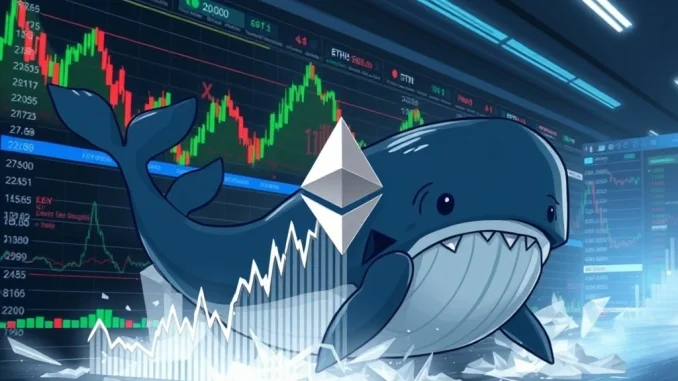
A prominent trader, known as AguilaTrades, recently faced a devastating blow. This Hyperliquid whale opened a massive 15x Ethereum (ETH) short position. This involved over 26,000 ETH. However, a sudden and sharp Ethereum price surge quickly turned their gamble into a significant loss. In under 10 minutes, AguilaTrades lost approximately $1.85 million. This rapid exit underscores the extreme volatility inherent in crypto trading.
Understanding the Hyperliquid Whale’s Strategy
Hyperliquid is a relatively new decentralized perpetuals exchange. It offers high leverage options for traders. A “whale” typically refers to an individual or entity holding a large amount of cryptocurrency. They often make significant trades. AguilaTrades, in this instance, was identified as a whale due to the sheer size of their position. They attempted to profit from an anticipated fall in Ethereum price. This strategy, known as an ETH short, involves borrowing and selling ETH. The trader then hopes to buy it back later at a lower price. The difference would be their profit. For example, if ETH was at $2,000 and they shorted 1 ETH, they would immediately sell it. If it dropped to $1,900, they would buy it back, pocketing $100.
The Peril of ETH Short Positions and Leverage
Shorting cryptocurrencies carries inherent risks. When a trader opens an ETH short, they are betting against the asset’s price. Adding leverage, as AguilaTrades did with 15x, amplifies both potential gains and losses. Leverage allows traders to control a large position with a relatively small amount of capital. For instance, $100 could control $1,500 worth of ETH with 15x leverage. However, this also means a small adverse price movement can lead to rapid liquidation. Liquidation occurs when the market moves against a leveraged position to a point where the trader’s collateral is no longer sufficient to cover potential losses. The platform automatically closes the position to prevent further losses. This mechanism is designed to protect the exchange but often results in significant losses for the trader.
Ethereum Price Volatility: A Constant Threat
The cryptocurrency market is notorious for its rapid price swings. Ethereum price movements can be particularly unpredictable. Factors like macroeconomic news, regulatory developments, technological upgrades (like the upcoming Dencun upgrade), and even large whale movements can trigger sudden shifts. In this specific case, an unexpected price spike caught AguilaTrades off guard. Such spikes are common in crypto. They often result from large buy orders or positive market sentiment. For a short position, a sharp upward move is the worst-case scenario. It quickly erodes the margin, leading to forced closure. This incident serves as a powerful reminder of how quickly market conditions can change.
Lessons from Crypto Trading’s High Stakes
This event provides critical insights for anyone involved in crypto trading. First, extreme leverage can be a double-edged sword. While it offers the allure of substantial profits, it equally magnifies the risk of devastating losses. Second, market timing is incredibly difficult. Even experienced traders can misjudge market direction. Third, having a robust risk management strategy is paramount. This includes setting stop-loss orders. A stop-loss order automatically closes a position when it reaches a certain certain price point. This limits potential losses. Many traders learn these lessons the hard way. AguilaTrades’ experience is a stark example.
Navigating Leveraged Trading Risks
For those considering leveraged trading, understanding the risks is crucial. Platforms like Hyperliquid provide powerful tools. However, these tools demand caution and expertise. Traders should always start with smaller positions. They should also gradually increase leverage as they gain experience. Diversifying a portfolio can also mitigate risk. Relying on a single large, highly leveraged position, as seen with the Hyperliquid whale, concentrates risk. Furthermore, staying informed about market news and technical analysis is vital. Yet, even with all precautions, the inherent volatility of digital assets means losses are always a possibility.
Conclusion
The dramatic loss incurred by the Hyperliquid whale AguilaTrades underscores the extreme risks of highly leveraged ETH short positions in a volatile market. A sudden Ethereum price spike led to millions in losses in minutes. This incident serves as a potent reminder for all participants in crypto trading. While the potential for profit is attractive, the dangers of leveraged trading are equally significant. Traders must prioritize risk management. They should also approach the market with caution and realistic expectations.
Frequently Asked Questions (FAQs)
Q1: What is an ETH short position?
A1: An ETH short position is a trading strategy where an investor borrows Ethereum and sells it, expecting its price to fall. They then aim to buy it back at a lower price later, returning the borrowed ETH and profiting from the price difference.
Q2: How does leverage amplify trading outcomes?
A2: Leverage allows traders to open larger positions with a smaller amount of capital. While it can magnify profits on winning trades, it also significantly amplifies losses on losing trades, increasing the risk of rapid liquidation.
Q3: What caused the Hyperliquid whale’s rapid loss?
A3: The Hyperliquid whale, AguilaTrades, suffered a rapid loss because a sudden and sharp surge in the Ethereum price moved against their 15x leveraged ETH short position, leading to an automatic liquidation of their trade.
Q4: What is Hyperliquid?
A4: Hyperliquid is a decentralized perpetuals exchange. It allows users to trade cryptocurrencies with leverage, offering high-speed execution and various trading options.
Q5: What are the key takeaways for crypto traders from this event?
A5: This event highlights the critical importance of risk management, caution with high leverage, and the unpredictable nature of cryptocurrency markets. Traders should use stop-loss orders and avoid over-leveraging.
Q6: Is leveraged trading suitable for beginners?
A6: Generally, leveraged trading is not recommended for beginners due to its high risk. It requires a deep understanding of market dynamics, risk management, and the potential for significant financial losses.