The cryptocurrency market often moves with rapid shifts. Recently, a significant indicator has captured the attention of traders and analysts alike. Bitcoin’s Deribit Volatility Index (DVOL) has seen a notable increase, signaling a potential for larger price movements in the near future. This development is crucial for anyone monitoring Bitcoin DVOL and its implications for the broader market.
Understanding the Surge in Bitcoin DVOL
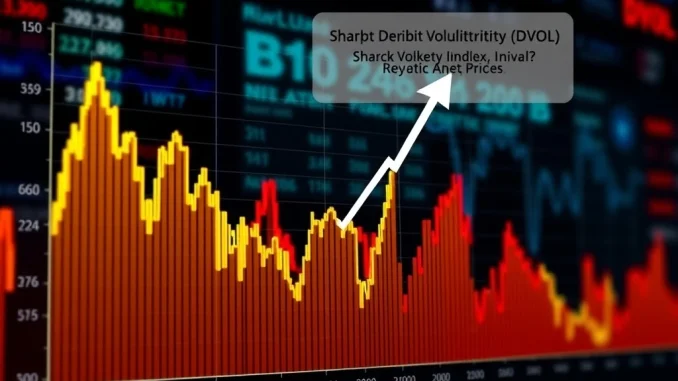
CoinDesk senior analyst James Van Straten recently highlighted a key metric. He reported that Bitcoin’s Deribit Volatility Index (DVOL) climbed to 37. This marks a significant rise from its 26% low observed just last week. The DVOL serves as a real-time measure of the implied volatility of Bitcoin options. Essentially, it reflects market participants’ expectations for future price swings. A higher DVOL suggests traders anticipate greater price fluctuations. Consequently, the recent jump to 37 indicates a growing expectation of increased market activity. This metric offers valuable insights into potential shifts in market sentiment.
Historically, significant DVOL movements often precede periods of heightened price action. Traders frequently use this index to gauge market sentiment and adjust their strategies. For instance, a low DVOL might suggest complacency or a period of consolidation. Conversely, a rising DVOL, as seen now, points to an environment where market participants are bracing for more dynamic price discovery. Therefore, this uptick is not merely a number; it represents a collective anticipation of more volatile trading conditions.
Analyzing Recent Bitcoin Price Action and Open Interest
The DVOL surge coincides with recent market movements. A spot-led weekend rally pushed Bitcoin’s price from approximately $116,000 to $122,000. This rally indicates underlying strength within the market. Spot-led rallies are often considered healthier than those driven by leverage, as they reflect genuine buying pressure. Furthermore, this price increase suggests sustained interest from investors. This positive price momentum, combined with rising implied volatility, creates an interesting dynamic for traders.
Meanwhile, declining open interest (OI) in Bitcoin futures and options markets adds another layer of complexity. Open interest represents the total number of outstanding derivative contracts that have not been settled. A decrease in OI, especially during a price rally, suggests that some leveraged positions have been closed. This reduction in leverage can have significant effects. It implies that any new leverage entering the market could potentially magnify future price swings. Consequently, the market becomes more susceptible to rapid movements, either upwards or downwards. This scenario demands careful observation from market participants. It also influences Bitcoin price prediction models.
What Rising Bitcoin Volatility Means for Traders
The current market conditions, marked by increased Bitcoin volatility, present both opportunities and risks. For options traders, higher implied volatility means options contracts become more expensive. This can impact strategies that rely on selling options, making them potentially less profitable. Conversely, buyers of options might find themselves paying a premium for potential future gains. Therefore, understanding DVOL is crucial for these participants. They must adjust their pricing models accordingly.
For spot traders, the message is clear: expect wider price swings. This heightened volatility can lead to quicker profits for those on the right side of a move. However, it also increases the risk of rapid losses. Implementing robust risk management strategies becomes paramount. Traders should consider tighter stop-loss orders and appropriate position sizing. These measures help protect capital during periods of extreme market fluctuations. Ultimately, preparedness is key when navigating a more volatile environment.
Consider these key implications:
- Increased Option Premiums: Buying options becomes more costly.
- Wider Price Swings: Expect larger daily price movements.
- Enhanced Risk: Potential for quicker, more significant losses.
- Strategic Adjustments: Traders must adapt risk management and entry/exit points.
Navigating Current Crypto Market Trends
The recent DVOL jump is part of broader crypto market trends. Several factors contribute to the current environment. Global macroeconomic indicators, such as inflation data and central bank policies, continue to influence investor sentiment. Regulatory developments also play a crucial role. Announcements regarding new frameworks or enforcement actions can significantly impact market confidence. Furthermore, the anticipation surrounding the upcoming Bitcoin halving event, while not immediate, subtly contributes to underlying market expectations of future supply shocks and potential price appreciation. These macro factors combine to create a complex landscape for digital assets.
Institutional adoption continues to be a driving force. Large institutional players entering or exiting the market can generate substantial volume and price impact. Their increased participation often leads to greater market maturity but also introduces new dynamics. Retail interest also remains a significant factor. Periods of heightened media attention or strong price performance often draw in new retail investors. Ultimately, the interplay of these diverse forces shapes the overall market trajectory. Understanding these trends helps in formulating a comprehensive market outlook.
Forecasting Bitcoin Price Prediction in a Volatile Climate
Given the elevated Deribit Volatility Index, making precise Bitcoin price prediction becomes more challenging. However, certain observations can guide expectations. The underlying strength shown by the spot-led rally suggests a solid foundation for potential upward movement. Nevertheless, the declining open interest indicates that while current leverage is low, new leverage could easily amplify price swings. This creates a scenario where rapid, significant moves are possible in either direction.
Analysts are closely watching key support and resistance levels. A sustained break above $122,000 could signal further upside potential. Conversely, a retreat below $116,000 might indicate a loss of momentum. The market will likely remain reactive to major news events and liquidity shifts. Traders should prioritize flexible strategies. These strategies must account for sudden changes in market direction. Ultimately, adaptability will be crucial in this dynamic environment. Monitoring DVOL will provide continuous clues about future market expectations.
The Path Forward: What to Expect
The current landscape suggests continued dynamism for Bitcoin. The elevated DVOL indicates that traders are prepared for significant moves. This readiness means the market could experience sharp rallies or corrections. Investors and traders must remain vigilant. They should continuously monitor market data and news. Furthermore, implementing sound risk management practices is essential. This includes setting clear entry and exit points. It also involves understanding one’s own risk tolerance.
Ultimately, the increase in Bitcoin DVOL serves as a vital signal. It underscores the importance of staying informed and agile in the fast-paced crypto world. While volatility brings risk, it also creates opportunities for those who are well-prepared. The coming weeks will likely offer further clarity on Bitcoin’s immediate direction. Staying updated on crypto market trends will be crucial for navigating these waters successfully.
Frequently Asked Questions (FAQs)
What is Bitcoin DVOL?
Bitcoin DVOL, or the Deribit Volatility Index, measures the implied volatility of Bitcoin options traded on the Deribit exchange. It reflects market participants’ expectations for future price swings in Bitcoin. A higher DVOL suggests traders anticipate larger price movements, while a lower DVOL indicates expectations of calmer market conditions.
Why did Bitcoin DVOL rise to 37?
The rise in Bitcoin DVOL to 37, from a previous low of 26%, indicates that traders are bracing for larger price moves. This increase is likely influenced by a combination of recent market activity, such as the spot-led weekend rally, and broader market sentiment anticipating significant shifts in Bitcoin’s price. It reflects a collective expectation of heightened market dynamism.
How does increased Bitcoin volatility affect traders?
Increased Bitcoin volatility means options contracts become more expensive due to higher implied risk. For spot traders, it implies wider and faster price swings, leading to both greater profit potential and increased risk of losses. Traders must adapt by employing stricter risk management, such as setting tighter stop-losses and carefully managing position sizes, to navigate these dynamic conditions.
What is ‘open interest’ in the context of cryptocurrency trading?
Open interest (OI) refers to the total number of outstanding derivative contracts, such as futures or options, that have not yet been settled or closed. Declining open interest, especially during a price rally, can suggest that some leveraged positions have been closed, potentially making the market more susceptible to magnified swings if new leverage enters.
How does the DVOL relate to Bitcoin price prediction?
The DVOL does not directly predict the direction of Bitcoin’s price, but it forecasts the *magnitude* of future price movements. A high DVOL suggests that significant price changes are expected, making precise price predictions more challenging due to increased uncertainty. It indicates that the market is preparing for a period of greater dynamism, where prices could move sharply in either direction.
What are the current crypto market trends to watch?
Current crypto market trends include increasing institutional interest, ongoing regulatory discussions, and the influence of global macroeconomic factors. The recent spot-led rally suggests underlying strength, while the rising DVOL indicates an expectation of higher volatility. Traders should monitor these trends, along with open interest data, to understand the broader market sentiment and potential future movements.