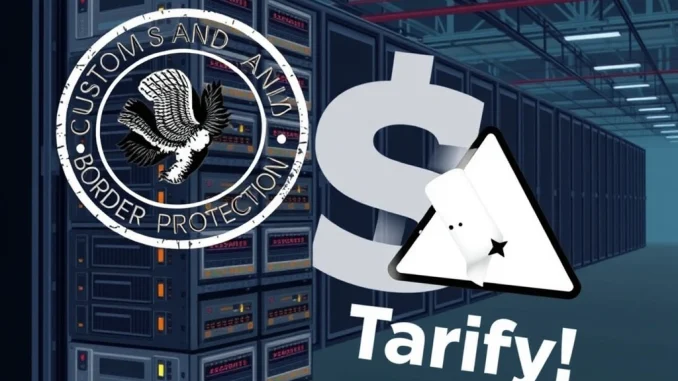
The cryptocurrency world often faces unexpected challenges. Recently, CleanSpark Inc. (NASDAQ: CLSK) found itself in a significant predicament. The company disclosed that U.S. Customs and Border Protection has classified some of its Bitcoin mining rigs as originating in China. This classification pertains to imports between April and June 2024. Consequently, this action could expose CleanSpark to substantial punitive tariffs, potentially reaching up to $185 million. This development was initially reported by Wu Blockchain on X, sending ripples through the crypto mining industry. The potential financial hit is considerable for CleanSpark, a major player in the Bitcoin mining sector.
Understanding the Bitcoin Mining Tariffs Challenge
The core of CleanSpark’s current challenge lies with the classification by US Customs and Border Protection. Historically, certain goods imported from China have been subject to Section 301 tariffs. These tariffs were initially imposed to address unfair trade practices. For Bitcoin mining rigs, the specific tariff code and origin determination are crucial. The classification of CleanSpark’s imported machines as Chinese-origin directly triggers these punitive duties. Therefore, the company faces a retrospective bill that could significantly impact its financial standing. This situation highlights the complexities of global supply chains in the digital asset space.
Several factors contribute to such classifications:
- Country of Origin Rules: Customs authorities apply specific rules to determine where a product originates. This often involves where the significant manufacturing or assembly takes place.
- Component Sourcing: Even if final assembly occurs elsewhere, a high percentage of components from a specific country can influence the origin classification.
- Customs Enforcement: US Customs actively enforces trade laws, including tariff assessments, based on their findings during import inspections.
The $185 million figure represents a substantial sum. It underscores the financial risk associated with international trade, especially for high-value mining rig imports.
The Financial Impact on CleanSpark
This potential tariff bill presents a significant financial hurdle for CleanSpark. An obligation of $185 million could severely impact the company’s balance sheet. Furthermore, it could reduce available capital for future expansion or operational improvements. Such a large unexpected expense typically affects profitability. It also influences investor confidence. The company’s stock price may reflect this uncertainty as the market digests the news. CleanSpark, like many public companies, relies on predictable operational costs. This tariff assessment introduces a major unpredictable variable.
Consider the potential ramifications:
- Cash Flow Strain: A large, unexpected payment could strain CleanSpark’s liquidity.
- Profitability Erosion: The tariffs would directly reduce net income for the period they cover.
- Future Strategy: CleanSpark might need to re-evaluate its procurement strategy for new Bitcoin mining rigs, seeking alternative suppliers or domestic manufacturing options.
The Bitcoin mining tariffs issue is not just about the immediate cost. It also creates uncertainty for future import plans. Companies in this sector must navigate a complex web of international trade regulations.
Broader Implications for the Crypto Mining Industry
CleanSpark’s situation serves as a stark reminder for the entire crypto mining industry. Many US-based miners rely on imported hardware. China has historically been a major manufacturing hub for these specialized machines. Consequently, other companies that have imported rigs from similar sources during the same period might face similar assessments. This could trigger a broader review of supply chain practices across the industry. Miners may prioritize diversifying their hardware sourcing to mitigate such risks. They might also look towards North American or European manufacturers, despite potentially higher costs.
The incident could accelerate a trend towards:
- Supply Chain Diversification: Companies will seek to reduce reliance on single regions for equipment.
- Domestic Manufacturing: Increased interest in establishing or supporting mining rig manufacturing within the US or allied countries.
- Regulatory Scrutiny: Greater attention to customs regulations and trade policies for high-tech imports.
This development underscores the growing maturity and increasing regulatory scrutiny of the Bitcoin mining sector. The industry must adapt to evolving global trade policies and tariff structures. This incident highlights the need for due diligence in all mining rig imports.
CleanSpark’s Path Forward and US Customs Procedures
CleanSpark now faces a critical juncture. The company will likely explore several avenues to address the US Customs assessment. One common approach is to challenge the classification. Companies can appeal customs decisions through administrative processes. This often involves providing detailed documentation about the manufacturing process and component origins. Legal counsel specializing in international trade law will be essential for CleanSpark. They can help navigate the complex appeal procedures. Furthermore, CleanSpark might need to negotiate with Customs for a reduced penalty or a payment plan. The outcome of such negotiations can significantly influence the final financial burden.
CleanSpark’s options may include:
- Appealing the Classification: Presenting evidence that the rigs do not originate in China under US trade laws.
- Negotiating with CBP: Seeking a settlement or a revised assessment.
- Adjusting Future Procurement: Shifting to non-Chinese suppliers or exploring domestic assembly options to avoid future Bitcoin mining tariffs.
This situation also serves as a warning for any company engaged in significant mining rig imports. Proactive compliance and thorough supply chain audits are becoming indispensable. The digital asset industry is rapidly professionalizing. Therefore, it must adhere to the same stringent international trade rules as traditional industries.
Navigating the Regulatory Landscape for CleanSpark
The incident with CleanSpark is not isolated. It reflects a broader trend of increased regulatory oversight across the cryptocurrency landscape. Governments worldwide are developing more defined frameworks for digital assets and related activities. This includes not only financial regulations but also trade and customs policies. For a company like CleanSpark, operating within these evolving regulations is paramount. The US government’s stance on trade, particularly with China, continues to influence various sectors, including the technology and hardware supply chains critical to Bitcoin mining. This incident serves as a reminder that the crypto mining industry must remain vigilant. Companies must anticipate and adapt to changes in global trade policies.
This situation emphasizes:
- Due Diligence: Thorough research into supplier origins and trade compliance.
- Risk Management: Developing strategies to mitigate unforeseen regulatory costs.
- Advocacy: Potentially engaging with policymakers to clarify or influence trade policies affecting the industry.
Ultimately, CleanSpark’s response and the resolution of this tariff issue will set a precedent. It will offer valuable lessons for other companies in the sector regarding mining rig imports and international trade compliance.
CleanSpark faces a substantial financial challenge due to unexpected Bitcoin mining tariffs. The classification of its imported rigs by US Customs highlights the complexities of global supply chains. This situation carries significant implications for CleanSpark‘s operations and financial health. Furthermore, it sends a clear message to the broader crypto mining industry about the importance of supply chain due diligence and regulatory compliance. As the company navigates this complex issue, its actions will be closely watched. The outcome will likely influence future procurement strategies across the sector. This event underscores the growing need for vigilance in a rapidly evolving global trade environment for digital assets.
Frequently Asked Questions (FAQs)
Q1: What is the main issue CleanSpark is facing?
CleanSpark is facing a potential $185 million tariff bill from U.S. Customs and Border Protection. This is because some Bitcoin mining rigs it imported between April and June 2024 were classified as originating in China, triggering punitive tariffs.
Q2: Why are these tariffs being imposed on Bitcoin mining rigs?
These tariffs are likely part of the Section 301 tariffs imposed by the U.S. on certain goods from China. The classification by U.S. Customs determines the country of origin, which then dictates whether these specific duties apply.
Q3: How will this impact CleanSpark’s financial situation?
A $185 million tariff could significantly strain CleanSpark’s cash flow and reduce its profitability. It might also impact its ability to invest in future expansion and could affect investor confidence.
Q4: Could other crypto mining companies face similar issues?
Yes, potentially. If other U.S.-based crypto mining companies imported rigs from similar sources during the same period, they could also be subject to similar tariff assessments from U.S. Customs. This highlights a broader industry risk.
Q5: What steps can CleanSpark take to address these tariffs?
CleanSpark can appeal the classification with U.S. Customs, negotiate for a settlement, or adjust its future procurement strategies to source mining rigs from different countries or explore domestic manufacturing options to avoid similar tariffs in the future.
Q6: What does this mean for the future of mining rig imports?
This incident suggests that crypto mining companies will need to conduct more thorough due diligence on their supply chains. They will also need to consider diversifying their sources for mining rigs to mitigate the risks associated with international trade regulations and tariffs.