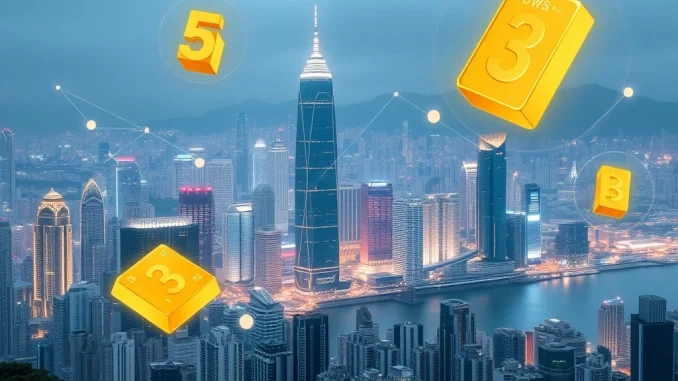
Hong Kong has taken a monumental leap forward in the digital asset space. The city officially launched its groundbreaking **Hong Kong RWA** registration and filing platform. This strategic move aims to revolutionize how **Real-World Assets** are managed and integrated into the blockchain ecosystem. Consequently, it marks a significant milestone for the region’s financial future. This platform offers comprehensive, end-to-end services for the digitization, tokenization, and financialization of various real-world assets. It truly represents a bold step.
Hong Kong RWA Platform Unveiled
The new **Hong Kong RWA** platform is now fully operational. PANews, citing data from Jin10, reported its official launch. This innovative system provides a complete suite of services. Specifically, it supports the entire lifecycle of real-world assets. This includes their initial digitization, subsequent tokenization, and ultimate financialization. Therefore, the platform streamlines complex processes. It ensures efficiency and compliance at every stage. Furthermore, this initiative reinforces Hong Kong’s position as a leading global financial hub. It actively embraces cutting-edge financial technologies.
The platform’s design focuses on accessibility and security. It facilitates the conversion of tangible assets into digital tokens. This process enhances liquidity for previously illiquid assets. Additionally, it offers robust regulatory oversight. This ensures investor protection and market integrity. The launch also coincides with the release of vital Web3 standards. These standards will guide future development in the digital asset sector. Clearly, Hong Kong is setting a new benchmark.
Demystifying Real-World Assets (RWAs)
**Real-World Assets** (RWAs) refer to tangible or intangible assets with inherent value in the physical world. Examples include real estate, fine art, commodities, intellectual property, and even company equity. Historically, these assets have faced challenges. They often lack liquidity and fractional ownership options. Tokenization, however, transforms these assets into digital tokens on a blockchain. This process unlocks significant benefits. For instance, it allows for fractional ownership. This means multiple investors can own a small part of a high-value asset. Consequently, it broadens investment access.
Moreover, tokenizing **Real-World Assets** enhances transparency. All transactions are recorded on a public ledger. This provides an immutable audit trail. It also improves settlement efficiency. Traditional asset transfers can be slow and costly. Blockchain-based token transfers are often faster and cheaper. Therefore, the appeal of RWAs in the digital domain is growing rapidly. This trend attracts both institutional and retail investors. It creates new investment opportunities for everyone involved.
The Power of RWA Tokenization
The launch of Hong Kong’s platform significantly boosts **RWA Tokenization**. This process involves representing ownership of a real-world asset as a digital token on a blockchain. To support this, Hong Kong released a comprehensive business guide. It also published detailed technical specifications for **RWA Tokenization**. These standards provide clear guidelines for participants. They ensure consistency and interoperability across the ecosystem. This clarity is crucial for widespread adoption.
The technical specifications cover various aspects. These include asset origination, legal frameworks, and smart contract implementation. By standardizing these elements, the platform reduces complexity. It also minimizes risks for asset issuers and investors. Ultimately, this structured approach fosters trust. It encourages greater participation in the digital asset market. Businesses can now more easily digitize their assets. Investors gain confidence in the underlying processes. This is a game-changer for the industry.
Advancing Web3 Standards for Digital Assets
Beyond **RWA Tokenization**, Hong Kong’s initiative introduces crucial **Web3 Standards**. These standards are essential for the maturation and growth of the entire digital asset ecosystem. They provide a common language and framework for developers and businesses. One key standard focuses on technical specifications for blockchain-based cross-border stablecoin payments. This particular standard addresses a critical need. It aims to facilitate seamless international transactions using stablecoins. This will significantly reduce friction in global commerce.
These new **Web3 Standards** promote interoperability. They allow different blockchain networks and digital asset platforms to communicate effectively. This fosters innovation and collaboration. Furthermore, they help establish a more secure and regulated environment. This builds confidence among traditional financial institutions. As a result, more entities will likely explore digital asset integration. Hong Kong is actively shaping the future of decentralized finance. Their proactive approach sets a global example for other jurisdictions.
Hong Kong’s Vision for Digital Assets
This comprehensive launch aligns with Hong Kong’s broader strategy. The city aims to become a global leader in **Digital Assets**. By providing clear regulatory frameworks and advanced infrastructure, Hong Kong attracts innovation. It also encourages responsible development within the Web3 space. The government has consistently expressed its commitment. They want to foster a vibrant and regulated digital asset industry. This platform is a tangible manifestation of that commitment.
The regulatory clarity offered by the new platform is paramount. It provides legal certainty for participants. This clarity helps mitigate risks associated with nascent technologies. Consequently, investor confidence grows. This encourages greater institutional participation. Hong Kong’s forward-thinking approach positions it uniquely. It can bridge traditional finance with the burgeoning digital economy. The future looks bright for **Digital Assets** in the region. This strategic vision will likely yield significant economic benefits.
Conclusion
Hong Kong’s official launch of its **Hong Kong RWA** registration and filing platform represents a pivotal moment. It signifies a clear commitment to integrating **Real-World Assets** into the digital economy. Through robust **RWA Tokenization** standards and progressive **Web3 Standards**, the city is building a resilient framework. This framework will support the growth of **Digital Assets**. This initiative not only enhances liquidity and accessibility for traditional assets but also establishes Hong Kong as a pioneering force. It sets a global precedent for responsible innovation in the digital asset space. This move will undoubtedly attract more investment and talent. It promises a dynamic future for digital finance in the region.
Frequently Asked Questions (FAQs)
Q1: What is the primary purpose of Hong Kong’s new RWA platform?
The platform’s primary purpose is to provide end-to-end services for the digitization, tokenization, and financialization of Real-World Assets (RWAs). It aims to streamline these processes and integrate traditional assets into the blockchain ecosystem.
Q2: What are Real-World Assets (RWAs) in the context of tokenization?
Real-World Assets (RWAs) are tangible or intangible assets that exist outside the blockchain. Examples include real estate, art, commodities, and company equity. Tokenization transforms these into digital tokens on a blockchain, enabling benefits like fractional ownership and increased liquidity.
Q3: Which key Web3 standards were released in conjunction with the platform’s launch?
Three key Web3 standards were released: a business guide for RWA tokenization, technical specifications for RWA tokenization, and technical standards for blockchain-based cross-border stablecoin payments. These standards aim to provide clarity and facilitate wider adoption.
Q4: How does RWA tokenization benefit investors and asset owners?
RWA tokenization offers several benefits, including increased liquidity for illiquid assets, the possibility of fractional ownership (allowing smaller investments), enhanced transparency through blockchain records, and potentially faster and cheaper transaction settlements compared to traditional methods.
Q5: How does this initiative impact Hong Kong’s position in the global financial landscape?
This initiative significantly strengthens Hong Kong’s position as a leading global financial and digital asset hub. By providing clear regulatory frameworks and advanced infrastructure for digital assets, it attracts innovation, investment, and talent, bridging traditional finance with the burgeoning digital economy.