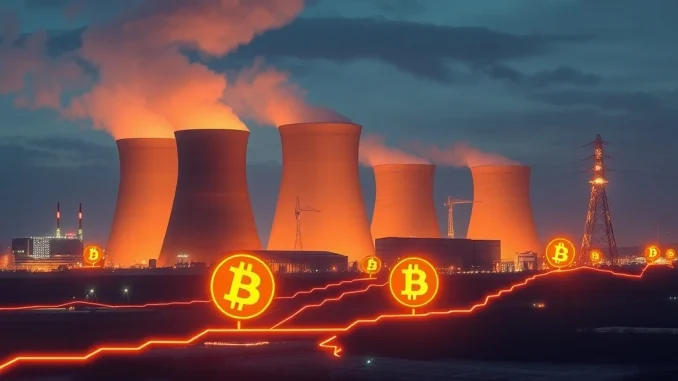
The political landscape is constantly shifting, and nowhere is this more evident than in the surprising convergence of traditional politics and cutting-edge technology. Imagine a scenario where a major European nation, known for its robust nuclear power infrastructure, decides to channel its excess energy into the booming world of Bitcoin mining. This isn’t a futuristic fantasy; it’s the audacious new proposal from France’s far-right Rassemblement National (RN) party, marking a remarkable pivot in their stance on cryptocurrencies.
Bitcoin Mining France: A Surprising Political Shift?
France, a nation historically cautious about digital assets, is now at the forefront of a fascinating discussion. The Rassemblement National, led by Marine Le Pen, is preparing a bill aimed at utilizing the country’s vast surplus electricity, primarily from its nuclear reactors, for Bitcoin mining. This move is particularly striking given Le Pen’s past advocacy for a crypto ban in 2016. What has prompted this dramatic reversal, and what are the implications for France and the global crypto scene?
- Key Proposal: A bill to direct surplus nuclear energy towards Bitcoin mining operations.
- Driving Force: The RN party, aiming to optimize national energy resources.
- Historical Context: Marine Le Pen’s previous anti-crypto stance.
Unpacking French Crypto Policy Evolution
France’s journey with cryptocurrencies has been a cautious one, characterized by a desire for regulatory oversight and consumer protection. While the country has embraced blockchain technology in certain sectors, direct governmental support for energy-intensive activities like Bitcoin mining has been less common. This new proposal signals a potential shift from a purely regulatory approach to one that actively seeks to integrate crypto into national energy and economic strategies. It raises questions about how France sees its role in the future of digital finance and energy innovation, potentially reshaping the broader French crypto policy landscape.
Harnessing Nuclear Energy for Bitcoin: The Economic & Environmental Angle
France boasts one of the world’s most extensive nuclear energy fleets, providing a significant portion of its electricity. Nuclear power plants often produce excess energy during off-peak hours, which can be challenging to store or efficiently utilize. This is where nuclear energy Bitcoin mining comes into play.
Economic Benefits:
- Monetizing Surplus Energy: Transforming otherwise wasted energy into valuable digital assets.
- Job Creation: Development of new data centers and technical roles within France.
- Revenue Generation: Potential tax revenues from mining operations, boosting the national economy.
Environmental Considerations:
- Utilizing Clean Energy: If the energy is truly surplus and from a low-carbon source like nuclear, it could be argued as a more sustainable form of Bitcoin mining.
- Reducing Curtailment: Preventing the need to shut down reactors or waste generated energy.
- Grid Stability: Mining operations can be designed to be flexible, consuming power when abundant and curtailing consumption when the grid is strained, acting as a load balancer.
Rassemblement National Crypto Stance: From Ban to Boost
The transformation of the Rassemblement National crypto policy is a fascinating case study in political pragmatism and evolving technological understanding. In 2016, Marine Le Pen expressed skepticism, advocating for a ban, likely due to concerns about illicit activities and financial instability. Fast forward to today, and the party appears to recognize the economic potential and energy efficiency benefits that well-regulated crypto mining can offer. This shift reflects a broader trend among political parties globally, where initial caution gives way to exploration of economic opportunities presented by digital assets, particularly when tied to national strategic interests like energy independence.
Marine Le Pen Bitcoin Vision: What Does It Mean for Europe?
Marine Le Pen’s support for Marine Le Pen Bitcoin mining isn’t just about domestic energy policy; it could send ripples across Europe. France is a key player in the EU, and if this bill progresses, it could inspire other European nations with similar energy surpluses (e.g., hydropower in Scandinavia, geothermal in Iceland) to explore similar initiatives. This could lead to:
- Increased European Crypto Adoption: A more favorable regulatory environment for mining across the continent.
- Energy Innovation: New models for integrating energy production with digital infrastructure, fostering a greener approach to crypto.
- Geopolitical Shifts: Europe potentially becoming a significant hub for sustainable Bitcoin mining, challenging existing centers and strengthening its position in the global digital economy.
Challenges and Considerations:
While the proposal presents exciting opportunities, several challenges must be addressed:
- Regulatory Framework: Establishing clear and robust regulations for mining operations to ensure transparency and compliance.
- Public Perception: Overcoming existing skepticism about crypto’s energy consumption and ensuring public buy-in.
- Grid Integration: Ensuring mining operations don’t destabilize the national grid and can seamlessly integrate with existing infrastructure.
- Security: Protecting large-scale mining infrastructure from cyber threats and ensuring operational integrity.
- Economic Viability: Ensuring the long-term profitability of such ventures amidst Bitcoin’s price volatility and global competition.
Conclusion:
France’s audacious move to harness its nuclear surplus for Bitcoin mining is a testament to the evolving understanding of digital assets within traditional political spheres. The Rassemblement National’s proposal, spearheaded by Marine Le Pen’s surprising reversal, signifies a potential new era where national energy strategies intersect with the decentralized world of cryptocurrency. If successful, this initiative could position France as a pioneer in sustainable Bitcoin mining, setting a precedent for other nations and reshaping the global energy and crypto landscape. It’s a bold vision that bears close watching, as it could unlock significant economic and environmental benefits for the nation.
Frequently Asked Questions (FAQs)
Q1: What is the core idea behind France’s new Bitcoin mining proposal?
A1: The core idea is for France’s far-right Rassemblement National (RN) party to introduce a bill that would allow the country to utilize its surplus electricity, primarily generated by nuclear reactors, for Bitcoin mining operations. This aims to monetize otherwise wasted energy.
Q2: Why is Marine Le Pen’s support for Bitcoin mining significant?
A2: Marine Le Pen, the leader of the RN party, previously advocated for a ban on cryptocurrencies in 2016. Her current support for Bitcoin mining represents a major reversal in her stance, indicating a potential shift in the party’s and possibly the broader French political establishment’s view on digital assets.
Q3: How can nuclear energy be used efficiently for Bitcoin mining?
A3: Nuclear power plants often produce a stable base load of electricity, sometimes generating surplus power during off-peak hours. Bitcoin mining, being energy-intensive, can serve as a flexible load, consuming this excess energy. This helps monetize power that might otherwise be curtailed or wasted, potentially making mining more sustainable if the energy source is clean.
Q4: What are the potential benefits of this initiative for France?
A4: Potential benefits include monetizing surplus energy, creating new jobs in the tech and energy sectors, generating tax revenue from mining operations, and potentially enhancing grid stability by acting as a flexible energy consumer. It could also position France as a leader in sustainable crypto mining.
Q5: Are there any challenges associated with this proposal?
A5: Yes, challenges include establishing a clear and robust regulatory framework, managing public perception regarding crypto’s energy use, ensuring seamless integration with the national power grid without causing instability, and addressing security concerns for large-scale mining infrastructure.
Q6: Could this French initiative influence other European countries?
A6: Absolutely. If France successfully implements this strategy, it could serve as a model for other European nations with significant energy surpluses (e.g., from hydropower, geothermal, or other nuclear plants) to explore similar initiatives, potentially leading to increased European crypto adoption and energy innovation.