Bitcoin is under intense pressure as whales, miners, and long-term holders (LTHs) accelerate selling. This broad-based sell-off raises concerns about a prolonged correction phase. Here’s what’s driving the downturn and what it means for investors.
Why Is Bitcoin Facing an Extended Sell-Off?
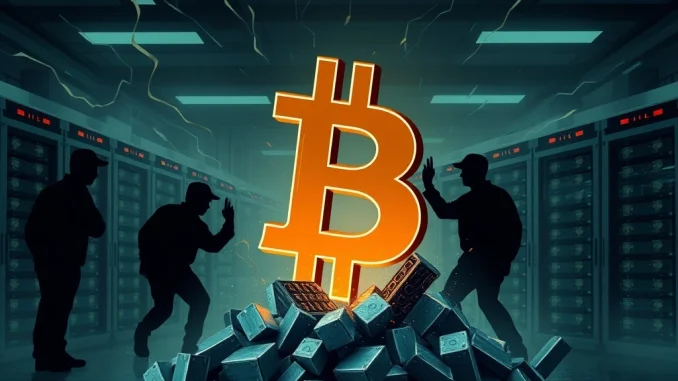
On-chain data reveals three major waves of whale selling since mid-2024. A dormant wallet, inactive for 14 years, recently moved $450M in BTC to exchanges. Miners, who paused selling in July, have resumed offloading holdings to lock in profits. Long-term holders, traditionally a stabilizing force, are now net sellers.
Key Factors Driving the Bitcoin Correction
- Whale Activity: Large holders are moving BTC to exchanges, signaling profit-taking.
- Miner Outflows: Post-ATH, miners are selling to cover operational costs.
- LTH Selling: Long-term holders are cashing in near the $120K resistance.
- Negative Coinbase Premium: Weak U.S. demand indicates reduced institutional interest.
Market Indicators Flash Warning Signs
The MVRV ratio nears peak levels, historically signaling a market top. Options traders are betting on a 10-30% drop, with puts at $80K, $95K, and $100K. Analysts warn of a potential correction lasting months.
Is Bitcoin Undervalued Despite the Sell-Off?
Charles Edwards of Capriole Fund argues BTC trades below its Energy Value model estimate. Meanwhile, CryptoQuant predicts Q4 accumulation could trigger a new rally. The immediate outlook, however, remains uncertain.
What’s Next for Bitcoin?
While institutional adoption may cushion the fall, the convergence of whale selling, miner outflows, and weakening demand suggests caution. Investors should brace for volatility in the coming months.
Frequently Asked Questions (FAQs)
Why are Bitcoin whales selling now?
Whales are likely taking profits after Bitcoin’s July ATH of $123,300, a key resistance level.
How does miner selling impact Bitcoin’s price?
Miners sell to cover costs, increasing market supply and adding downward pressure.
What does a negative Coinbase Premium indicate?
It signals weaker U.S. demand, often preceding broader market declines.
When could Bitcoin recover?
Historical trends suggest Q4 could see renewed accumulation, but short-term risks remain.