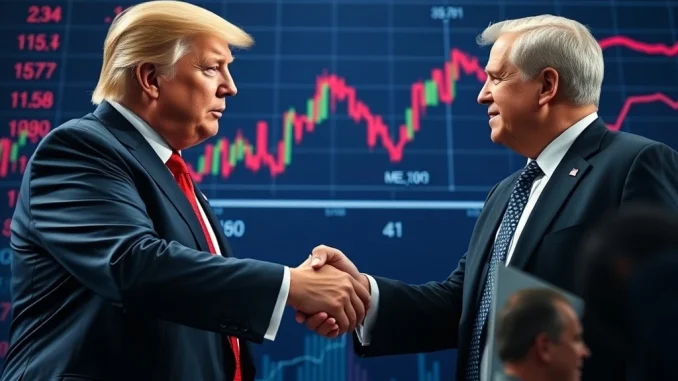
In a move that has left global markets on edge, President Trump has delayed tariffs on Mexico amid vague trade agreements. This decision has significant implications for international trade and could ripple through the cryptocurrency markets. Here’s what you need to know.
Trump’s Tariff Delay: A Closer Look
Trump announced a 90-day extension for negotiations with Mexico, reducing the threatened tariff from 30% to 25%. While he called the deals “excellent,” no specific terms were disclosed. This lack of transparency has fueled uncertainty among analysts and businesses alike.
How Does This Impact Global Markets?
The delay in tariffs has created a mixed reaction in global markets:
- Short-term relief: Markets initially reacted positively to the news of delayed tariffs.
- Long-term uncertainty: The vague nature of the agreements leaves room for speculation and potential volatility.
- Cryptocurrency implications: Bitcoin and other cryptocurrencies often act as hedges against market uncertainty, which could see increased interest.
Cryptocurrency and Trade Uncertainty
Trade tensions often drive investors toward alternative assets like cryptocurrencies. Here’s why:
| Factor | Impact on Cryptocurrency |
|---|---|
| Market Volatility | Increased interest in stablecoins and Bitcoin as safe havens |
| Currency Fluctuations | Cryptocurrencies may benefit from weakened fiat currencies |
What’s Next for Trade and Cryptocurrency?
With Trump’s executive order looming, businesses and investors are bracing for potential disruptions. Cryptocurrency traders should monitor:
- Market reactions to further trade announcements
- Increased volatility in traditional markets
- Potential regulatory shifts impacting crypto
As the situation unfolds, staying informed and agile will be key to navigating these uncertain times.
Frequently Asked Questions (FAQs)
1. How do Trump’s tariffs affect cryptocurrency markets?
Trade uncertainties often drive investors toward cryptocurrencies as alternative assets, potentially increasing demand and volatility.
2. Why is the Mexico trade deal important for global markets?
Mexico is a key trade partner for the U.S., and any disruptions could impact supply chains, inflation, and market stability.
3. What cryptocurrencies are most affected by trade tensions?
Bitcoin and stablecoins like USDT often see increased activity during periods of market uncertainty.
4. How can investors prepare for trade-related market volatility?
Diversifying portfolios and staying informed about trade developments can help mitigate risks.