Bitcoin’s network activity took a significant hit in July, with daily active addresses dropping by 47.5%. This sharp decline raises questions about user engagement and market sentiment. Let’s dive into the data and explore what’s driving this trend.
Bitcoin Daily Active Addresses: A Steep Decline
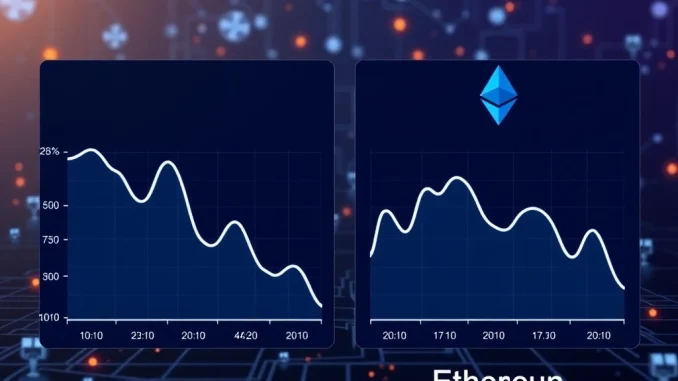
According to Santiment, Bitcoin’s daily active addresses fell from 570,000-800,000 at the start of July to just 380,000 by month’s end. This 47.5% drop contrasts sharply with Ethereum’s stable activity around 511,000 addresses. Key factors behind this decline include:
- Bear market fatigue leading to reduced trading
- Consolidation into secure wallets
- Growing use of Layer-2 solutions like Lightning Network
- Macroeconomic uncertainty
Why Ethereum’s Network Activity Remains Stable
While Bitcoin struggles, Ethereum maintains consistent activity due to:
| Factor | Impact |
|---|---|
| DeFi ecosystem | Sustains transaction volume |
| NFT market | Drives regular activity |
| Proof-of-Stake | Encourages participation |
| Smart contracts | Creates utility beyond storage |
Layer-2 Growth: Hidden Network Activity
The maturation of Bitcoin’s Layer-2 solutions means:
- More transactions occur off-chain
- Reduced base layer congestion
- Lower visible activity doesn’t equal reduced usage
- Improved scalability for future growth
What This Means for Bitcoin Investors
While the drop in active addresses seems alarming, context matters:
- Long-term holder behavior differs from traders
- Layer-2 adoption changes on-chain metrics
- Bitcoin’s store-of-value proposition remains strong
- Market cycles typically see periods of low activity
FAQs About Bitcoin’s Network Activity
Q: Does fewer active addresses mean Bitcoin is losing value?
A: Not necessarily. It may reflect changing usage patterns rather than declining value.
Q: Why is Ethereum’s activity more stable than Bitcoin’s?
A: Ethereum’s diverse use cases (DeFi, NFTs, smart contracts) create more consistent demand.
Q: How does the Lightning Network affect these metrics?
A: It moves transactions off-chain, reducing visible base layer activity while increasing actual usage.
Q: Should investors be concerned about this trend?
A: It’s one metric among many. Investors should consider the broader context and long-term fundamentals.