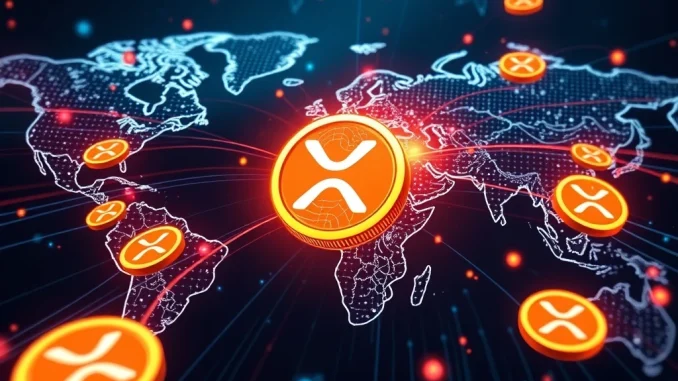
In the fast-evolving world of cryptocurrency, XRP continues to stand out as a leader in cross-border payments. Ripple’s Chief Technology Officer, David Schwartz, recently reaffirmed XRP’s dominance, highlighting its unmatched efficiency and integration within Ripple’s global payment infrastructure. But what makes XRP so special, and how does it compare to stablecoins? Let’s dive in.
XRP: The Backbone of Ripple’s Cross-Border Payments
David Schwartz recently stated that XRP’s role in Ripple Payments far surpasses any other asset. Ripple’s On-Demand Liquidity (ODL) product leverages XRP to enable near-instant settlements without pre-funded accounts. Here’s why XRP excels:
- Speed: Supports up to 1,500 transactions per second.
- Cost Efficiency: Reduces fees compared to traditional methods.
- Seamless Integration: Native to the XRP Ledger (XRPL), ensuring automatic pathfinding between currencies.
XRP vs. Stablecoins: Which One Wins?
While stablecoins like USDC and USDT dominate in collateral and edge transactions, XRP offers unique advantages for cross-border payments. Here’s a quick comparison:
| Feature | XRP | Stablecoins |
|---|---|---|
| Speed | Near-instant | Slower due to blockchain congestion |
| Cost | Low fees | Higher fees for large volumes |
| Volatility | Moderate | Minimal |
Why XRP’s Utility Matters for Long-Term Growth
Schwartz emphasized that XRP’s deep integration into Ripple’s infrastructure makes it irreplaceable. Unlike stablecoins, which are ideal for short-term predictability, XRP offers:
- Real-World Applications: Cross-border payments, remittances, and more.
- Growth Potential: As XRP Ledger adoption grows, so does XRP’s value.
- Regulatory Advancements: Efforts to integrate permissioned liquidity could boost on-chain activity.
Conclusion: XRP’s Unshakable Position in Crypto Payments
XRP’s dominance in cross-border payments is undeniable. While stablecoins have their niche, XRP’s speed, efficiency, and integration with Ripple’s technology make it a powerhouse for global transactions. As the XRP Ledger gains traction, XRP’s long-term utility and value are poised to rise.
Frequently Asked Questions (FAQs)
1. How does XRP compare to Bitcoin for cross-border payments?
XRP is faster and cheaper than Bitcoin, making it more suitable for real-time transactions.
2. Why do stablecoins dominate in some areas?
Stablecoins offer price stability, making them ideal for lending and institutional use.
3. Can XRP be used outside of Ripple’s ecosystem?
Yes, XRP is used independently, but its integration with Ripple enhances its utility.
4. What is the future of XRP in global payments?
With increasing adoption of the XRP Ledger, XRP’s role in global payments is expected to grow significantly.