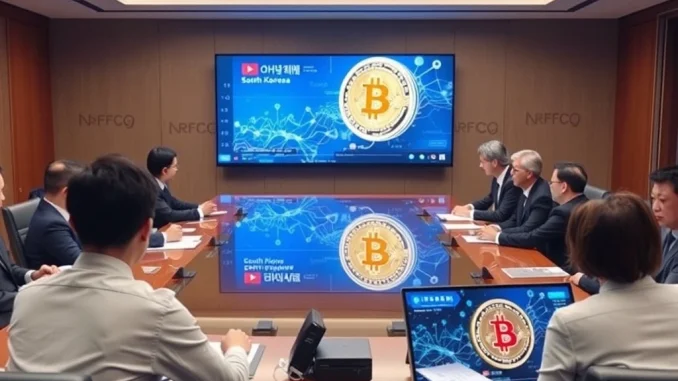
South Korea is making waves in the cryptocurrency world with its latest regulatory move. The Financial Services Commission (FSC) has teamed up with major crypto exchanges to draft comprehensive guidelines for Bitcoin lending services. This initiative aims to create a safer and more transparent environment for digital asset leveraged trading.
Why is South Korea focusing on crypto lending?
The FSC and Financial Supervisory Service are leading this effort, working with DAXA and five top crypto exchanges. Their goal is to establish clear rules for:
- Leverage limits to prevent excessive risk-taking
- Eligible assets for lending services
- Internal control standards for exchanges
- Enhanced investor education programs
How will this impact Bitcoin lending in South Korea?
The new framework addresses several critical areas of concern in the crypto market:
| Area | Impact |
|---|---|
| Investor Protection | Reduced exposure to volatile lending products |
| Market Stability | Clearer operational boundaries for exchanges |
| Institutional Participation | Potential for spot crypto ETFs by late 2025 |
What does this mean for the future of digital asset regulation?
South Korea’s proactive approach sets a potential precedent for other countries. The Bank of Korea has already formed a Virtual Asset Team to improve coordination with market players. This structured oversight could lead to:
- More institutional participation in crypto markets
- Better protection for retail investors
- Increased confidence in South Korea’s crypto ecosystem
FAQs About South Korea’s Crypto Lending Framework
Q: When will the new guidelines take effect?
A: The task force aims to finalize the guidelines by next month.
Q: Which exchanges are involved in creating these rules?
A: While not all names are public, major platforms like Upbit and Bithumb are participating.
Q: Will this affect existing crypto lending services?
A: Yes, exchanges may need to adjust their current offerings to comply with the new standards.
Q: How does this compare to regulations in other countries?
A: South Korea is reviewing international frameworks to ensure its rules align with global standards while addressing local market conditions.