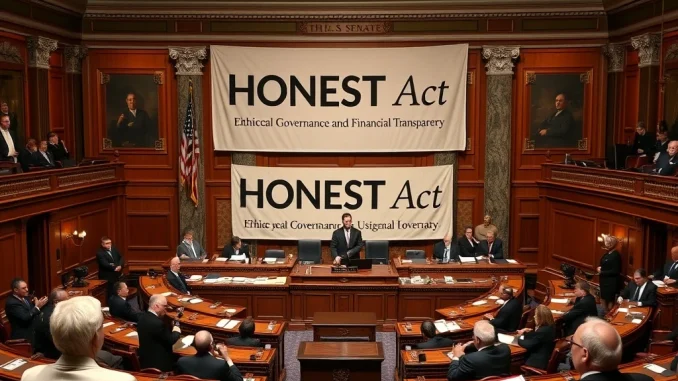
Could a new Senate bill finally put an end to lawmakers trading stocks while in office? The HONEST Act, which seeks to ban stock trading by members of Congress, has taken a crucial step forward, but not without controversy. Here’s what you need to know.
Senate Bill Advances to Ban Lawmaker Stock Trading
The Senate committee has advanced the HONEST Act (Halting Ownership of Non-Ethical Securities and Trusts), a bill aiming to prohibit Congress members, the president, and vice president from trading stocks. Key points:
- Bipartisan support with backing from Democrats and Republican Sen. Josh Hawley.
- Exempts sitting presidents and vice presidents until they leave office.
- Does not apply to cryptocurrencies, leaving digital assets unaffected.
Why the HONEST Act Matters for Ethical Governance
The bill addresses concerns about insider trading and conflicts of interest. Supporters argue lawmakers should prioritize constituents over personal investments. Critics, however, claim it unfairly targets legitimate business activities.
Controversy and Partisan Divide
Sen. Josh Hawley’s support has drawn sharp criticism, including from former President Trump, who called him a “pawn” of Democrats. Meanwhile, some Republicans acknowledge the need for reform, citing past abuses of insider trading.
What’s Next for the Bill?
The bill now awaits a decision from Senate Majority Leader John Thune. If passed, it could reshape financial conduct in Washington, though its full Senate prospects remain uncertain.
FAQs
Q: Does the HONEST Act ban cryptocurrency trading for lawmakers?
A: No, the bill only restricts traditional stock investments, leaving crypto unaffected.
Q: Why is Donald Trump exempt from the bill?
A: The restrictions apply only after a president or vice president leaves office.
Q: Who supports the HONEST Act?
A: Democrats and a few Republicans, including Sen. Josh Hawley, back the bill.
Q: What happens if the bill passes?
A: Lawmakers would be barred from trading stocks, promoting greater ethical governance.