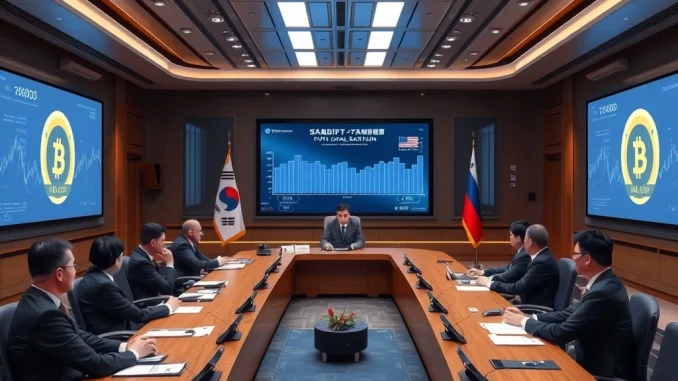
South Korea is taking a proactive stance on stablecoin oversight as the Presidential Commission on National Policy Planning receives a critical briefing from the Financial Supervisory Service (FSS). Could this be the turning point for stablecoin regulation in one of Asia’s most dynamic crypto markets?
Korea Stablecoin Oversight: What’s at Stake?
The FSS outlined key considerations for regulating Korean won-backed stablecoins, emphasizing:
- Seigniorage management to prevent private issuers from profiting unfairly
- Systemic risk prevention to avoid stablecoin volatility spilling into traditional finance
- Investor protection mechanisms for this emerging asset class
Why Stablecoin Regulation Matters for Financial Stability
The FSS warning highlights three critical concerns:
- Potential disruption to monetary policy if stablecoins gain widespread adoption
- Liquidity risks during market stress events
- Transmission of crypto volatility to traditional financial institutions
The Path Forward for Korean Won-Backed Stablecoins
While no decisions have been made, the FSS briefing suggests possible regulatory approaches:
| Option | Pros | Cons |
|---|---|---|
| Central Bank Digital Currency (CBDC) | Full government control | Slower innovation |
| Licensed Private Issuers | Market-driven solutions | Regulatory complexity |
| Hybrid Model | Balanced approach | Implementation challenges |
FSS Briefing Reveals Critical Insights
The exclusive Donga Ilbo report indicates regulators are particularly concerned about:
- The need for robust reserve requirements
- Transparency in stablecoin operations
- Clear redemption mechanisms for users
What This Means for Korea’s Crypto Future
South Korea’s careful approach to stablecoin oversight could set an important precedent for other nations grappling with similar challenges. By addressing these issues early, Korea positions itself as a leader in responsible crypto innovation while protecting its financial system.
Frequently Asked Questions
Q: What is seigniorage in the context of stablecoins?
A: Seigniorage refers to the profit earned from issuing currency. For stablecoins, private issuers could capture this benefit instead of governments.
Q: How could stablecoin volatility affect traditional finance?
A: Large-scale redemptions or loss of confidence could create liquidity crunches that spread to banks and other financial institutions.
Q: When will Korea finalize its stablecoin regulations?
A: No timeline has been announced, but the Presidential Commission’s involvement suggests it’s a policy priority.
Q: Will existing stablecoins like USDT be affected?
A: The briefing focused on won-pegged stablecoins, but broader regulations may follow.