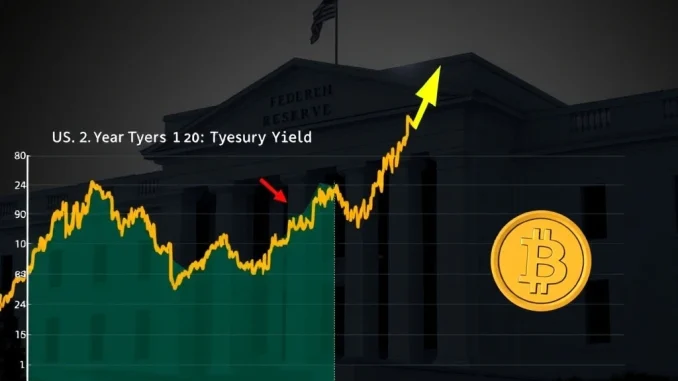
The U.S. 2-Year Treasury Yield has surged to 3.94%, its highest level in weeks, sending shockwaves through the crypto market. As traditional finance tightens its grip, Bitcoin and altcoins face a critical reassessment. Will this mark the beginning of a prolonged crypto winter, or is it just a temporary setback?
Why the U.S. 2-Year Treasury Yield Matters for Crypto
The U.S. 2-Year Treasury Yield is a key indicator of short-term interest rates and investor sentiment. When it rises, it signals:
- Higher borrowing costs for crypto startups
- Reduced appetite for riskier assets like Bitcoin
- Stronger U.S. dollar, making crypto more expensive globally
Federal Reserve Policy: The Crypto Market’s Biggest Threat?
The Federal Reserve’s hawkish stance is driving yields upward. Key factors include:
| Factor | Impact on Crypto |
|---|---|
| Persistent inflation | Reduces real returns on crypto investments |
| Strong economic data | Supports continued rate hikes |
| Risk-off sentiment | Capital flows out of Bitcoin into bonds |
DeFi vs. Traditional Bonds: Can Crypto Compete?
While DeFi offers innovative yield-generating mechanisms like staking, they come with higher risks compared to Treasury bonds. The current yield environment makes this trade-off particularly challenging for investors.
Actionable Insights for Crypto Investors
To navigate this volatile period:
- Monitor Federal Reserve communications closely
- Diversify across asset classes
- Focus on projects with strong fundamentals
- Reassess risk tolerance
FAQs
Q: How does the U.S. 2-Year Treasury Yield affect Bitcoin prices?
A: Rising yields typically make Bitcoin less attractive as investors shift to safer assets with guaranteed returns.
Q: Will DeFi platforms be able to compete with higher bond yields?
A: While DeFi offers higher potential returns, the risk profile is significantly different, making direct comparison difficult.
Q: How long might this crypto market pressure last?
A: It depends on inflation trends and Federal Reserve policy, potentially several months if yields remain elevated.
Q: Should I sell my crypto holdings now?
A: This depends on your investment horizon and risk tolerance. Consult with a financial advisor for personalized advice.